


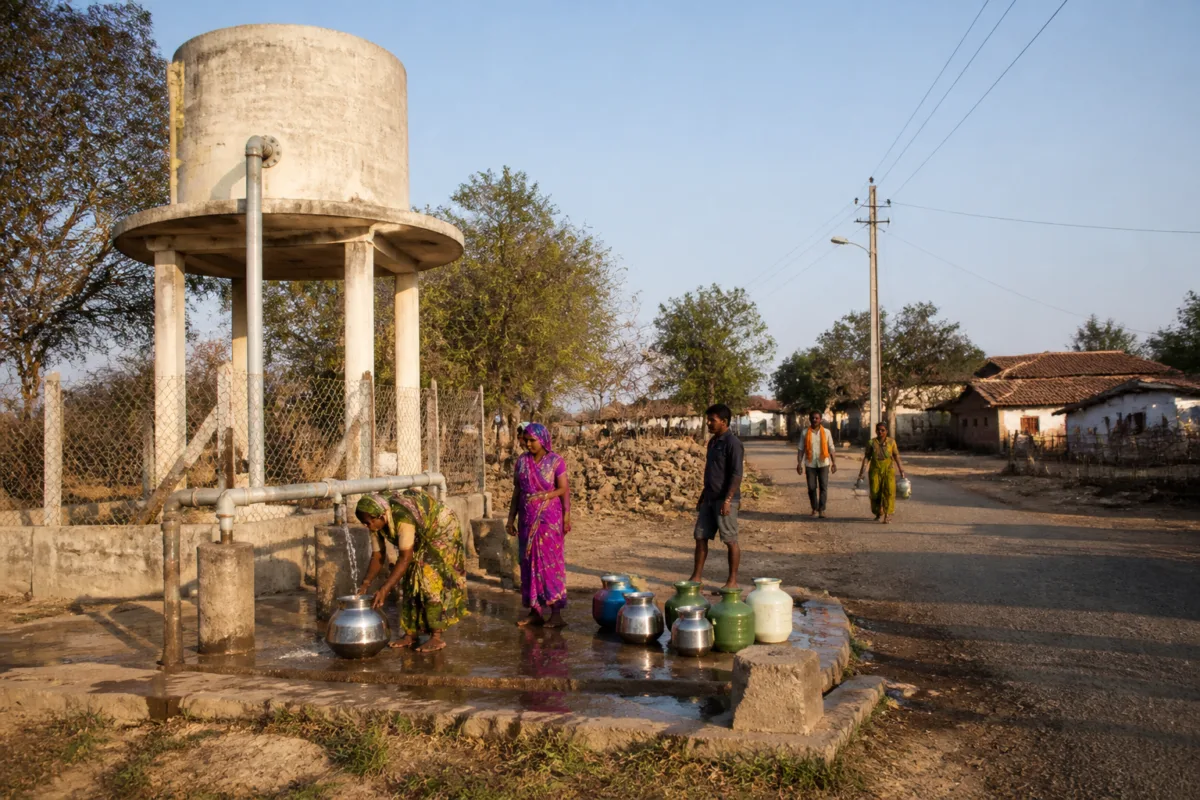
Chhattisgarh’s gram panchayats will have to recover at least 50% of monthly water charges to qualify for government assistance to maintain rural tap-water schemes under rules approved by the state cabinet.
The Chhattisgarh Panchayat (Rural Tap Water Operation, Maintenance and Management) Rules, 2026, approved by the cabinet chaired by Chief Minister Vishnu Deo Sai, will replace the existing 2024 regulations, according to a report by the Times of India.
Under the new framework, panchayats with populations below 1,000 will be eligible for assistance through the Mukhyamantri Nal Jal Anudan, subject to meeting the minimum collection requirement. Panchayats that collect more than 75% of annual dues will receive an incentive of Rs 50,000.
The rules also provide a one-time incentive of Rs 50,000 to panchayats that achieve 100% water metering for two consecutive years. The measures link access to maintenance support with local revenue collection and metering performance, placing greater operational responsibility on village-level institutions.
The framework incorporates 19 technical, administrative and financial parameters recommended by the Centre, the report said. These provisions are intended to support the operation and maintenance of rural water-supply infrastructure after tap-water connections have been established.
The new collection-linked system could make panchayat-level billing, metering and payment recovery central to the continued functioning of village water schemes. However, the reported cabinet decision does not specify the monthly water charges, the process for assessing compliance, or how assistance will be handled when panchayats fall short of the 50% threshold.
The rules form part of Chhattisgarh’s revised administrative framework for managing rural tap-water systems, with financial incentives for stronger collection and complete metering. Their effectiveness will depend on how consistently panchayats can bill households, recover dues and maintain the underlying supply infrastructure.

