


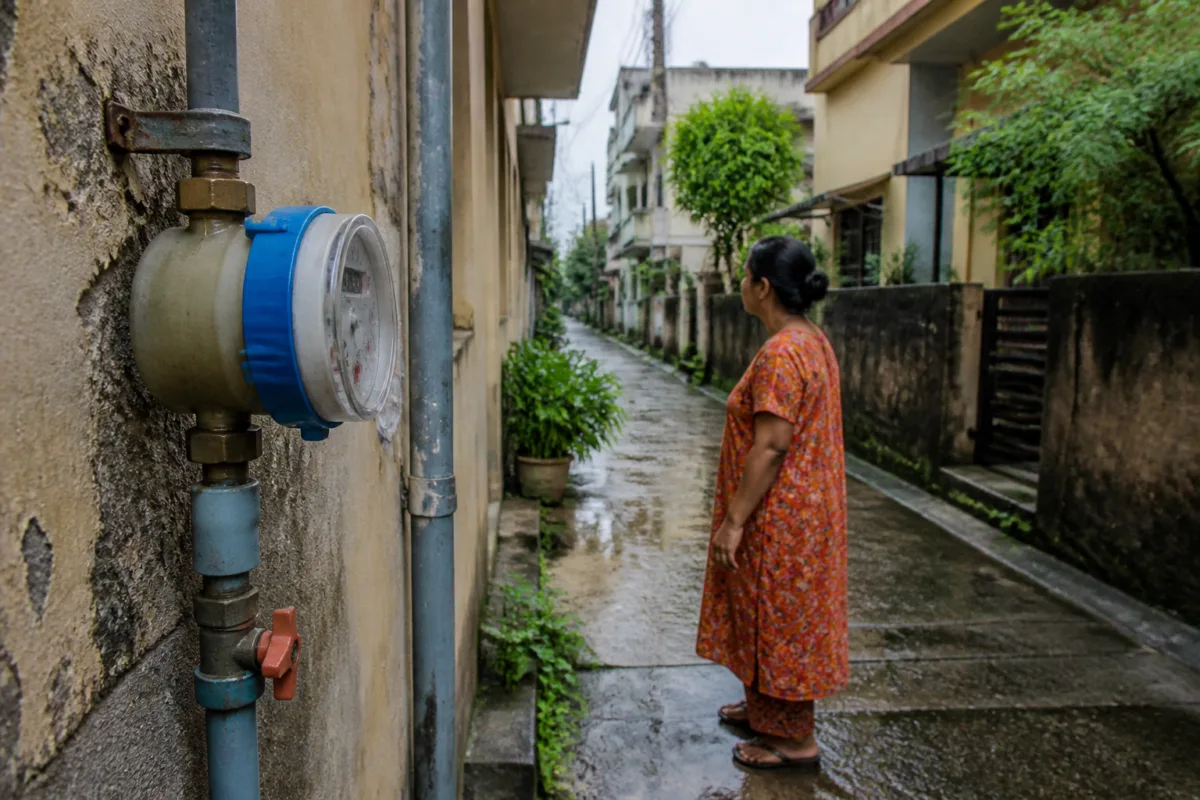
West Bengal is planning to install water meters across the state to measure consumption and reduce wastage, public health engineering minister Ajay Poddar said on Wednesday. He said the proposed system was intended to assess water use rather than impose a tax on residents.
“We will install water meters across the state. The objective is not to tax people but to assess water consumption and wastage,” Poddar said at the Electrosteel Jal Sevak Samman 2026 event in Kolkata.
The minister said almost 40% of water was wasted daily and called for better measurement of the per-capita water footprint. The report does not specify whether the estimate refers to distribution losses, household wastage or a combination of factors. It also does not provide a rollout schedule, the locations to be covered first, the proposed metering technology or details of how the data would be used.
For cities and towns, metering can provide utilities with a clearer picture of demand across neighbourhoods and user categories. Such information may help identify unusually high consumption, support leak detection and improve planning for supply augmentation. However, the effectiveness of a metering programme would depend on the quality of the network data, the reliability of the devices and the state’s ability to act on the information collected.
Poddar linked the proposal to groundwater depletion and arsenic contamination risks, and advocated rainwater harvesting and community participation. These concerns are significant for areas that depend partly on groundwater or face pressure on local water sources. Metering alone, however, would measure consumption; it would not by itself recharge aquifers, improve source quality or resolve distribution deficiencies.
At the same conference, Central Ground Water Board representative Sandhya Yadav emphasised the need for scientific assessment before groundwater recharge projects are undertaken. Her remarks point to a broader requirement for water policy to combine demand measurement with reliable assessments of aquifers, sources and recharge potential.
Electrosteel Castings executive director Pankaj Poddar also stressed water conservation in the context of climate change. The event was organised with the Bharat Chamber of Commerce.
The state’s next steps will determine whether the proposal becomes a functioning utility-management system or remains a broad conservation commitment. Key public-interest questions include the coverage of the programme, responsibility for installation and maintenance, treatment of low-income households, access to consumption data and the safeguards against using meters as an immediate billing mechanism. None of these implementation details were provided in the report.

