


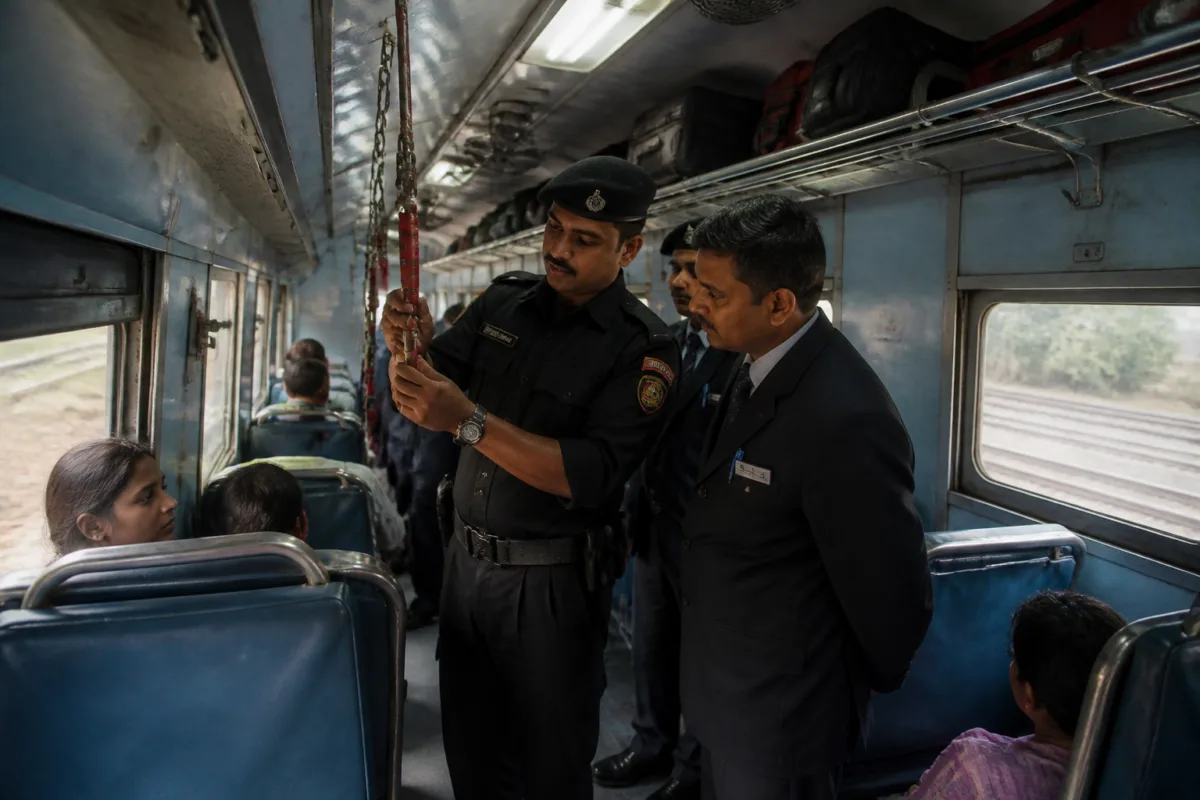
The East Central Railway’s month-long action against illegal alarm chain pulling shows how a seemingly individual passenger act can become an operational problem across a large railway network. Between October 1 and 31, the Railway Protection Force penalised 1,014 passengers across all five divisions of East Central Railway and collected Rs 4.39 lakh in fines.
The enforcement figures were released after a special drive conducted under Operation Samay Palan, an initiative intended to curb unnecessary alarm chain pulling and protect the punctual running of long-distance mail and express trains. The campaign was led by a special RPF team headed by senior commercial officials, linking passenger conduct directly with railway operations and service reliability.
The largest number of violations was recorded in Danapur division, where 515 passengers were penalised. This was followed by Samastipur with 180 cases, the DDU division with 136, Sonepur with 116 and Dhanbad with 67. The distribution is significant because the total was not concentrated evenly across the railway zone. Danapur alone accounted for slightly more than half of all reported cases during the month-long campaign.
That concentration makes the enforcement data more than a simple record of fines. It identifies where the railway’s operational and passenger-management concerns were most visible during the period. However, the figures supplied by the railway do not explain why Danapur recorded the highest number of cases, whether the division has greater passenger volume, more long-distance services, different travel patterns or more intensive enforcement. Those questions remain outside the evidence currently available.
Alarm chain pulling is treated by the railway as a disruption to train operations when it is undertaken without a valid emergency reason. The RPF action was carried out under Section 141 of the Railway Act. The stated objective was not only to penalise passengers but also to prevent unnecessary stoppages that can affect the punctual running of mail and express trains.
This distinction matters for understanding the administrative logic of the campaign. The railway is not dealing with a problem limited to one coach or one passenger. An avoidable emergency brake application can require intervention by onboard staff, the train crew and security personnel before a service can resume. Even though the supplied report does not quantify delays caused by the 1,014 cases, the campaign’s stated purpose indicates that punctuality was the central operational concern.
The use of a month-long, zone-wide drive also points to a coordinated enforcement model. All five divisions of East Central Railway were included, while the special team was headed by senior commercial officials and involved the RPF. This combination brings together passenger-facing administration, train operations and railway security. It suggests that the railway views illegal alarm chain pulling as both a discipline issue and a service-management issue.
The division-wise breakdown provides the clearest evidence of how the campaign was implemented. Danapur recorded 515 penalties, more than the combined total of Samastipur and Dhanbad. Samastipur reported 180 cases, while DDU recorded 136. Sonepur and Dhanbad recorded 116 and 67 cases respectively. Across the five divisions, the railway identified a total of 1,014 passengers during the campaign.
The fine collection, at Rs 4.39 lakh, also shows the monetary scale of the enforcement action. On average, the amount collected works out to roughly Rs 433 per penalised passenger, although the supplied information does not state whether every case carried the same fine or whether the total includes different penalty amounts. The figure should therefore be read as an aggregate enforcement outcome, not as evidence of a uniform charge.
The data also reveals the limits of a fine-based response. The railway has reported how many passengers were penalised and how much money was collected, but it has not disclosed the number of alarm chain pulling incidents that occurred, the number of trains affected, the duration of stoppages or the punctuality impact before and after the drive. Without those measures, it is not possible to determine whether the campaign reduced disruptions or simply improved detection during October.
That gap is important because the stated objective of Operation Samay Palan is punctual running, not revenue collection. The number of fines is an enforcement indicator. It does not, by itself, establish whether trains ran more punctually, whether repeat violations declined or whether particular routes or services faced a disproportionate burden. A fuller assessment would require operational data alongside prosecution figures.
The campaign nevertheless demonstrates the administrative challenge involved in managing a railway system that operates across multiple divisions. East Central Railway reported violations in Danapur, Samastipur, DDU, Sonepur and Dhanbad, meaning that the enforcement exercise required a common legal and operational approach across different administrative units. The figures were presented together, allowing the zone to compare the scale of reported violations between divisions.
For passengers, the issue is closely connected to the distinction between a genuine emergency and an unnecessary intervention. The source material does not provide details of the individual circumstances behind the 1,014 cases, so it cannot establish how many were deliberate misuse, misunderstanding or responses to passenger emergencies. The railway’s official position, as reported, is focused on curbing unnecessary alarm chain pulling while maintaining train punctuality.
This is where railway governance and passenger communication intersect. Enforcement can identify and penalise violations, but the supplied information does not indicate what communication measures accompanied the drive, whether announcements or signage were intensified, or whether the railway reviewed the reasons passengers gave for pulling the chain. Those details would help establish whether the campaign was designed primarily as deterrence, passenger education or a combination of both.
The institutional structure is clearer. The RPF carried out the penal action, while senior commercial officials headed the special team. The railway’s chief public relations officer, Saraswati Chandra, provided the division-wise figures and the total amount collected. The campaign therefore combined field enforcement, railway administration and public communication, with the results communicated through the zone’s official spokesperson.
The operation also highlights a recurring measurement issue in public infrastructure management: the difference between activity and outcome. A campaign can report the number of people penalised, the amount collected and the areas covered. Those figures demonstrate effort and enforcement reach. They do not necessarily show whether the underlying behaviour changed or whether the intended service improvement was achieved.
For East Central Railway, the next layer of accountability would be a comparison between enforcement and operations. The available report does not state whether the 1,014 cases produced measurable delays, nor does it provide a before-and-after comparison for punctuality during the drive. It also does not explain why the Danapur division’s total was substantially higher than the other divisions. These are not established findings, but they are the unanswered questions raised by the data.
The October drive is therefore best understood as a snapshot of railway enforcement rather than a complete assessment of passenger behaviour. It confirms that illegal alarm chain pulling remained significant enough for East Central Railway to conduct a coordinated campaign across all five divisions. It also shows that the reported problem was unevenly distributed, with Danapur accounting for the largest share of cases.
What the evidence confirms is straightforward: 1,014 passengers were penalised under Section 141 during the month-long drive, Rs 4.39 lakh was collected, and the railway linked the action to protecting the punctual operation of long-distance trains. What remains unestablished is whether enforcement reduced disruptions, improved punctuality or addressed the reasons behind the violations. Those outcomes would require operational and passenger-level data beyond the figures released for the campaign.

