


SpaceX’s reported $40 billion debt financing for graphics processing units offers a clear view of the capital scale now required to build AI computing capacity. The transaction, described by Elon Musk as primarily callable debt for GPU purchases arriving in the first and second quarters, is not simply a corporate funding event. It shows how the AI boom is moving into a more infrastructure-heavy phase, where access to chips, data centres and long-term revenue is becoming as important as software capability.
According to a report by Reuters published by The Hindu BusinessLine, Musk said SpaceX had closed the debt financing and attributed its access to credit to the company’s investment-grade status and revenue from Starlink satellite internet and launch businesses. The report also noted that it was not immediately clear from Musk’s post what “closed” meant in terms of the final pricing or investor commitments. That distinction matters because the financing claim is central to understanding how AI infrastructure is being funded, while the precise terms of the transaction were not provided.
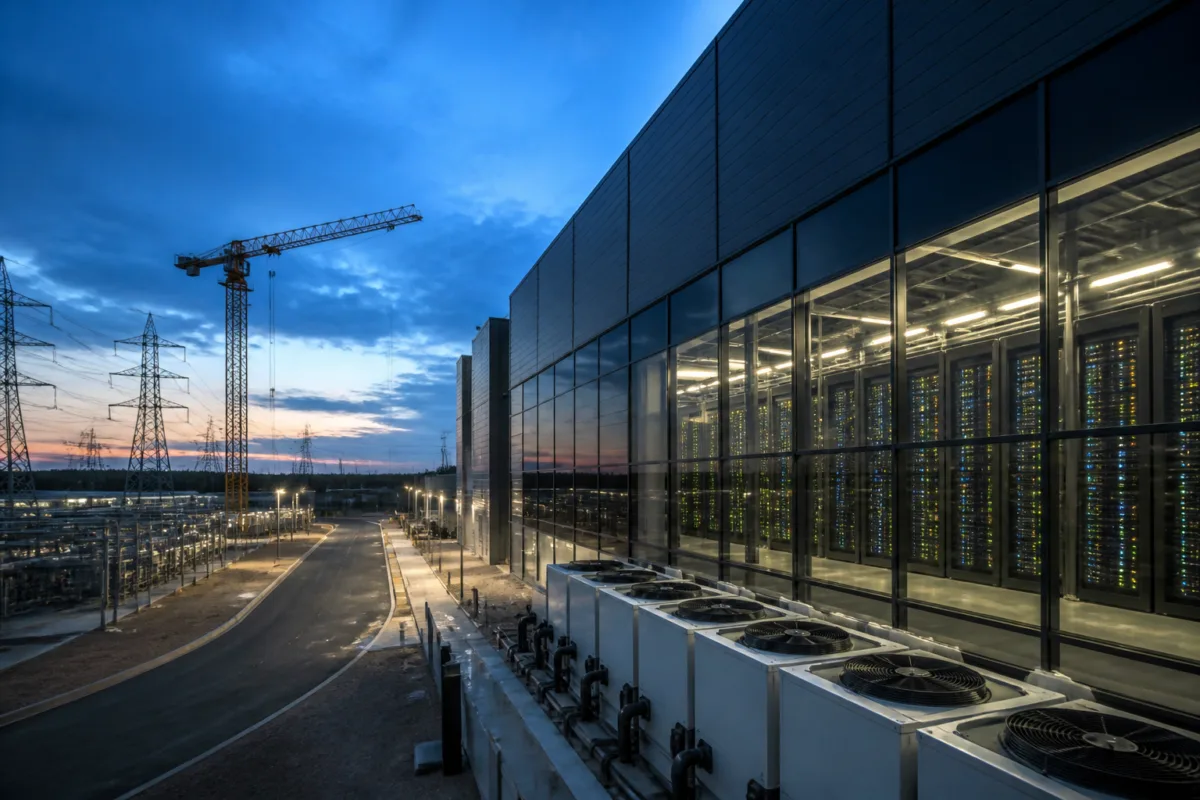
The immediate use of the money is clearer. Musk said the debt would primarily be used to buy GPUs, with deliveries expected in the first two quarters. The scale of the proposed purchase reflects the shift in AI investment from research and software development towards physical computing capacity. GPUs are the specialised processors used to train and run many AI systems. Securing them requires not only substantial capital but also supporting data-centre facilities, power, cooling, networking and operational systems.
The report puts SpaceX’s expected fourth-quarter capital expenditure at between $35 billion and $40 billion, citing Chief Financial Officer Bret Johnsen. It also said Reuters had reported earlier in the month that SpaceX was in talks with banks and asset managers to raise $40 billion for Nvidia artificial intelligence chips. The figures indicate that the company’s AI ambitions are being developed as a major capital programme rather than as a limited extension of its existing businesses.
That changes the infrastructure question. AI capacity is often discussed through the language of models, applications and digital services, but the investment described in the report is directed towards the physical layer beneath them. GPUs must be purchased, installed and operated. The resulting systems require industrial-scale facilities and dependable revenue to service the financing used to build them. In this model, computing capacity becomes an infrastructure asset with a financial profile similar to other capital-intensive networks, even though its equipment may become technologically obsolete more quickly.
Musk’s warning about the debt market provides the report’s most important indication of where pressure may emerge. He said debt markets had “almost entirely shut off access to money for any company that doesn’t have substantial revenue independent of AI data centers”. He subsequently predicted significant consolidation and failures among neocloud companies, while saying SpaceX would not buy any neoclouds because doing so would be “pointless”.
Neocloud companies such as Nebius and CoreWeave are described in the report as firms focused largely on technology customers and on offering capacity tailored to AI workloads. Their business model depends on acquiring expensive computing hardware and selling access to that capacity. The model can grow rapidly when demand is strong, but its financial structure also makes it sensitive to borrowing costs, chip supply, customer concentration and the speed at which AI revenues develop.
The reported market reaction suggests that investors are already examining this risk. The Hindu BusinessLine report said investors had begun betting against US neocloud and data-centre companies after concerns that debt-funded AI expansion was becoming unsustainable triggered a sell-off. The evidence supplied does not establish that a broad sector failure is under way. It does, however, show that the economics of AI infrastructure are being judged through the same questions that apply to other urban and industrial systems: who finances capacity, how quickly it becomes productive, what revenue supports it and who carries the risk if demand changes.
SpaceX’s own revenue mix is central to its ability to pursue this strategy. The report said the company’s revenue rose 161 per cent year on year to $14.58 billion for the three months ended September 30. AI revenue increased almost tenfold to $7.56 billion. Those figures are presented as evidence that the company’s heavy investment in AI was generating returns, while also showing how quickly AI has become a substantial part of a business whose financial engine has traditionally included Starlink satellite internet services.
This diversification is significant for infrastructure financing. A company with revenue from satellite internet and launch services may be viewed differently by lenders from a company whose only income is linked to future AI demand. Musk’s comments therefore point to an emerging divide between infrastructure operators with established non-AI cash flows and firms that must borrow heavily before their AI facilities produce dependable earnings. The report does not provide the debt’s interest rate, maturity or security arrangements, so the precise risk profile of SpaceX’s financing remains unestablished.
The investment also extends beyond buying existing processors. Terafab, the chip-manufacturing joint venture between SpaceX and Tesla in Austin, is expected to produce its first test chip around May or June of the following year and aims to reach volume production by the third quarter of 2028, according to the report. If those stated milestones are met, the project would add semiconductor manufacturing to SpaceX’s growing AI infrastructure chain. That would connect computing demand with factory construction, equipment procurement and manufacturing employment rather than leaving the company dependent only on external chip suppliers.
The proposed manufacturing capacity also illustrates the length of the infrastructure cycle. GPU procurement can be financed and executed on a relatively short timetable, but chip production requires testing, process development and a longer path to volume output. The gap between an immediate demand for computing power and a future domestic manufacturing capability creates a period in which companies must continue spending heavily on imported or externally supplied hardware while building their own production systems.
The overlap between SpaceX and Tesla adds another institutional layer. Musk told investors that a merger of the two companies would be “a good idea”, citing their growing overlap. The report also said SpaceX had listed manufacturing its own GPUs among the substantial capital expenditures in its S-1 statement before its blockbuster initial public offering, warning prospective investors about the scale of its spending on AI and other technologies. These details indicate that AI infrastructure is being positioned not as a standalone product line but as part of a broader corporate strategy involving satellites, launch systems, vehicles, chips and computing.
For cities, the significance is indirect but material. The AI infrastructure described here depends on physical sites, electricity systems, cooling arrangements, industrial supply chains and communications networks. The supplied report does not identify specific data-centre locations, power requirements or local planning approvals, so it cannot establish the immediate land, water or electricity impact of SpaceX’s investment. It does establish the direction of travel: large technology companies are treating computing capacity as a strategic asset that requires substantial physical and financial infrastructure.
That direction creates a structural question for the built environment. If AI demand continues to be served through debt-funded expansion, the growth of data centres and related industrial facilities will depend not only on technology forecasts but also on the ability of operators to sustain revenue outside AI, secure long-term financing and manage rapid hardware replacement. If financing becomes available mainly to companies with strong independent cash flows, the market could consolidate around larger, diversified firms. Musk’s comments explicitly point towards that possibility, although the report does not provide enough evidence to determine its scale or timing.
The evidence currently confirms three developments: SpaceX has reported a $40 billion debt financing primarily linked to GPU purchases; the company is planning very high capital expenditure while its AI revenues grow; and its leadership expects weaker neocloud companies to face consolidation or failure. It does not establish the final terms of the debt, the full operating location of the planned computing capacity or whether the predicted neocloud shakeout will occur. Those are the developments that will determine whether the present AI infrastructure buildout becomes a durable industrial expansion or a heavily leveraged cycle of overcapacity and consolidation.

