


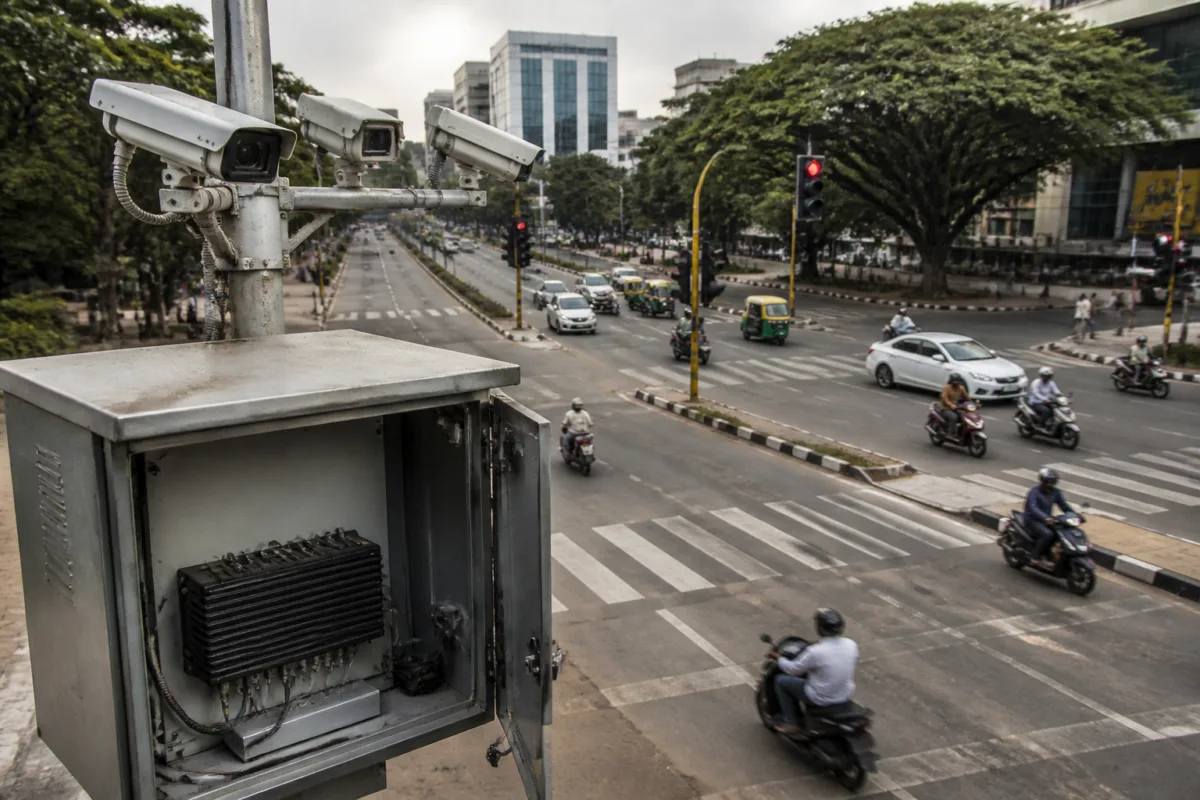
Bengaluru-based startup Radiantech Systems has proposed an edge-computing device that processes traffic-camera footage at road junctions, rather than continuously sending raw video to centralised servers. The company says its approach could reduce the bandwidth, storage and computing infrastructure required for AI-based traffic enforcement.
The RTE-300-R Rugged High Performance Edge AI Compute device was showcased at the Bengaluru Tech Summit 2026. According to Radiantech, the hardware can analyse camera feeds locally and send only a brief alert to the city command centre when it detects a violation such as jumping a red light.
The company’s chief executive, Sumanth S, said a network of 10,000 cameras, with each camera transmitting 3–4 MB of data per second, could generate around 40,000 Mbps of continuous backhaul traffic. Such a system would increase demands on connectivity, video storage and computing capacity, potentially requiring GPU-powered data centres, he said.
Edge computing shifts part of that processing closer to the point where data is generated. In the proposed model, the device would identify relevant events at the junction and transmit an alert instead of continuously transferring all camera footage. Radiantech said this could reduce the volume of data moving across the city’s network, although the report does not provide independently verified estimates of savings or accuracy.
The ruggedised, air-cooled unit has been designed for outdoor conditions, according to the company. Radiantech said it avoids the need for expensive, water-intensive cooling infrastructure and can store footage locally for 60 days. The files would be automatically deleted after that period, while specific clips could be retrieved when required.
Radiantech has submitted a formal proposal to the Bengaluru Traffic Police, which has expressed interest in the architecture, the report said. The company is awaiting a Letter of Intent. This means the device has been presented as a proposed solution, but the available information does not establish that it has been deployed across Bengaluru’s traffic network or that a procurement decision has been made.
The company plans to work with third-party software developers to run AI-based violation-detection models on the hardware. That arrangement would separate the device infrastructure from the software used to identify violations, while leaving the eventual operating model dependent on the traffic authority’s procurement, testing and implementation decisions.
For Bengaluru, the proposal highlights a wider infrastructure choice in expanding camera-based enforcement: whether traffic data should be processed predominantly in central facilities or partly at junctions. The answer will affect network capacity, storage design, cooling requirements and how authorities retrieve and retain footage. Any future deployment would also need clearly defined performance, maintenance, data-retention and accountability requirements, none of which have been detailed in the available report.

