


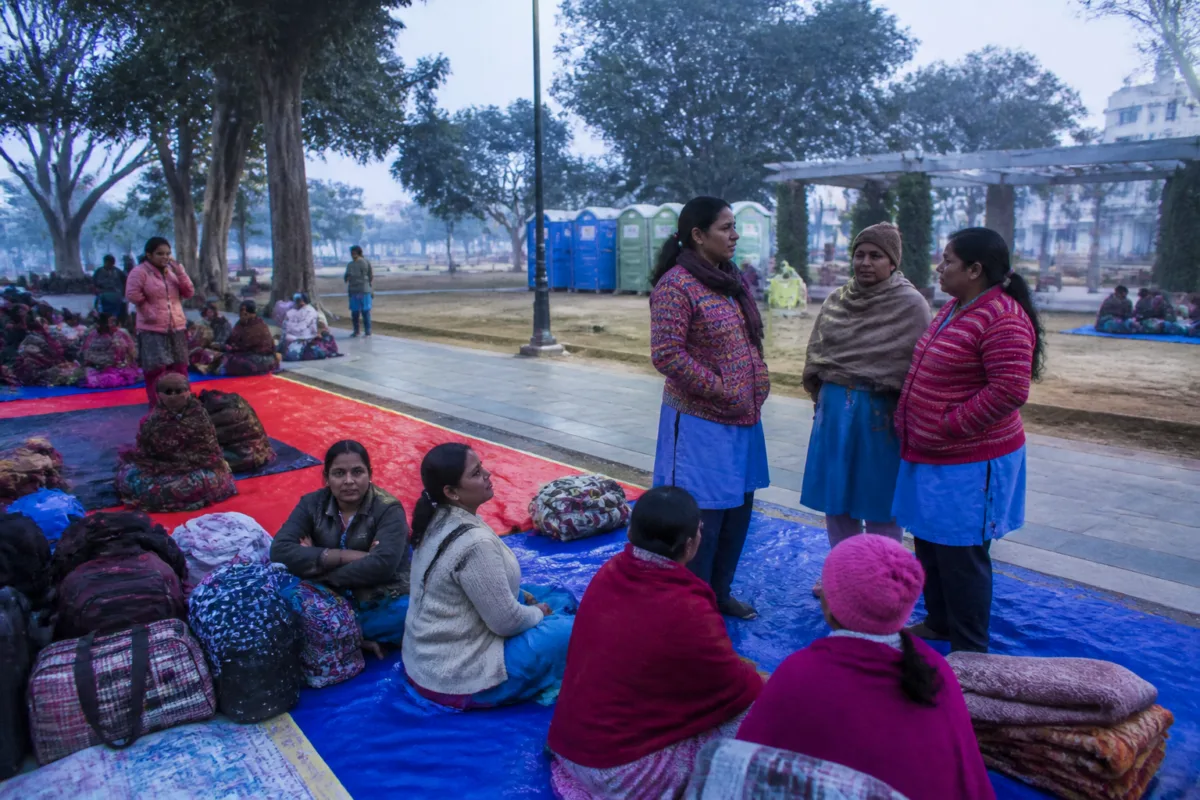
Thousands of ASHA workers from across Karnataka have been holding a round-the-clock protest at Bengaluru’s Freedom Park since November 17, with inadequate shelter and shared sanitation emerging as immediate public-health concerns alongside their demand for higher monthly honorariums and payment of pending dues.
The protest, reported on November 20, has left workers sleeping in the open on tarpaulin sheets, using travel bags as pillows and relying on sweaters, mufflers and thin bedsheets for protection. Temperatures at night have been reported at 17-19 degrees Celsius. One worker from Bidar and her eight-month-old baby slept outdoors on Thursday night before fellow protesters and volunteers provided another blanket and moved them to a relatively warmer location, according to the report.
The conditions at Freedom Park show how a public space used for sustained civic mobilisation can come under pressure when large groups remain there overnight. Workers told the newspaper that they were unable to take hot-water baths and were experiencing joint pain. Another worker from Hassan reported rashes on her hands and legs, which she attributed to dust exposure while sleeping either in the protest area or on nearby streets.
About nine ASHA workers have so far been admitted to KC General Hospital with dehydration, fluctuations in blood pressure, stomach infections and flu, the report said. Several others reported urinary tract and vaginal infections, which they attributed to the shared washroom arrangements.
The protesters are using around 25 mobile toilets, eight toilets inside Freedom Park and another 10-15 toilets in a nearby multi-level car park. Workers said the facilities were considerably clean but that they were uncomfortable using them repeatedly. They told the newspaper that some were drinking less water as a result, a practice that can compound dehydration concerns during a prolonged outdoor stay.
The situation underlines the practical requirements of accommodating extended public demonstrations in city spaces: access to safe overnight shelter, usable sanitation, drinking water and basic health support. In this case, the report provides details of the facilities and health complaints, but does not record a formal civic-authority plan for improving arrangements at the site.
The protest is also tied to a wider dispute over how ASHA workers should be funded. Leaders of the Karnataka State Samyukta ASHA workers’ union have accused the Congress-led state government and the BJP-led Union government of shifting responsibility for the workers’ demands onto each other.
Union state president K Somashekar Yadagiri said the state government would require Rs 492 crore to provide a dignified livelihood to all 41,000 ASHA workers. He argued that this could be mobilised by reducing 5% of the Rs 11,000 crore allocated as incentives to corporate companies over three years. These are the union’s claims; the report does not include a response from the state or Union government validating or disputing the figures.
Yadagiri also questioned government spending on advertisements, cars for legislators and the proposed Rs 20,000 crore tunnel road. The comparisons place the protest within a broader argument about public priorities, but they remain part of the union’s case rather than independently established findings in the report.
For Bengaluru, the immediate issue is not only the workers’ remuneration dispute but also the capacity of the city’s public spaces and institutions to support a large, prolonged demonstration without exposing participants to preventable health and sanitation risks. The reported hospital admissions, limited toilet access and lack of adequate overnight protection make the conditions at Freedom Park a matter of urban administration as well as labour policy.

