


Highway bridge maintenance and construction practices are being identified as major factors behind deterioration that can begin within five to 10 years of a bridge becoming operational, despite structures being designed for a 100-year service life, according to research presented by a senior National Highways Authority of India (NHAI) engineer.
Dr Narwal, Project Director-cum-Deputy General Manager (Technical) at NHAI’s Project Implementation Unit in Amritsar, presented the paper, titled “Early Age Deterioration of Highway Bridges Due to Bearings and Expansion Joints Malfunction: Root Causes, Dynamic Response and a Preventive Framework”, at the recently held annual session of the Indian Roads Congress in Hyderabad. The research has also appeared in the Journal of Indian Road Congress, according to a report by Livemint citing the paper.
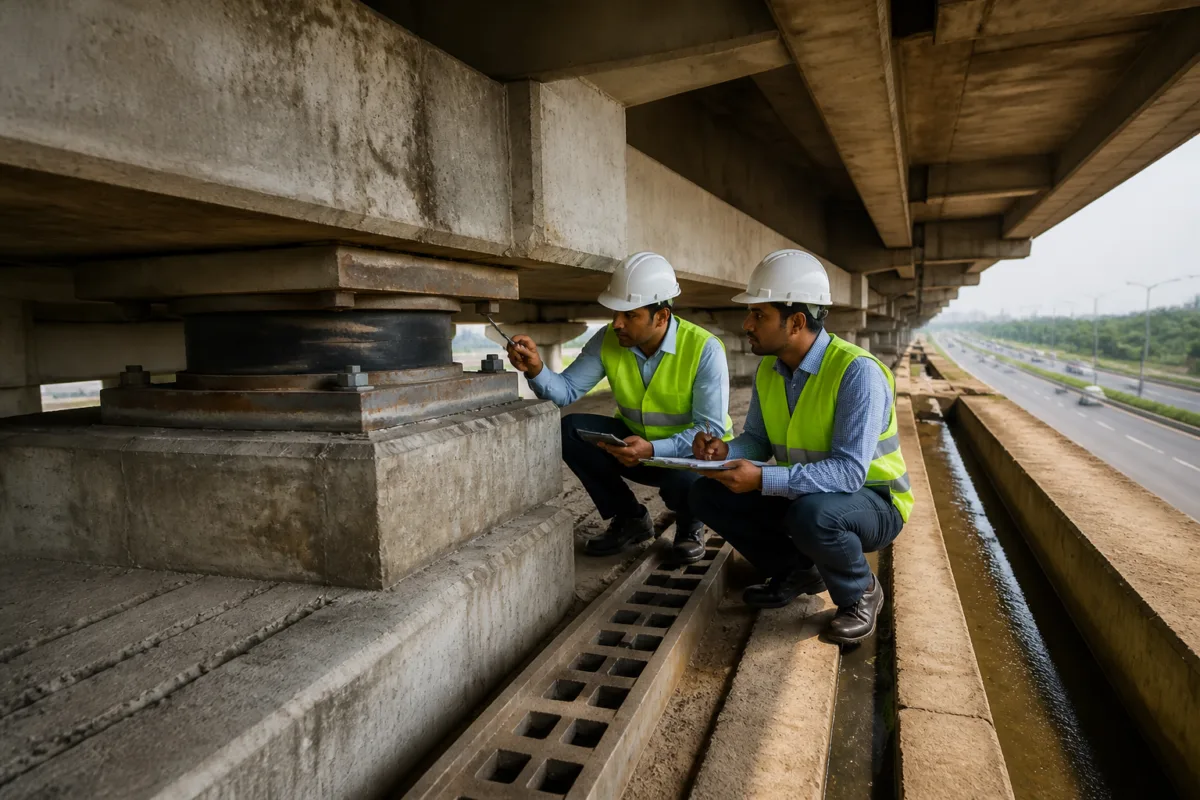
The study focuses on bridge components that are relatively small compared with the overall structure but are essential to its performance. These include bearings, expansion joints and drainage systems. Bearings transfer loads from the bridge deck to its supporting structure, while expansion joints accommodate movement caused by factors such as traffic and changes in temperature. Drainage systems help prevent water from remaining on or entering vulnerable parts of the bridge.
According to the research, incorrect installation, misalignment, insufficient seating and inadequate maintenance of bearings and expansion joints can cause defects in the bridge’s primary structural elements. A bearing that is locked, incorrectly aligned or poorly positioned may interfere with the distribution of loads. This can place additional stress on girders, pedestals and other components, contributing to cracking.
The paper also links leaking expansion joints to the movement of water, chlorides and debris into bearings and the substructure. These conditions can accelerate corrosion and the deterioration of concrete. Missing or inadequate drainage arrangements can worsen the damage by allowing water to accumulate or reach areas that require protection.
The research attributes a majority of the defects identified in field assessments to the construction phase. It states that many of these problems could have been avoided through adherence to approved designs, technical specifications and manufacturers’ installation guidelines. The findings shift attention from only repairing visible cracks to checking the installation and performance of the components that help a bridge carry loads and manage movement.
Dr Narwal’s proposed preventive framework begins before a bridge is opened to public traffic. It calls for compulsory installation checklists, designated inspection stages during construction, a Bridge Completion and Commissioning Certificate, and an initial assessment of the bridge’s condition.
The framework also proposes phased inspections after commissioning, with checks at one, three, six, 12 and 24 months. Such a schedule is intended to identify early signs of damage while defects can still be addressed before they develop into more extensive structural problems.
The paper argues that preventing construction-stage defects is more economical than carrying out major repairs after a bridge has entered service. Its broader conclusion is that achieving a bridge’s intended service life requires more than a sound structural design. It also depends on quality control, monitored installation, proper drainage, compliance with technical specifications and regular inspection after commissioning.
For highway authorities, the findings point to a lifecycle approach in which component-level checks form part of project delivery and post-construction management. For road users, the issue is significant because premature deterioration can lead to repair work, traffic restrictions and repeated expenditure on infrastructure that was intended to remain operational for decades. The research’s proposed certification and inspection framework offers a specific process for detecting such weaknesses before they become costly and difficult to manage.

