


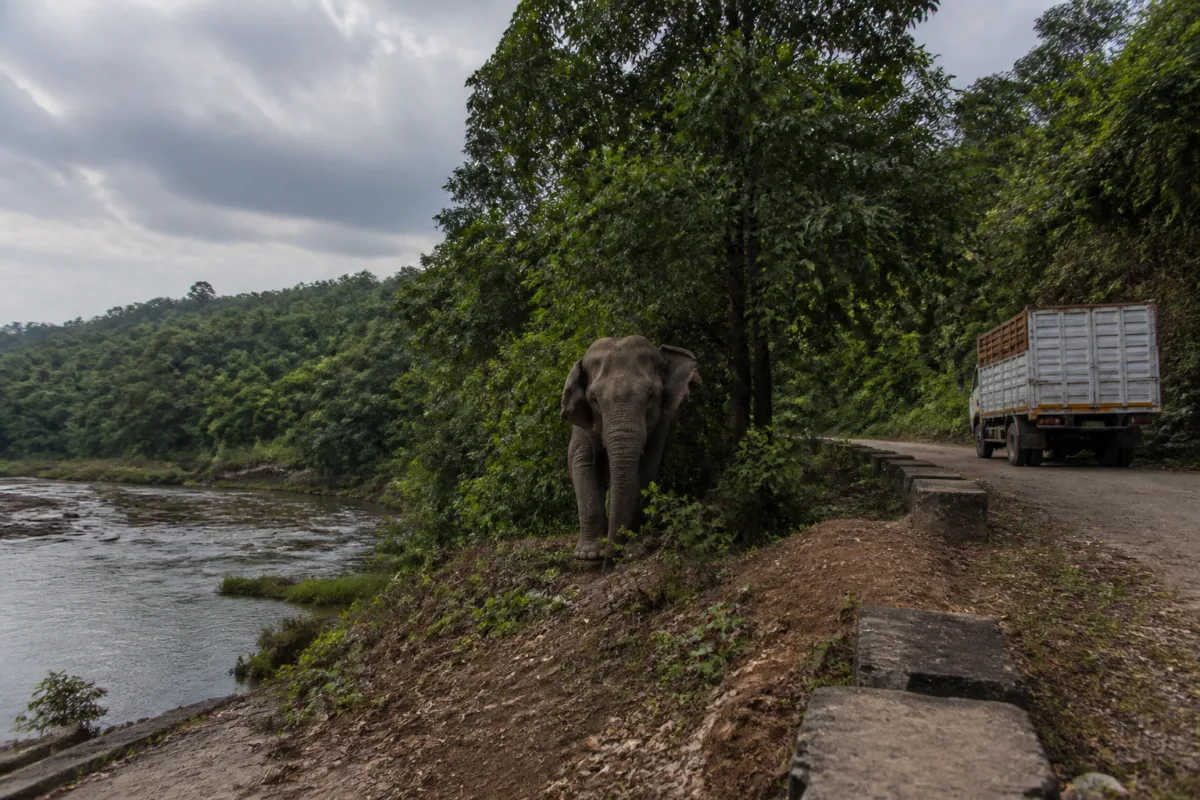
A man was killed and his nephew survived after a wild elephant charged at them near the Phuljhar river in Chhattisgarh’s Surajpur district, prompting villagers to demand closer monitoring and faster warnings along roads through the forest region.
The incident took place in the Kalyanpur area of the Surajpur forest range when the two were travelling by motorcycle near a river crossing. According to the report, the elephant suddenly moved towards them and charged before they could reach safety. The man, aged between 35 and 40, was killed at the spot.
His nephew escaped by running towards a parked truck and hiding underneath it until the elephant moved away. The account highlights the risks faced by residents who use roads and crossings located close to forest areas frequented by elephants, particularly when animal movement is not detected or communicated in time.
Local residents suspect that the elephant involved may be an animal known in the area as Kabra Kaan, a name linked by villagers to its distinctive ears. Villagers also claimed that the elephant has been moving through the Surajpur forest region for a considerable period and has been involved in fatal encounters in the past.
Forest officials have not yet confirmed whether the animal involved in the latest attack was Kabra Kaan. They have also not confirmed the deaths that residents have attributed to the elephant. The distinction is significant because identifying the animal would require matching local accounts with the Forest Department’s monitoring and field records.
A Forest Department team reached the site after receiving information about the attack. The department’s immediate response was not detailed in the report beyond the team’s visit to the spot.
Residents of nearby villages said they were fearful, especially because they regularly travel on roads passing through forested areas and locations used by elephants. They have sought closer monitoring of elephant movements and timely warnings so that people can avoid routes or crossings when an animal is nearby.
The incident places attention on the safety of everyday movement at the edge of forest habitats, where roads and river crossings also function as access routes for local communities. The next steps will depend on the Forest Department’s assessment of the elephant’s identity, its movement pattern and the measures authorities take to alert residents in the affected area.

