


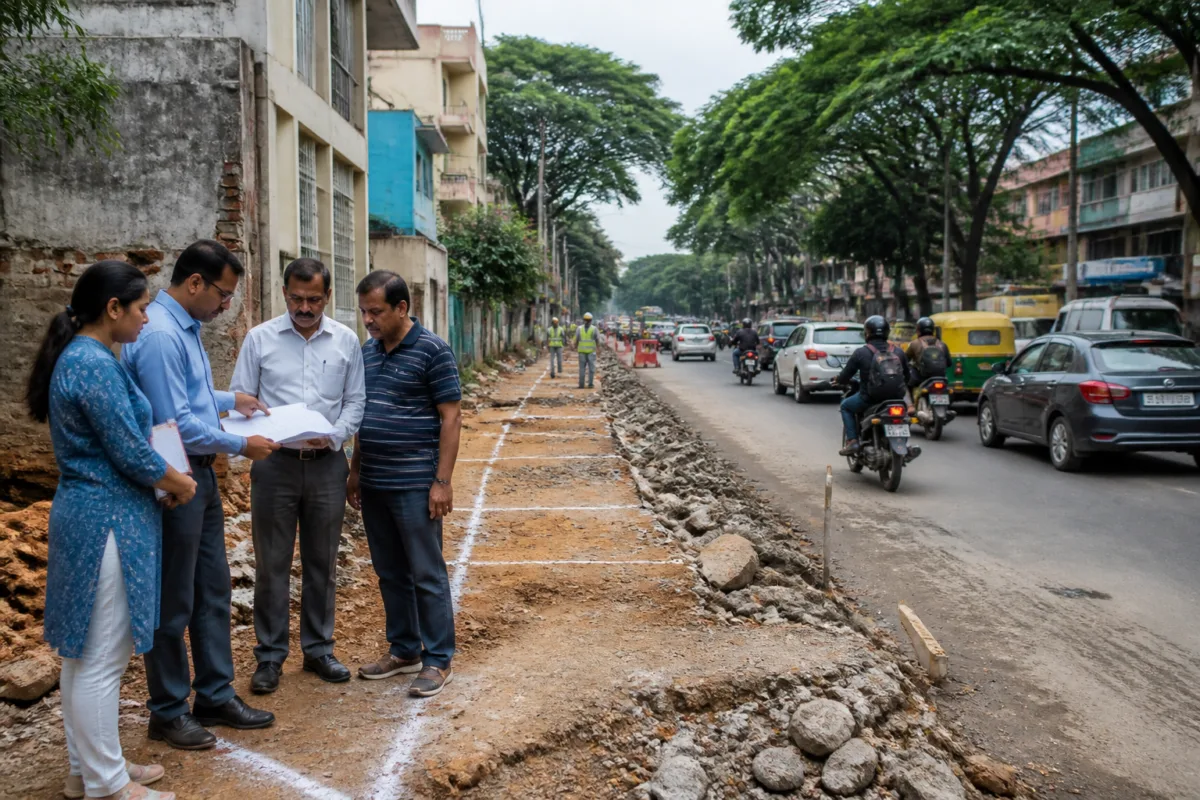
Bengaluru will fully digitise its Transferable Development Rights (TDR) system to make land acquisition for road widening and new roads more transparent, trackable and faster, Greater Bengaluru Development Minister Krishna Byre Gowda said after a meeting with officials.
The proposed digital system will cover the process from the preliminary recording of road and property details through verification and the eventual issue of TDR certificates. The government also plans to bring TDR transactions, including their purchase, sale and final utilisation, onto the same digital platform.
TDR is used to compensate eligible landowners when land is required for public infrastructure such as road expansion. Instead of relying only on direct monetary compensation, the system allows development rights associated with a property to be transferred or used elsewhere, subject to applicable approvals and planning rules.
Byre Gowda said the existing process had been handled through physical files for years, making it difficult to track applications and maintain a transparent record of decisions. He said this had contributed to public dissatisfaction and a lack of trust in the TDR system.
The minister said Bengaluru’s rising traffic congestion made road widening and the construction of new roads urgent requirements. However, the pace of such projects is closely linked to how quickly authorities can identify affected properties, complete verification, settle the compensation mechanism and issue the relevant development rights.
Under the proposed system, applicants would be able to check the status of their files online. The government expects this to reduce the role of intermediaries, limit avoidable delays and reduce the need for repeated visits to government offices. The move is also intended to give public agencies a clearer record of land and property details connected to infrastructure projects.
The digitisation plan places the TDR process within a wider administrative challenge facing Bengaluru: delivering transport infrastructure in a densely built city where acquiring land can be complex and time-consuming. A digital record may improve visibility of applications, but the source report does not specify the platform to be used, the implementation deadline, the agencies responsible for each stage or the safeguards that will govern changes to property records.
The government has directed officials to take the necessary steps to digitise the full process, rather than limiting the reform to TDR approvals alone. The next stages will involve defining the system for recording applications, completing scrutiny, issuing certificates and enabling TDR transactions and end-use tracking online.

