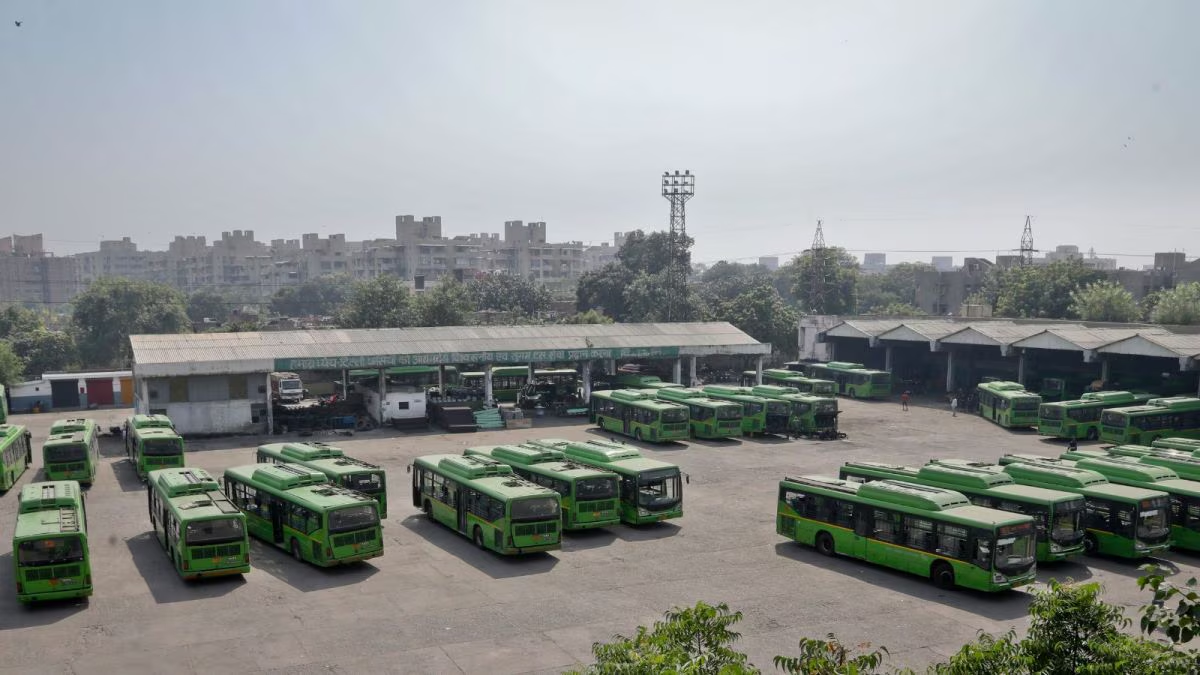
Delhi’s state-run bus operator has reported a marked improvement in earnings this financial year, with average monthly income rising to about ₹91 crore, up from roughly ₹68 crore last year a shift that signals renewed momentum in the capital’s public mobility transition. The jump in Delhi DTC revenue reflects a combination of higher fleet deployment, route optimisation and the rapid induction of electric buses. Transport officials indicate that income accrued until November in the current fiscal has already moved close to last year’s annual ticketed earnings, suggesting that the operator may surpass previous performance benchmarks if trends hold.
Beyond passenger fares, non-ticket streams are gaining strategic importance. Special hire services for government agencies and institutions have expanded, contributing significantly to overall receipts. Ancillary sources including property rentals, scrap disposal and other operational recoveries have also registered strong growth this year. Together, these segments are providing fiscal breathing room to an agency long burdened by operating losses and subsidy dependence.
Urban mobility analysts note that improved Delhi DTC revenue must be viewed within the wider context of capital investment in clean transport. The city now operates more than 4,000 electric buses, one of the largest such fleets in India. Officials attribute efficiency gains partly to lower fuel costs and more predictable maintenance cycles associated with electric mobility.
Yet the revenue uptick comes against a backdrop of structural challenges. Delhi’s transport planners estimate that a minimum of 11,000 buses is required to serve the city’s population adequately. The current fleet remains well below that threshold, though the administration aims to cross 7,000 buses by year-end. Separately, the regional air quality regulator has set a longer-term objective of expanding the fleet to 15,000 buses by 2030 to curb private vehicle dependence and address worsening pollution. Mobility experts caution that while rising income improves operational resilience, farebox recovery alone will not resolve long-term financial sustainability. Capital expenditure for electrification, depot retrofitting and charging infrastructure remains substantial. Moreover, inclusive urban growth depends not only on fleet size but also on service reliability, last-mile connectivity and safe access for women, elderly commuters and persons with disabilities.
For Delhi, the present trajectory offers a crucial test case. If revenue gains are reinvested into expanding clean bus capacity and improving service frequency, public transport could become more competitive against private vehicles. That shift would carry significant climate dividends in a city battling severe air pollution and congestion. The coming years will determine whether stronger earnings translate into structural reform transforming Delhi’s bus system from a subsidy-heavy service into a cornerstone of a zero-emission, people-first urban transport network.
Delhi Transport Corporation revenue climbs sharply