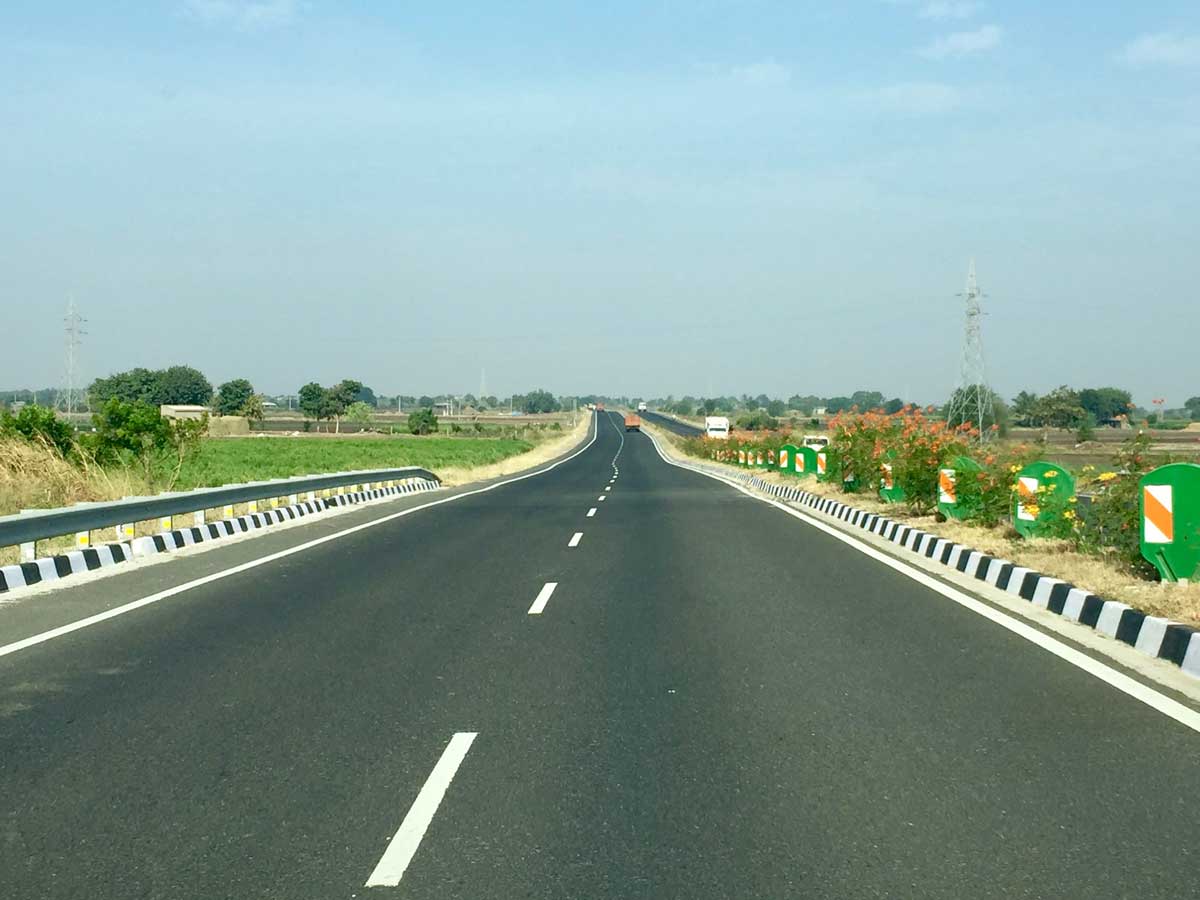
The Gujarat government has cleared a major highway expansion project that will significantly reshape regional mobility between Ahmedabad and north Gujarat, approving an eight-lane upgrade of the Ahmedabad–Mehsana corridor. The decision, taken in Gandhinagar, reflects growing pressure on legacy road infrastructure as urban expansion, industrial activity, and commuter traffic intensify across the state’s northern districts. The approved Ahmedabad Mehsana Highway expansion will widen a critical 51.6-kilometre stretch linking the state’s largest city with emerging urban and agrarian hubs beyond its northern edge. Urban planners say the project addresses a long-standing capacity gap on a corridor that has seen traffic volumes multiply since it was last upgraded more than two decades ago.
Originally expanded to four lanes in the late 1990s, the highway was designed for a very different urban reality. Since then, the Ahmedabad metropolitan region has sprawled northwards, while towns in Mehsana, Patan, and Banaskantha have grown into key centres for dairy processing, agri-logistics, manufacturing, and warehousing. Daily commuter movement between these districts and Ahmedabad has also surged, adding sustained pressure on the road network. According to officials familiar with the planning process, the eight-lane configuration is intended not just to reduce congestion but to improve travel reliability for freight and public transport. Faster and more predictable road connectivity is increasingly seen as essential for supply chains serving north Gujarat’s industrial clusters and export-oriented agriculture.
Infrastructure economists note that highway widening projects of this scale often have wider land-use implications. Improved access can accelerate residential development, logistics parks, and commercial real estate along the corridor. This places greater responsibility on planning authorities to ensure that growth remains orderly, inclusive, and supported by public transport integration rather than car-dependent sprawl. Environmental experts also caution that road expansion must be accompanied by climate-sensitive design choices. Drainage resilience, service roads that protect local access, and space for future public transport lanes are emerging priorities as Gujarat faces more frequent extreme weather events. Officials indicate that the project will retain service roads, a move expected to reduce conflict between local traffic and long-haul vehicles.
From a governance perspective, the Ahmedabad Mehsana Highway expansion highlights how state infrastructure spending is increasingly being aligned with regional development strategies rather than city-centric planning alone. By strengthening connections between urban cores and secondary cities, policymakers aim to distribute economic opportunity more evenly while easing pressure on major metros. As the project moves toward tendering and execution, urban planners say its long-term success will depend on coordination with local development plans, safety enforcement, and last-mile connectivity. If managed well, the corridor could serve as a model for how high-capacity highways support sustainable regional growth without undermining livability.