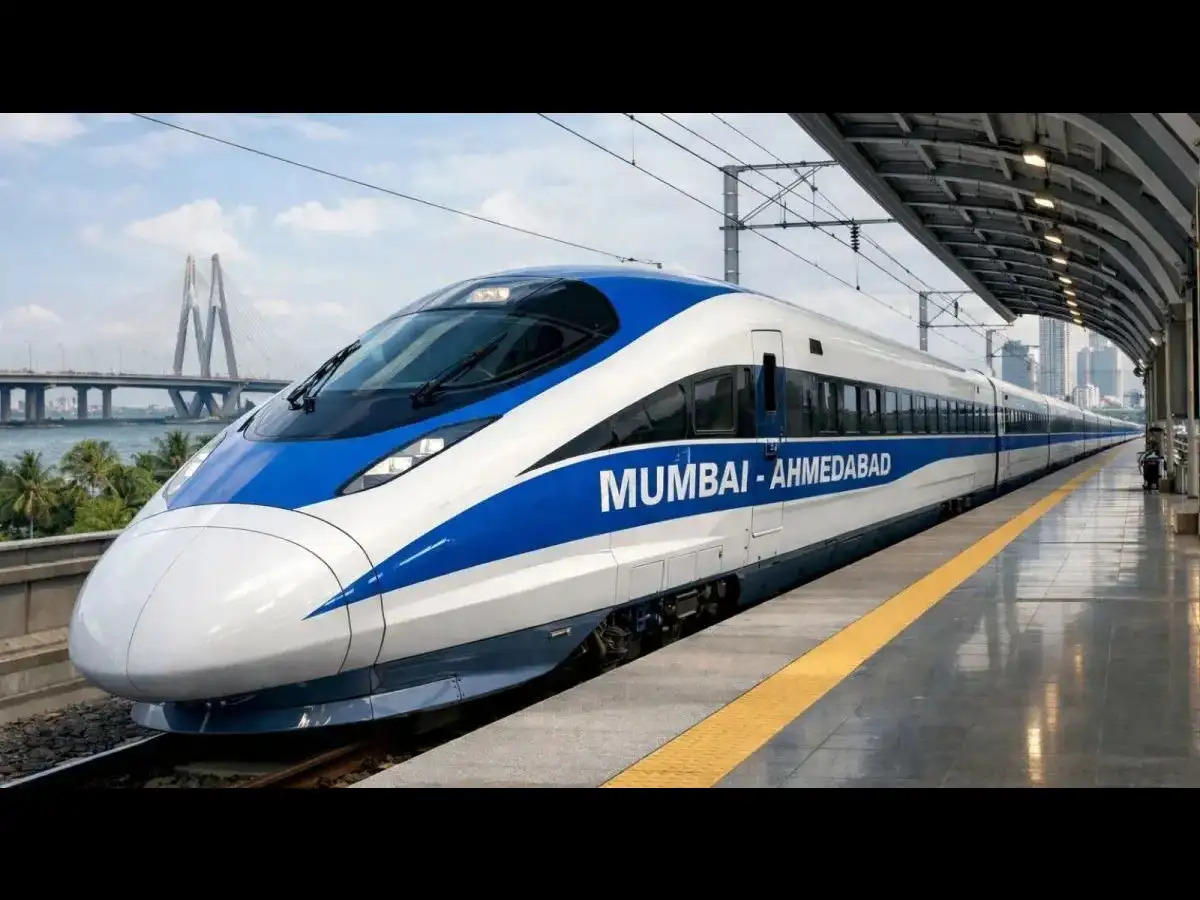
The Mumbai–Ahmedabad High-Speed Rail project has reached a critical execution phase, with official monitoring data showing physical progress at 62% in July, up from 61% a month earlier. The 508-km corridor still has 38% of its work to complete against a revised December 2029 target. With cumulative expenditure already approaching ₹91,000 crore, the latest numbers put renewed attention on construction productivity, sequencing and the project’s ability to convert spending into completed infrastructure. The Mumbai Ahmedabad bullet train project was originally scheduled for completion in August 2027. The target has since moved to December 2029, after early delays, including difficulties with land acquisition in Maharashtra. The government has said the land acquisition process gained momentum from 2022 and that all required land has now been acquired.
The latest monitoring figures also show the scale of capital already committed. The project carries an original approved cost of ₹1.08 lakh crore, while cumulative expenditure has reached about ₹90,966.9 crore. That means a substantial share of the approved project cost has already been spent while more than a third of the physical work remains. A single month of progress should not, however, be treated as a complete measure of project performance. High-speed rail construction involves several interconnected stages, including viaduct construction, tunnels, stations, track systems, electrification and specialised equipment. Progress can therefore move unevenly as different packages enter or leave construction-intensive phases. There are signs of activity across technically demanding sections. In Maharashtra, three mountain tunnel breakthroughs were achieved within five months by June, while tunnelling for the Mumbai underground section has entered another important phase. A tunnel boring machine launched from Vikhroli is being used to construct part of the 21-km underground section between the Sawli area and Bandra Kurla Complex.
For Mumbai, the significance of the Mumbai Ahmedabad bullet train extends beyond faster intercity travel. The corridor is intended to connect major economic centres and reshape travel between Maharashtra and Gujarat. Its eventual integration with Mumbai’s transport network could also influence commercial development around stations and strengthen links between employment clusters. The larger concern is execution discipline. Large infrastructure programmes carry economic costs when schedules stretch, because capital remains locked into incomplete assets while construction, financing and associated land-use decisions continue. The project has also attracted attention because its original completion timeline has already been revised.
The 2029 deadline remains achievable only if the remaining work progresses at a materially faster and more consistent rate than the latest monthly movement suggests. The coming monitoring cycles will therefore be more important than any single month’s figure, particularly as the project moves from major civil works towards systems integration and commissioning.