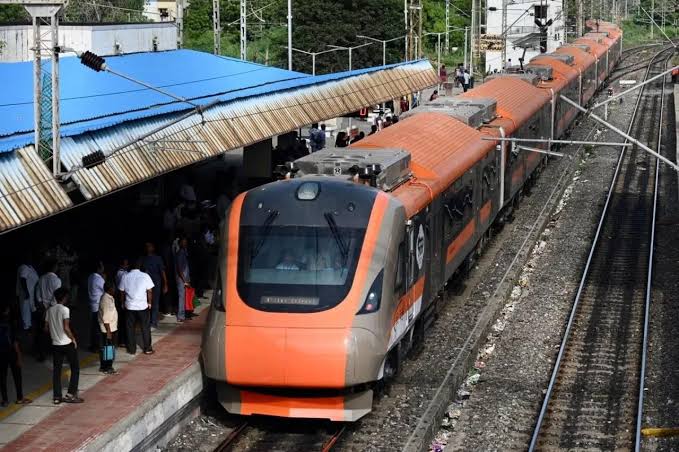
Mumbai’s suburban rail system is set for a major fleet expansion after Indian Railways assigned production of 238 twelve-car Vande Metro trainsets to its own manufacturing units. The ₹19,290-crore programme includes 2,856 coaches and 35 years of maintenance, with the first prototype now expected in 2027. The shift to domestic production could accelerate capacity creation while keeping manufacturing and long-term maintenance within the public railway system. The order has been divided among three production facilities. Integral Coach Factory in Chennai will manufacture 120 trainsets, Rail Coach Factory in Kapurthala will produce 71, while Modern Coach Factory in Raebareli will build the remaining 47. Together, the plants will be responsible for both manufacturing and maintaining the fleet over the contract period.
The decision follows difficulties with the original procurement process. Mumbai Railway Vikas Corporation had invited international bids for the fleet in 2023, but the tender received no response and was subsequently reissued. Technical issues led to repeated extensions to the bidding schedule, delaying a programme intended to substantially increase suburban rail capacity. The revised procurement route changes the delivery timetable. Under the earlier tender, the prototype was expected only around 2030, with the entire fleet due by 2034. Production through Indian Railways facilities is expected to bring the first train forward to 2027 and complete fleet deployment by 2030. For Mumbai, the significance of the Vande Metro fleet lies primarily in capacity rather than headline speed. Each twelve-car unit is designed to accommodate 3,208 passengers, including about 1,150 seated passengers. Its design also provides wider internal circulation space, an important consideration on a network where crowding is a persistent feature of daily commuting.
The trains are designed for speeds of up to 130 kmph, although operating speeds depend on the infrastructure and route constraints. The emphasis on higher-capacity rolling stock could help Mumbai handle passenger growth without relying exclusively on expensive new corridors. The economic impact extends into the railway manufacturing ecosystem. A large, long-duration order gives public production facilities greater visibility over workloads while creating sustained requirements for components, engineering, maintenance and technical skills. The 35-year maintenance component also shifts attention from simply acquiring trains to keeping them operational throughout their useful life. Urban transport experts note that fleet expansion will deliver its full value only if train availability is matched by adequate track capacity, signalling, station infrastructure and timetable integration. More rolling stock cannot by itself resolve bottlenecks elsewhere on the suburban network.
The Vande Metro fleet nevertheless represents a significant capacity intervention for Mumbai. Faster delivery could ease pressure on an overstretched commuter system and support more reliable public transport as the metropolitan region expands. The next test will be whether production stays on schedule and whether supporting infrastructure is ready when the new trains arrive.