Hyderabad Warangal Road Upgrade Targets Faster Movement
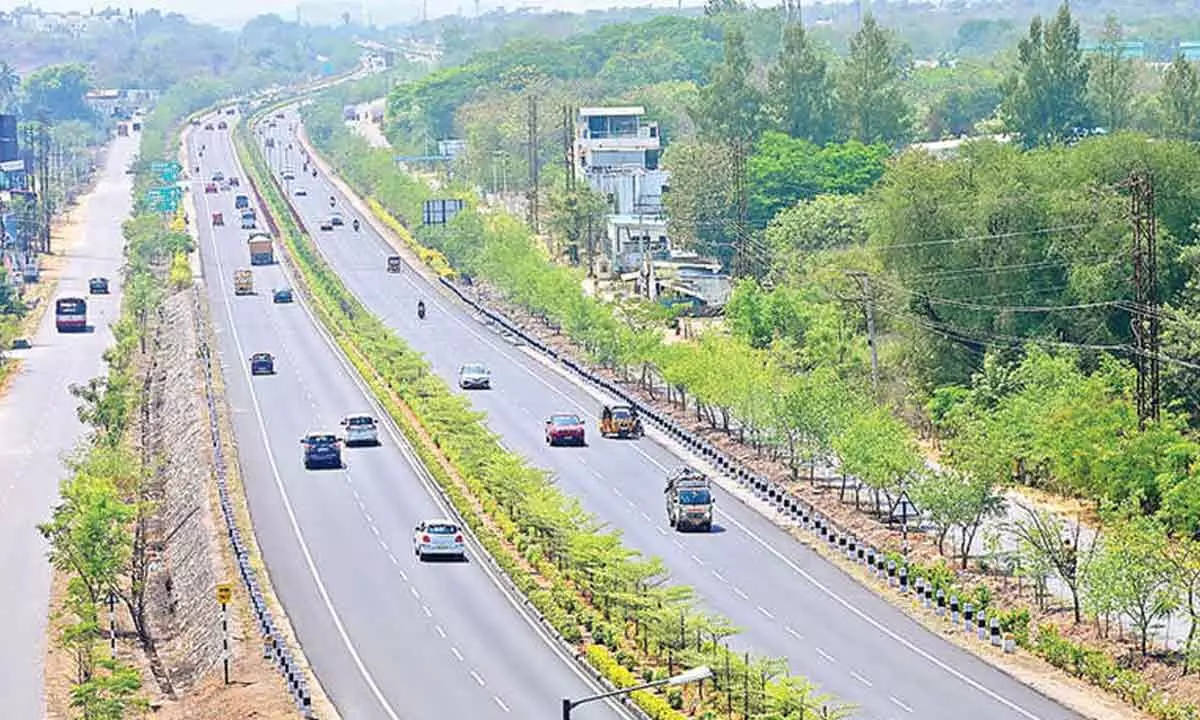
A 35.65-km section of the Hyderabad–Warangal highway has been upgraded to a six-lane divided corridor, strengthening one of Telangana’s important road links between two major urban centres. The completed expansion is expected to improve traffic movement and road safety while supporting the faster movement of people and goods across the region.
The upgraded stretch replaces the earlier road configuration with a wider divided carriageway designed to accommodate growing traffic volumes. Lane markings, central separation and other road-safety features have been incorporated as part of the expansion. The corridor carries a mix of passenger and commercial traffic, making its performance important to both commuters and businesses. Greater road capacity can help reduce bottlenecks and improve journey reliability, particularly as development continues along the Hyderabad–Warangal growth axis. For Telangana’s economy, the highway is more than a connection between two cities. Better road links can strengthen access to employment centres, markets, logistics networks and emerging development areas. Faster movement of goods can also reduce delays for businesses that depend on predictable regional transport.
However, widening a highway does not automatically resolve congestion over the long term. Traffic demand can increase as improved connectivity encourages new housing, commercial activity and industrial development along the corridor. The resulting pressure on junctions and settlements can eventually create new bottlenecks if supporting infrastructure does not keep pace. Urban planners also point to the need for safer access for people living and working near major highways. Service roads, pedestrian crossings, public transport connections and appropriate junction design become increasingly important as traffic volumes rise. Without these measures, improved vehicle movement can come at the expense of road safety and local accessibility. The environmental footprint of expanded road infrastructure is another consideration. Larger corridors can encourage outward development and increase vehicle dependence unless they are planned alongside public transport and compact, well-connected settlements. Drainage, roadside vegetation and protection from flooding should also form part of long-term corridor management.
The completed six-lane section nevertheless provides Telangana with additional road capacity at a time when movement between its major urban centres is becoming increasingly important. Its wider economic value will depend on how effectively the state manages development around the corridor and integrates road expansion with safer, lower-carbon transport options. With the upgraded stretch now available, attention is likely to shift from construction to performance. Monitoring traffic flows, accident rates, local access and development patterns will be important to determine whether the investment delivers durable mobility benefits rather than simply shifting congestion further along the route.