


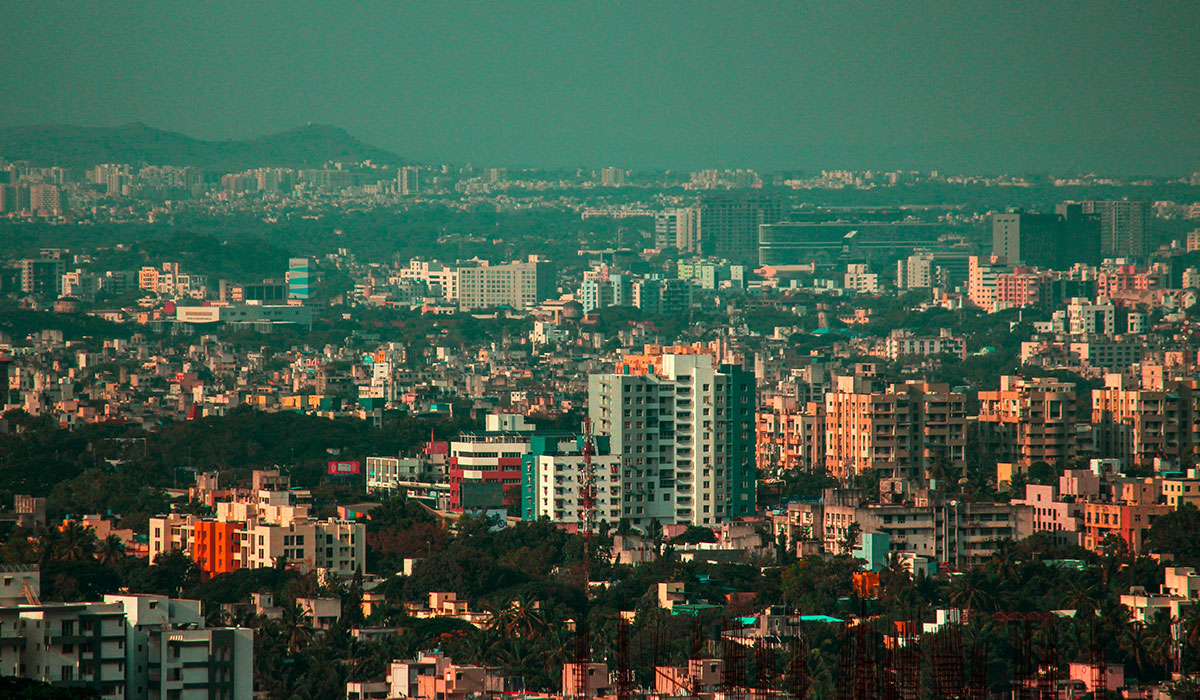
A new residential development in Pune’s Mundhwa corridor is drawing attention for what it omits as much as for what it offers. At a time when premium housing in Indian cities is often defined by vertical density and amenity stacking, a recently launched project in eastern Pune is adopting a deliberately restrained approach fewer homes, larger internal layouts, and a limited shared population. The strategy reflects a broader recalibration underway in urban luxury housing, where exclusivity is increasingly measured by space, privacy, and long-term liveability rather than headline specifications.
Located on a sizeable land parcel near established neighbourhoods such as Koregaon Park, Kalyani Nagar and Magarpatta, the project has been planned with a capped number of residential units across distinct towers. Urban planners note that such low-density configurations are becoming rare in high-growth micro-markets, where land values typically push developers towards maximum permissible floor space consumption. By resisting this pressure, the project positions itself as an alternative to congestion-led luxury. Design choices reinforce this philosophy. The absence of commercial components within the premises preserves a purely residential character, while open layouts and uninterrupted sightlines aim to improve natural light and ventilation factors increasingly linked to health outcomes in dense cities. Amenities have been curated for a smaller resident base, which urban economists say can improve maintenance quality and reduce long-term operational stress on shared infrastructure. Pricing transparency has also emerged as a distinguishing feature. Uniform rates across floors, without elevation-linked premiums, reflect a shift away from layered pricing structures that often complicate buyer decision-making. Market analysts suggest this approach may appeal to end-users seeking predictability and fairness rather than speculative upside driven by artificial differentiation.
The development is backed by a Pune-based real estate group with over a decade of operational history and a track record spanning multiple residential formats across the city and its peripheral growth zones. Across its portfolio, the group has focused on phased delivery, low leverage, and early completion factors that have gained importance as regulatory scrutiny and buyer expectations have intensified under the Real Estate Regulation framework. From an urban development perspective, the project raises wider questions about how Indian cities should grow. Mundhwa sits at the intersection of older residential pockets and newer employment hubs, making it a test case for balanced densification. Lower residential density, while limiting short-term supply, can reduce strain on roads, water systems, and public services aligning with longer-term climate resilience goals. Housing researchers point out that scarcity-led residential planning is not without risks, particularly in cities facing affordability pressures. However, when applied selectively within premium segments, it can free up higher-density development for more price-sensitive housing elsewhere, contributing indirectly to more equitable urban form.
As Pune continues to expand eastward, projects that prioritise space efficiency, transparent pricing, and community scale may influence how luxury housing is evaluated not by how much is built, but by how thoughtfully it integrates with the city. The Mundhwa development signals that, in a crowded market, restraint itself can become a differentiator.
Also Read: Hyderabad Manufacturing Boost Strengthens Electric Bus Supply
Pune Mundhwa Sees New Low Volume Housing
