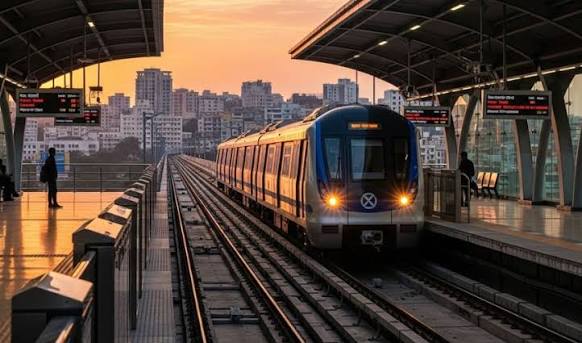
Pune: As Metro Line 3 moves towards passenger operations, authorities are working to solve a less visible challenge around Hinjawadi: how commuters will safely reach stations from large office campuses. Five major technology employers are being approached to develop dedicated foot overbridges connecting their campuses with nearby stations, potentially improving access for a workforce of more than 120,000 people across the identified companies.
The proposed foot overbridges are intended to connect office premises with stations along the Hinjawadi section of the corridor. Under the proposed arrangement, the participating companies would finance construction, while the Maharashtra Industrial Development Corporation would make the required land available for bridge supports. Two companies have already expressed interest and secured approvals for proposed connections serving office areas in Hinjawadi Phase 2. The links are planned towards MIDC Circle, Hinjawadi Circle 1 and Hinjawadi Circle 2 stations. The two campuses together account for about 55,000 employees. Discussions are also under way with three additional companies for pedestrian connections around Maan, Shree Shiv Chhatrapati Shivaji Maharaj Chowk, Hinjawadi and Hinjawadi Circle 1. Their combined workforce is estimated at around 32,000. The scale of employment around these stations makes pedestrian access an important part of the corridor’s transport planning rather than a secondary infrastructure issue.
For Pune Metro Line 3, the approach also points to a broader question about how new transit infrastructure integrates with existing private developments. A metro station can shorten a journey, but poor walking routes, difficult road crossings or exposure to fast-moving traffic can discourage people from using public transport for the first and final parts of their trip. The Hinjawadi-Shivajinagar corridor is planned to extend 23.3 km with 23 stations, connecting the major technology district with central Pune. The project is being implemented through Pune IT City Metro Rail Ltd under the Pune Metropolitan Region Development Authority. Twelve stations between Maan and Ramnagar have been completed, while work on several stations towards Shivajinagar is progressing. Urban transport specialists say station-area planning will determine how effectively Pune Metro Line 3 can reduce dependence on private vehicles. Safe footpaths, accessible crossings, lighting, universal access and links with buses and other modes will be particularly important for workers travelling outside conventional office hours.
The proposed bridges could therefore serve more than individual corporate campuses. If designed as genuinely public pedestrian infrastructure, they could strengthen the wider station network and make the metro easier to use for employees, service workers and visitors. As Line 3 approaches its operational phase, attention is shifting from construction alone to the quality of the passenger experience. The success of the corridor will ultimately depend on whether commuters can move safely and conveniently between workplaces, neighbourhoods and stations.