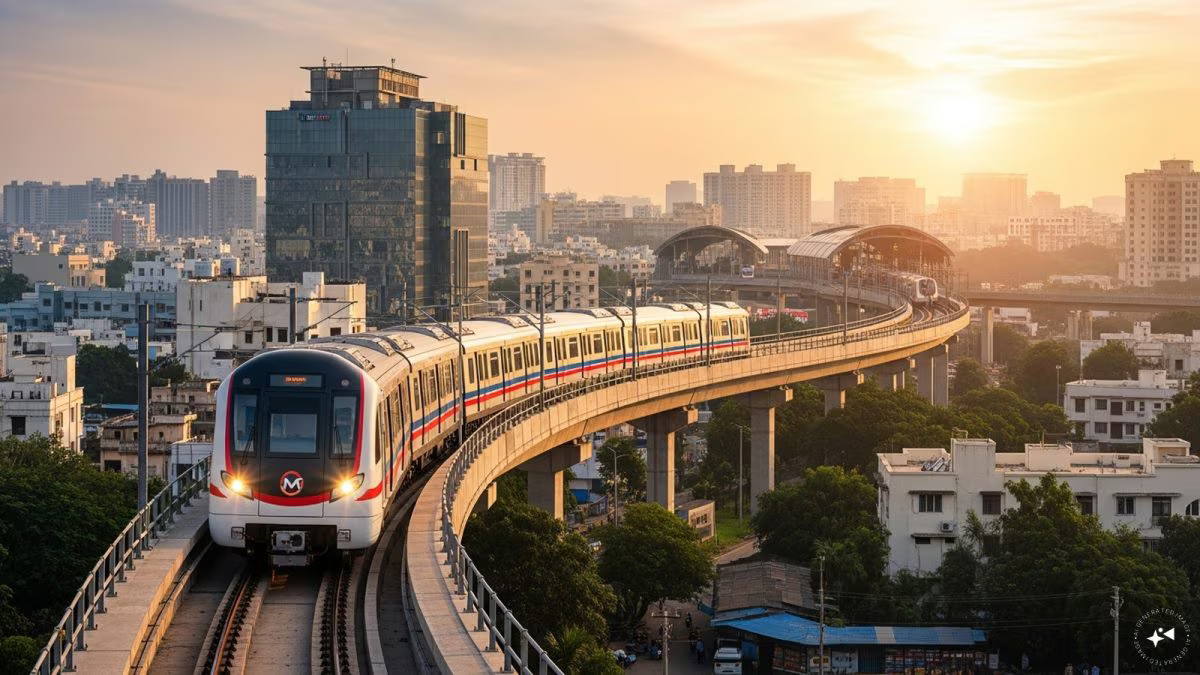
Thane’s long-strained road network may finally see meaningful relief as multiple metro corridors move closer to reshaping travel across the city and its surrounding regions. With congestion mounting along key stretches such as Ghodbunder Road, Kasarvadavali and Balkum, planners say the combined impact of three metro lines could significantly reduce commute times while encouraging a shift away from private vehicles.
At the heart of this transformation is Mumbai Metro Line 4, a major elevated corridor being developed by the regional transport authority. Stretching from Wadala in central Mumbai to Kasarvadavali in Thane, the line spans over 32 km and includes around 30 stations. A planned extension and spur connection towards Gaimukh will further expand its reach, strengthening east–west connectivity between Mumbai and Thane. Transport officials say this corridor is designed to serve some of the region’s most congested residential and commercial belts. Urban mobility experts note that Line 4’s importance lies not only in its length but also in its integration with other transport systems. “Interchanges with existing metro lines and rail networks will allow commuters to bypass road bottlenecks that have plagued this corridor for years,” an urban transport planner said. Reduced travel times could also make public transport more attractive for daily office commuters.
Complementing this is Mumbai Metro Line 5, often referred to as the Thane–Bhiwandi–Kalyan corridor. Covering nearly 25 km with 15 stations, this elevated line aims to improve connectivity between Thane and rapidly growing industrial and residential zones to the east. By linking with Line 4 and the central railway network, Line 5 is expected to ease pressure on arterial roads while supporting regional economic activity. The third pillar of Thane’s metro push is the Thane Integral Ring Metro, a city-focused loop designed specifically for internal mobility. Running entirely within municipal limits, the roughly 29 km circular route connects major localities, employment hubs and both old and new railway stations. With a mix of elevated and underground stations, the ring metro is intended to shorten cross-city travel and reduce dependence on intermediate road-based transport.
Together, these Thane metro corridors form a layered mobility network addressing both local and regional travel needs. Urban planners argue that such integrated systems are critical for building compact, low-carbon cities. By reducing reliance on private vehicles, the metro network could help cut emissions, improve air quality and make daily travel safer and more inclusive. While construction timelines and last-mile connectivity remain key challenges, experts believe the long-term gains outweigh short-term disruptions. If executed effectively, the Thane metro expansion could redefine commuting patterns, offering residents a cleaner, faster and more equitable alternative to gridlocked roads.
Thane Metros Offer Ghodbunder, Kasarvadavali And Balkum Motorists Long Awaited Traffic Relief