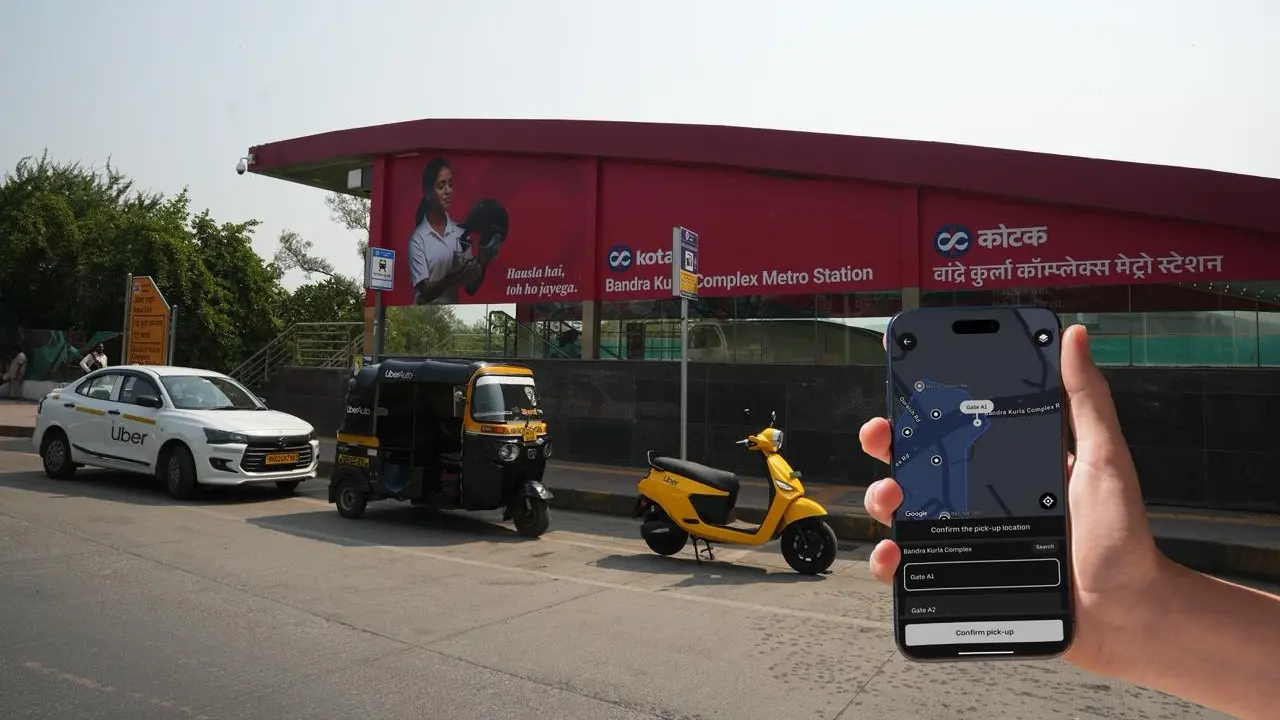
Mumbai Metro Line-3 commuters now have enhanced mobility options, thanks to a new collaboration with ride-hailing service Uber. The partnership aims to provide seamless first- and last-mile connectivity, making the daily commute smoother while reducing congestion at key metro stations. The integration aligns with broader efforts to modernise Mumbai’s transport ecosystem and improve commuter experience.
Under the agreement with Mumbai Metro Rail Corporation Ltd (MMRCL), Uber will offer Auto, Moto, and Cab services at designated pickup zones outside major Line-3 stations. Clear signage, in-app navigation, and geofenced pickups will guide passengers directly from the platforms to these points, creating a structured, time-efficient transfer system. “Our vision is not just about moving people quickly but ensuring every connection is seamless,” a senior MMRCL official said, highlighting the initiative’s role in transforming stations into comprehensive mobility hubs. The integration draws on Uber’s experience in other Indian cities, including Lucknow and the Delhi-Ghaziabad Rapid Rail, and expands its metro-ticketing and ride-hailing services already operational in Delhi, Chennai, and Mumbai Metro Line-1. A representative from Uber India emphasised that the move enables commuters to exit the metro and enter a ride within minutes, enhancing efficiency, safety, and overall convenience for daily travellers.
Metro Line-3, also known as the Aqua Line, has demonstrated strong ridership since its inauguration. Official statistics indicate that between October 1 and October 31, the line served 3,863,741 passengers, underlining consistent daily traffic and growing commuter confidence in Mumbai’s underground network. Spanning approximately 33.5 kilometres with 27 stations, the Aqua Line represents one of the largest urban transport infrastructure projects in Mumbai’s history. Industry experts note that improving first- and last-mile connectivity is critical to increasing public transport adoption and reducing private vehicle dependency. “Integrating metro systems with app-based mobility solutions is essential for creating efficient, low-carbon urban transport corridors,” a transport planner said. By facilitating smoother transfers and reducing wait times, such initiatives also contribute to lowering congestion-related emissions and support the city’s broader sustainability goals.
In addition to operational benefits, the partnership reinforces the city’s commitment to inclusive and sustainable transport. With clearly marked pickup points, commuters from diverse backgrounds, including working parents, students, and elderly passengers, can navigate the system more confidently. Officials also highlighted that these measures will help manage crowding during peak hours, further enhancing safety and comfort. As Mumbai continues to expand its metro network and integrate digital mobility solutions, the Line-3 Uber collaboration exemplifies how technology can complement large-scale urban transport infrastructure. The initiative sets a precedent for future integrations aimed at making public transport in Mumbai more connected, accessible, and environmentally responsible.
Mumbai Metro Line 3 Riders Can Now Access Uber For Seamless Commute