Mumbai High Speed Rail Reshapes Regional Connectivity
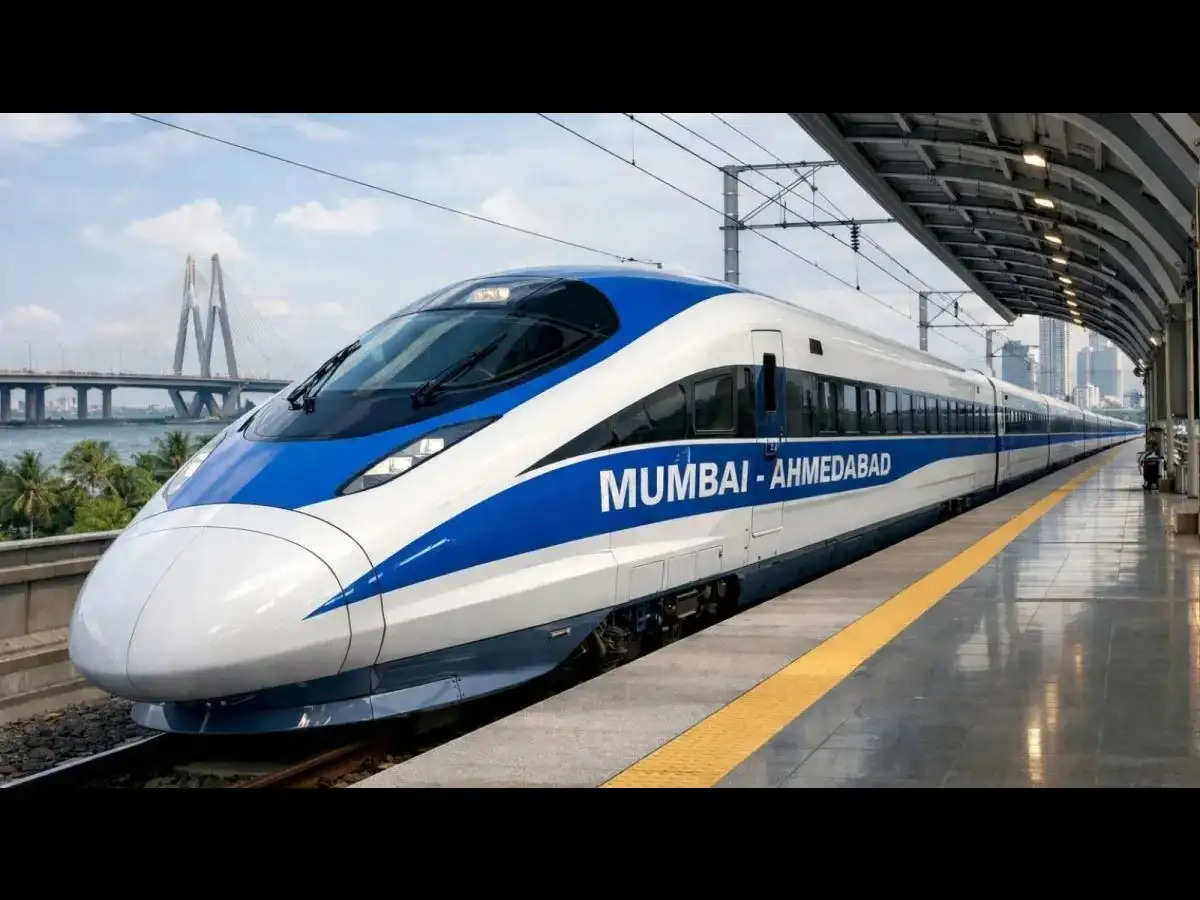
India’s Mumbai–Ahmedabad high-speed rail project has moved deeper into its construction and systems phase, with hundreds of kilometres of elevated structures now completed across the 508-km corridor. Progress on track beds and electrification is also accelerating, while the most complex works around Mumbai continue underground. The shift matters because the project is beginning to move from large-scale civil construction towards the integrated systems needed for passenger operations. The Mumbai bullet train project has recorded substantial progress on its viaduct infrastructure. Around 452–453 km of piers and roughly 356–359 km of viaduct or girder work have been completed, according to recent public project updates. Much of this progress is concentrated in Gujarat, where construction conditions are generally less complex than in Mumbai’s dense urban environment.
Track-bed construction has also advanced, reaching approximately 209 km. The corridor will use a ballastless track system designed for trains operating at speeds of up to 320 km/h. Overhead electrification work is progressing alongside it, with about 190 km of equipment masts installed. The changing construction mix is significant. As viaducts become available, the project must increasingly coordinate track, power, signalling, stations and safety systems. Industry experts say this integration stage can be more demanding than individual civil works because multiple systems must perform together before commercial operations can begin. Gujarat is expected to provide the first opportunity to demonstrate the operating model. The Surat–Bilimora section has been identified for an early passenger-service target in August 2027, subject to testing and statutory safety approvals. The full corridor remains targeted for completion towards the end of 2029.
Mumbai presents a different engineering challenge. The Mumbai bullet train project includes a substantial underground section approaching the city, including a tunnel incorporating an undersea stretch beneath Thane Creek. Construction in this area requires specialised tunnelling techniques and careful coordination with existing urban infrastructure. At Bandra Kurla Complex, the proposed high-speed rail station is being developed below ground within one of Mumbai’s major commercial districts. Such infrastructure can reshape how a high-value business centre connects with regional transport, but construction also requires close management of traffic, utilities and surrounding development. At Ahmedabad, the Sabarmati terminal is planned as a multimodal interchange connecting high-speed rail with conventional railway services and urban public transport. This integration will be important in determining whether the new line functions as a wider regional mobility network rather than a standalone premium service.
The project’s long-term urban impact will depend on more than journey speeds. Effective station access, public transport connections, land-use planning and environmental management will determine whether high-speed rail distributes economic opportunity while limiting additional dependence on private vehicles.