


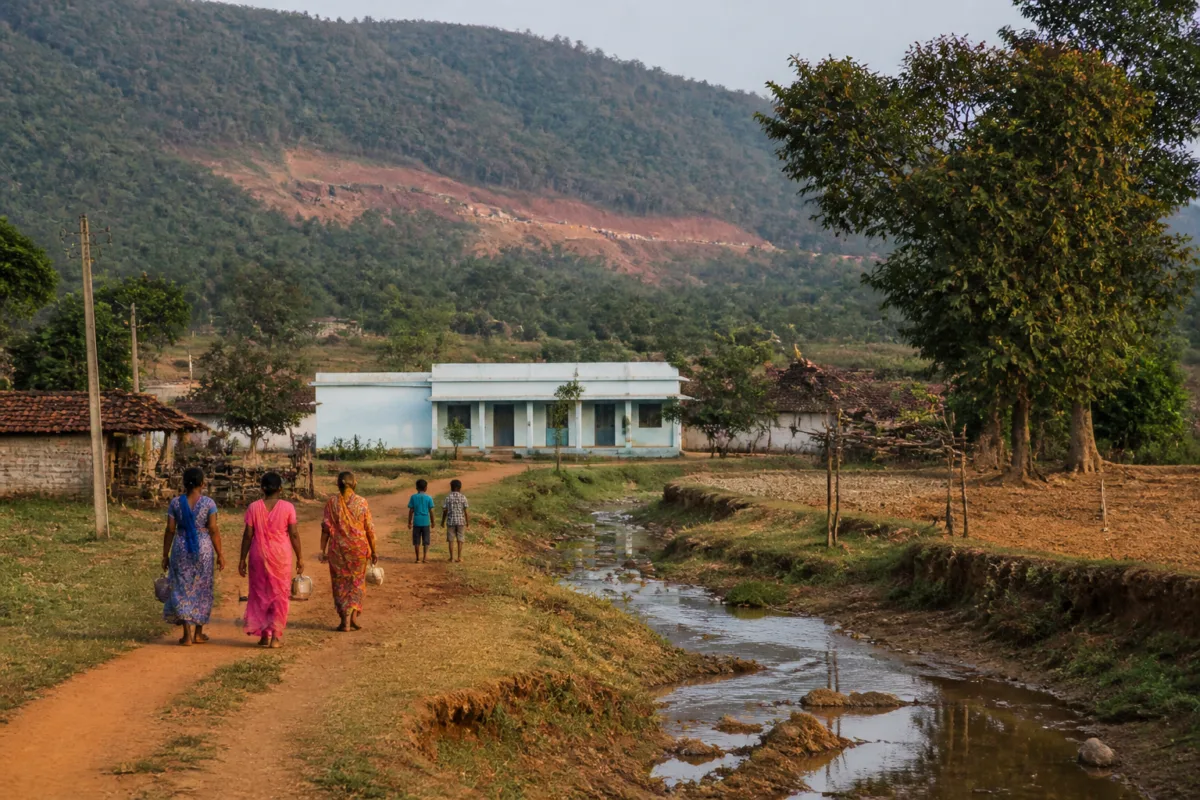
In Rollagadda and nearby villages in Telangana’s Bhadradri-Kothagudem district, the end of Maoist activity has not been followed by reliable access to basic infrastructure, according to a ground report by Siasat.com. Residents described continuing gaps in mobile connectivity, agricultural markets, irrigation, healthcare, schooling and access to forest land, while proposed coal mining has created fresh uncertainty over the area’s future.
Rollagadda is a Koya village in the forests near Gundala, about five kilometres from Gundala town. Residents told Siasat that mobile services stopped working in the village and surrounding areas after protests following the 2019 killing of Punem Linganna, a Communist Party of India (Marxist–Leninist) New Democracy leader. Section 144 was imposed in the mandal in August 2019 and was later lifted, but residents said the mobile signal did not return.
The loss of connectivity has practical consequences in villages where services increasingly depend on online access. Residents said it is difficult to stay in touch with people outside the area and use digital services. The report did not identify a current official explanation for the continuing absence of mobile coverage.
The report also found that farmers in Gundala have limited options for selling their produce. Residents said the mandal has one trader who buys farm output, while a government agricultural sub-market is not functioning. Tolam Gopi, the Gundala sarpanch and a CPI(M) member, told Siasat that farmers had no functional local markets and that the area still depended on a single trader.
Irrigation is another major gap. Gopi said the Kinnerasani river passes through the area, while smaller streams including Edumullakalawagu, Mallannawagu and Bandirevu flow seasonally. He said there were no projects on these watercourses to harvest or store water, including check dams.
The report also described limited public services. Gopi said the entire mandal had one doctor and two nurses. Residents said children in some villages travelled between five and 10 kilometres to attend school. Gundala has a Mandal Parishad Primary School, while Ekalavya schools serve some surrounding areas, but residents reported staff shortages and poor facilities.
These deficits shape how residents remember the Maoist period. Several people told Siasat that Maoist leaders helped communities negotiate with the Forest Department, settle disputes and secure access to cultivation land. Residents referred to this land as podu, or shifting cultivation, and said they had been able to clear more land and obtain cultivation pattas while Linganna was alive.
Those accounts do not establish that Maoist rule provided a lawful or sustainable alternative to public administration. They do, however, point to a continuing institutional gap: residents associate the state with restrictions and legal cases but say they do not experience a comparable presence through markets, irrigation, healthcare, communications or affordable access to essential materials.
Claims surrounding Linganna’s death remain disputed. The police position, as reported by Siasat, was that he died in an exchange of fire while carrying a self-loading rifle and facing cases including extortion and murder. His son alleged that the body showed signs of torture, and the Civil Liberties Committee filed a case alleging a fake encounter. A second post-mortem was conducted in August 2019. These allegations were not resolved in the source report.
Residents also told Siasat that a stupa built for Linganna on family land was demolished by police and has remained vandalised. The report did not provide an official response from the police on the alleged demolition.
The most consequential development now concerns coal. The Singareni Collieries Company Limited conducted exploratory surveys around Rollagadda in 2019, according to the report. Villagers said coal was found and that Linganna had opposed mining. Documents reviewed by Siasat referred to proposed open-cast mines at Kachapally and Mamakannu, as well as roads sanctioned for the projects.
For communities that have faced restrictions over forest cultivation, the prospect of open-cast mining raises a question of unequal land-use enforcement. Residents quoted in the report questioned why clearing forest for cultivation was treated as an environmental offence while a coal mine could be proposed in the same landscape. The report does not establish the current approval status, construction schedule or environmental conditions of the proposed mines.
A resident, Sanjay, told Siasat that mining could be either beneficial or harmful, but said it was difficult to trust the government without knowing what would happen. That uncertainty is central to the area’s development challenge. New roads and mining-related investment could improve physical access and economic activity, but the source material does not establish whether local communities have received rehabilitation, livelihood, environmental or service-delivery assurances.
The evidence from Rollagadda and Gundala suggests that the end of insurgency alone has not resolved the region’s governance deficit. A durable transition would require more than security operations. It would also require functioning markets, dependable communications, small-scale water infrastructure, accessible healthcare, better schools and transparent decisions on forest rights and coal development. Without those foundations, state authority may be visible through policing and extraction while remaining weak in the everyday systems that make remote settlements viable.

