


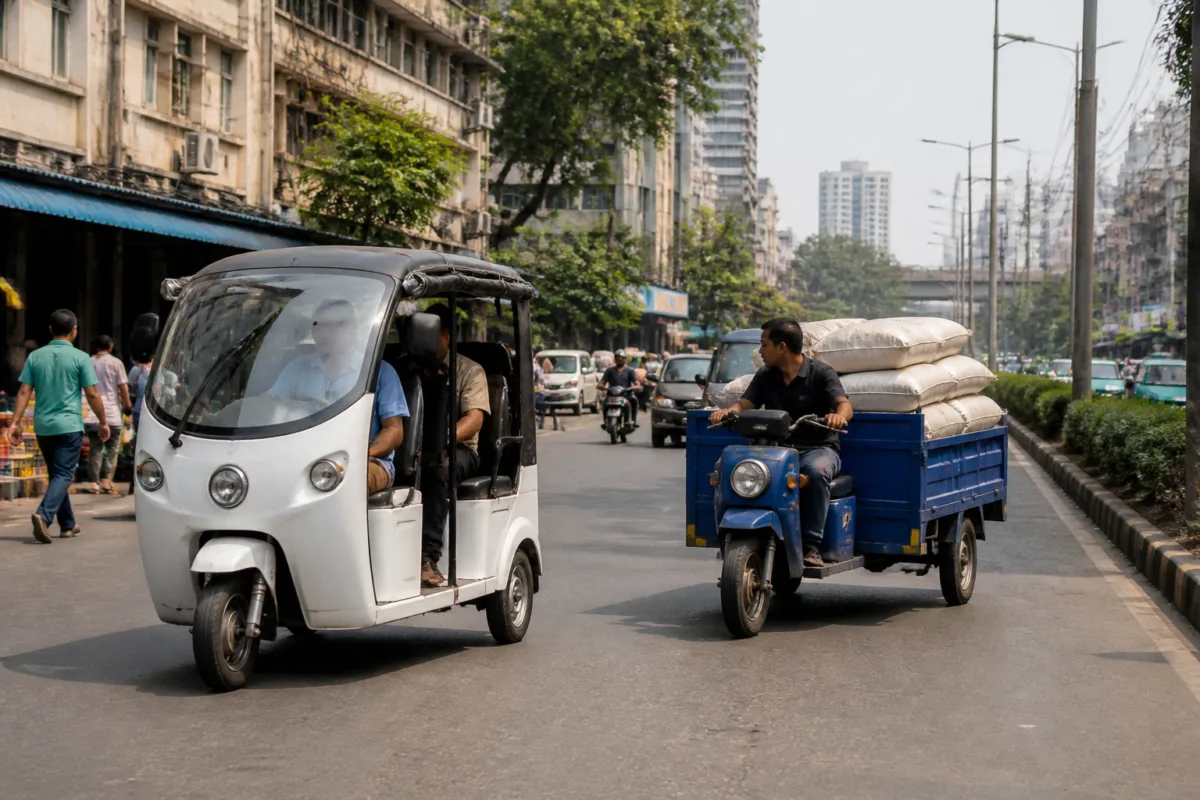
Mahindra Last Mile Mobility Ltd is considering a public listing in about 18 months to support expansion into new electric vehicle segments and increase production capacity, according to chairman Rajesh Jejurikar. The company has not finalised an IPO date, and the timeline remains broad.
The company is evaluating electric three- and four-wheelers for both passenger and cargo applications while retaining its focus on last-mile transportation within cities rather than intercity travel. Jejurikar told PTI that the company would not disclose specific products at this stage.
The proposed expansion is significant for urban mobility because electric three-wheelers serve short-distance passenger travel, deliveries and other forms of local distribution. Jejurikar said passenger electric three-wheelers had so far driven demand, but the company expected cargo vehicles to gain momentum.
Mahindra Last Mile Mobility already has a valuation of around USD 1 billion, according to Jejurikar. He said two investors were on board and a third was expected shortly. The company intends to use any IPO-related funds mainly for growth in new segments and products, as well as capacity expansion, while Mahindra would continue participating in the business.
The company is also examining possible overseas markets, including Southeast Asia and Africa, along with some Western markets. Jejurikar said expansion would require market-by-market assessments covering product suitability, business potential and electric-vehicle penetration. Distribution, spare-parts and service networks would also need to be established before a wider international rollout.
The Earthshot Prize recognition received by the company is expected to assist with potential global partnerships. However, Jejurikar said the one million pounds received through the prize would not be used for business expansion. Instead, the amount would support women seeking to become drivers and promote women’s empowerment.
The company’s growth plans come as vehicle-price incentives under the FAME and PM E-DRIVE schemes are no longer available for the category, according to Jejurikar. He said the production-linked incentive scheme was the remaining form of support. The company expects higher volumes to improve material-cost optimisation, while customers’ recognition of electric vehicles’ operating economics could create some room for pricing.
For cities, the immediate significance lies less in the proposed listing than in the potential expansion of electric passenger and cargo fleets. More cargo-focused products could support urban deliveries, but their impact would depend on affordability, charging access, vehicle uptime and the availability of maintenance and spare-parts networks. The company has not yet provided product specifications, capacity targets or a detailed implementation schedule.

