


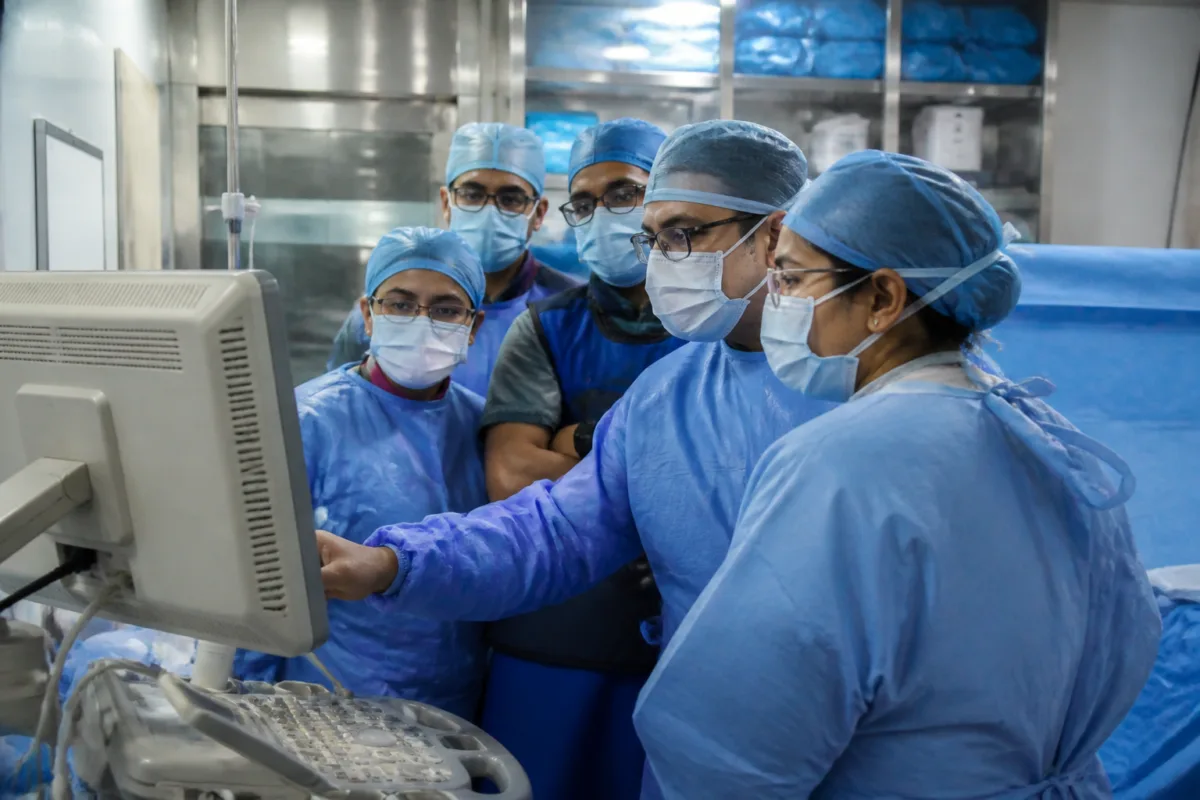
AIIMS Delhi doctors have performed what the institute described as India’s first fetal surgery for meningomyelocele, a serious congenital spinal defect, on a 25-week-old fetus. The medical team plans to monitor the mother and fetus before attempting delivery at around 32 weeks, with the procedure expected to reduce the risk of hydrocephalus and the future need for a shunt by up to 50%, according to doctors quoted by Jagran.
The procedure was discussed at a press conference by AIIMS director and endocrinology and metabolism specialist Professor Nikhil Tandon, who said the operation was the result of coordination across several medical specialties. The doctors stressed that the surgery is not a complete cure and that its full outcome will only become clear years after birth, when the child’s mobility, leg strength and ability to control urination and bowel movements can be assessed.
Professor P. Sharad Chandra of the neurosurgery department said similar procedures had been performed abroad since 1997, with an estimated 3,500 to 5,000 operations carried out internationally. The AIIMS team said this was the first such fetal surgery performed in India.
The mother was referred to AIIMS from Lady Hardinge Medical College at 22 weeks of pregnancy. The medical team spent three weeks on preparation, simulation and counselling before operating. It also received guidance from Brazilian fetal surgery specialist Professor Sergio from São Paulo, according to the report.
During the operation, doctors opened the uterus in three layers, repaired the defect and closed it again. Amniotic fluid lost during the procedure was replaced with warmed fluid that was continuously infused. About 300 millilitres of fluid was placed back into the uterus before closure. Ultrasound was used throughout the procedure to monitor the placenta and umbilical cord.
The anaesthesia team monitored the mother’s and fetus’s blood pressure and oxygen levels. Plastic surgeons repaired the neural tissue and used a skin flap from the right hip region to close the wound without tension. An MRI had identified a grade-three herniation, according to AIIMS radiology specialist Dr Smita Manchanda.
The next phase will involve continued monitoring of fetal development, the umbilical cord, the placenta and the mother’s health. The planned delivery at approximately 32 weeks will be assessed according to the condition of both the mother and fetus.
The case has also drawn attention to the wider burden of neural tube defects. Dr Deepak Gupta, who led the surgical team, said that between 20,000 and 30,000 children are born in India every year with open neural tube defects. Genetics specialist Dr Neerja Gupta emphasised the importance of taking folic acid before conception, while the team said folate fortification of food could prevent about 50% of cases. The figures and prevention estimate were reported as statements by the AIIMS doctors.

