


A mobile phone snatching case in Delhi’s Bhajanpura area shows how a street crime can quickly become a coordinated attack on a victim’s telecom identity, banking access and digital payments. According to a report by Live Hindustan – NCR, a tax practitioner whose unlocked phone was snatched allegedly lost ₹85,576 after the stolen device was used alongside SIM reactivation, an alteration to the registered alternate number and call forwarding.
The case is important not only because money was taken from two credit facilities. It demonstrates how much personal and financial access is concentrated in a single handset and the mobile number connected to it. Once that chain is disrupted, blocking the SIM alone may not be enough to prevent further misuse, particularly when the stolen phone is unlocked and the attacker is able to interfere with the number’s service controls.
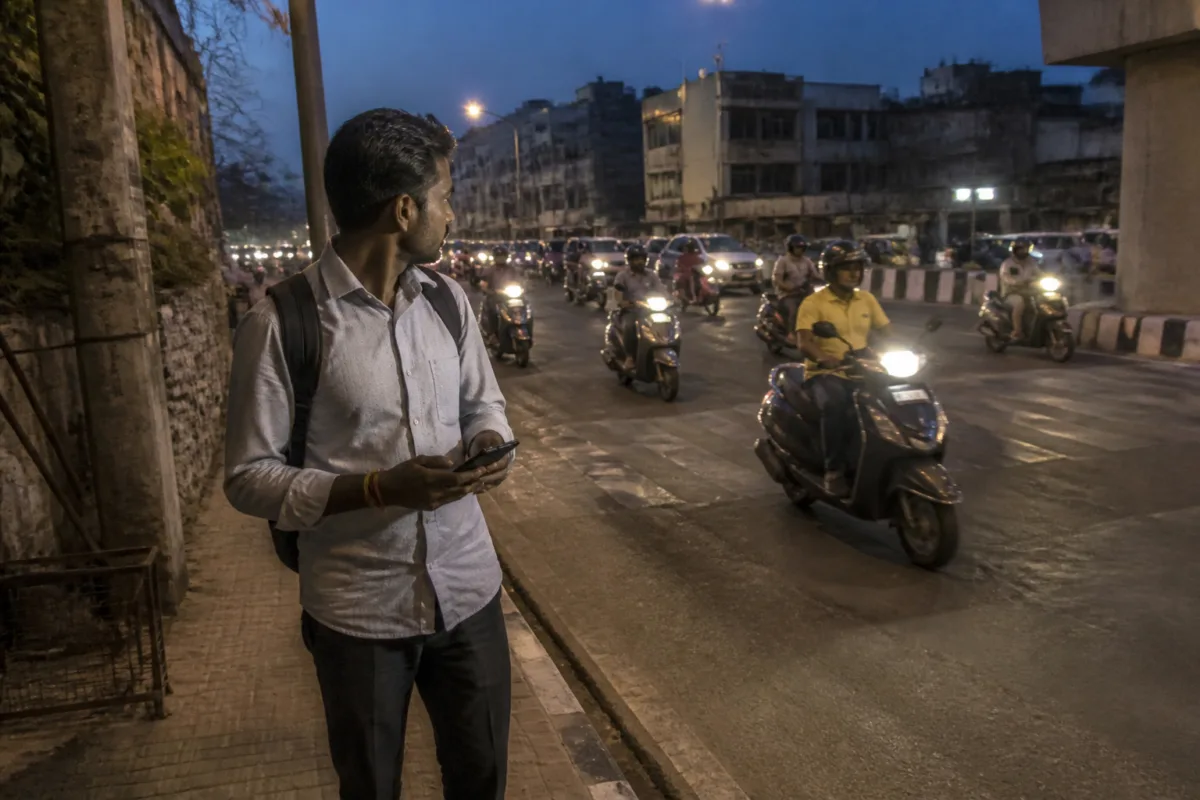
The incident reportedly took place at around 10.30 pm on 1 November near Morol Hospital at the main intersection of Y Yamuna Vihar’s C-Block. Sakib Suhail, a 30-year-old resident of Dilshad Colony and a tax practitioner, was returning from a function with his uncle Mohammed Ubaid and cousin Mohammed Salik. He was using his unlocked phone to book a cab when two men on a scooter allegedly snatched it and escaped towards Khajuri Chowk.
A police control room call was made and a snatching case was registered, according to the report. The immediate response by the victim was to have his mobile number and SIM blocked because the phone had been taken while unlocked. However, the report says the SIM was later activated again. After Suhail had it blocked a second time, it was allegedly reactivated once more.
The reported sequence raises a critical operational issue: the difference between requesting a service to be blocked and ensuring that the underlying customer record, authentication process and linked recovery channels remain secure. In this case, the alleged offenders also changed the alternate number associated with the victim’s number in the telecom company’s records. The report says this made it difficult for him to shut down his own number for a period of time.
That detail is central to understanding the urban risk exposed by the incident. A mobile number is no longer only a communications service. It can function as a recovery channel for banks, cards, digital wallets and other online accounts. An alternate number linked to the telecom or financial record can influence how a customer is contacted or verified. When control over those channels is lost, the victim may be forced to deal with several institutions at once, each with different procedures and response times.
The report further says that the alleged offenders used call forwarding to divert calls and one-time passwords arriving on Suhail’s number to another mobile number. Before the victim could complete the required legal and administrative processes, ₹66,112 was allegedly taken from one credit card and ₹19,464 from another digital credit card. The total reported loss was ₹85,576 across five transactions.
The case therefore involved several linked layers rather than a single act of theft. The first layer was the physical snatching of the phone. The second was the continued use or reactivation of the connected SIM. The third was the alleged modification of the registered alternate number. The fourth was call forwarding, which could redirect communications and OTPs. The final layer was the use of those channels to access credit facilities and remove money.
The available report does not establish how the SIM was reactivated, how the alternate number was changed or whether the telecom and financial institutions followed their standard procedures in the case. It also does not provide the police investigation’s findings on the identity of the alleged offenders. Those details matter because responsibility in such incidents may extend across multiple systems, while the immediate burden of coordination falls on the victim.
For cities, this is a growing form of risk created at the intersection of street-level crime and digital infrastructure. Delhi’s roads, crossings and public spaces are where phone snatching occurs, but the financial consequences are mediated through telecom networks, bank systems, card issuers and digital-payment platforms. The crime begins in a public place and continues through institutional systems that are mostly invisible to the user.
That makes prevention more complicated than advising people not to carry expensive phones. The reported incident involved an unlocked device being used in a public location, but the subsequent loss depended on the links between the handset, the SIM, the registered contact details, call settings, card accounts and digital-payment access. Each link may appear manageable in isolation. Together, they create a rapid escalation pathway after a theft.
The safety measures cited in the report reflect this layered threat. Users are advised to enable a SIM lock so that a PIN is required when the SIM is inserted into another phone. Theft-detection lock features can automatically secure a device when a sudden snatching movement is detected. Biometric locks on telecom service applications, including apps used to manage SIM settings, can add another barrier to unauthorised changes.
The report also advises victims to contact the 1930 cybercrime helpline and use the relevant government portal to block the phone’s IMEI after an incident. It says victims should not stop after asking the telecom operator to block the SIM. They should also contact banks and card issuers immediately to block cards and UPI access. These steps are presented as protective guidance in the report, not as evidence that every stolen-phone case will follow the same sequence.
The distinction is significant. A SIM block addresses the mobile connection, but it may not automatically block a bank card, a credit facility, a UPI account, an application session or a device already authorised by an account. Similarly, changing a password may not by itself cancel call forwarding or update every recovery channel. The reported case illustrates why the response needs to cover the entire account ecosystem rather than only the stolen object.
The recommendations also point to a governance challenge. Citizens interact with separate institutions for telecom services, banking, credit cards, digital payments, cybercrime reporting and police complaints. A victim may have to make several calls, submit separate requests and provide different forms of identification while an attacker attempts to exploit the time between the theft and the completion of those processes.
The report’s advice to keep a family member’s number as the alternate contact for banks and telecom accounts is intended to reduce the risk that a stolen phone becomes the only route for recovery or confirmation. Its other recommendations include hiding OTP previews on the lock screen, avoiding the use of unlocked phones near the road and standing towards the inner side of the pavement while booking a cab or making a call.
These measures place an important part of the security burden on individual behaviour. The Bhajanpura case, however, also shows that user precautions operate within systems designed and administered by telecom companies, banks and payment providers. The reported reactivation of a blocked SIM and alteration of an alternate number are not merely phone-use issues; they concern the integrity of customer records and the safeguards around account recovery.
The evidence supplied in the report is limited to one reported case and does not establish the frequency of similar incidents across Delhi or elsewhere. It does not provide comparative data on mobile snatching, digital-payment fraud after phone theft, successful SIM reactivations or the time taken to block accounts. Those figures would be necessary to determine whether the Bhajanpura incident represents a wider measurable trend or an especially complex case.
What the case does establish is the speed with which a physical theft can cross institutional boundaries. The victim was using the phone in a public space when it was snatched, but the reported financial loss followed through telecom records, call settings and credit accounts. The urban safety question is therefore no longer confined to whether a person can keep hold of a handset on a street. It also concerns whether the systems attached to that handset can be rapidly isolated when control is lost.
The next developments that deserve attention are the police investigation into the snatching, the explanation for the reported SIM reactivations and alternate-number change, and the response of the relevant telecom and financial institutions. Until those details are established, the case is best understood as a warning about the combined exposure created by an unlocked phone, a connected mobile number and multiple financial services tied to the same digital identity.

