


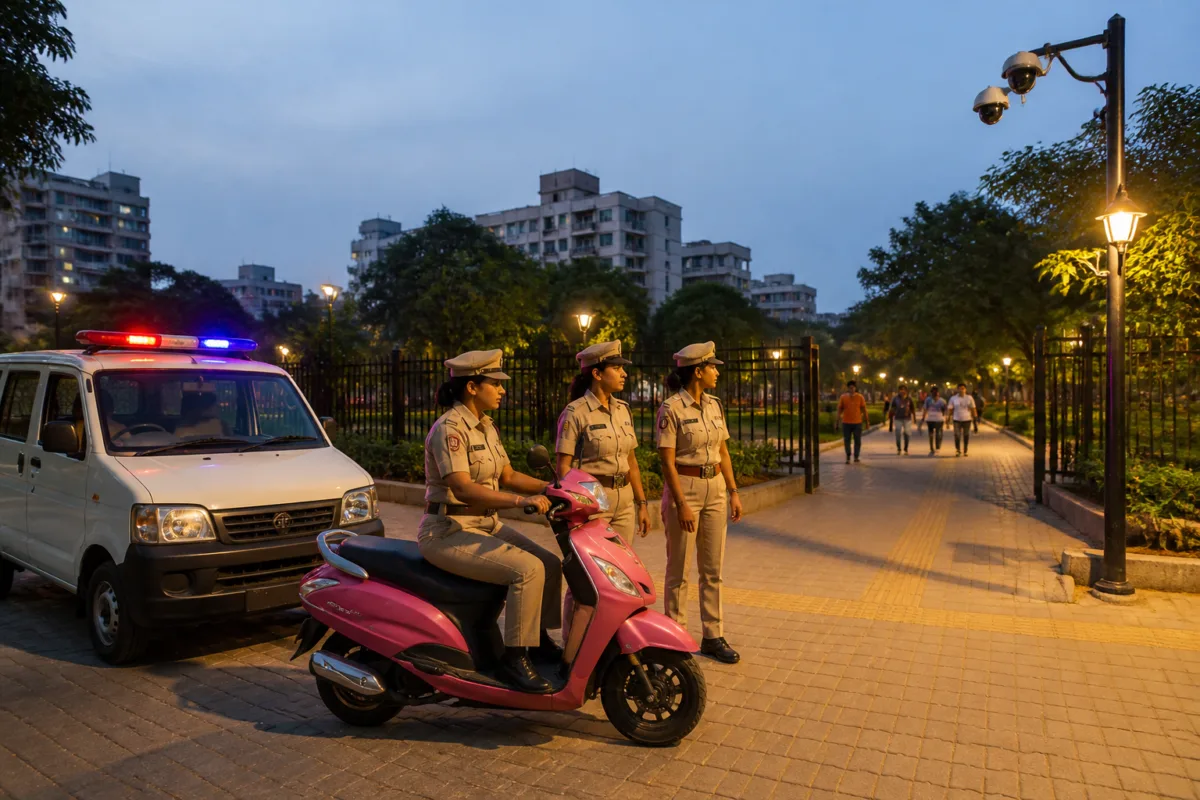
Delhi Police has expanded CCTV coverage, patrols, women’s help desks and fast-response measures under a citywide women’s safety action plan, with the average emergency response time reduced from 11 minutes 53 seconds to eight minutes two seconds, according to a progress report cited by Jagran.
The measures cover parks, educational institutions, working women’s hostels, public transport centres and other locations identified as vulnerable. The action plan was prepared after Union Home and Cooperation Minister Amit Shah directed Delhi Police on October 24 to draw up a three-month plan to strengthen women’s safety.
Delhi Police has completed safety audits of 1,635 parks. The audits examined measures including boundary walls, fencing and lighting. More than 6,000 CCTV cameras have been installed in parks, while 19,822 dark spots across the capital have been identified for CCTV coverage. The police have set a target of completing fencing and boundary wall work in all parks by January 26, 2027.
The force has also reported completing the installation of gates and initiating regular patrols in all 503 large parks covered by the programme. Police control room vans are being positioned outside parks, while 178 pink scooters are conducting patrols for an average of 7.4 hours a day. In addition, 35 all-women PCR vans have been deployed across the city.
Women’s access to police assistance has been expanded through 125 pink booths, which receive an average of 308 women complainants every day. Women’s help desks are operating around the clock at the Anti-Human Trafficking Units in every district and at police stations serving the airport, railway stations and metro stations. Women police personnel are also maintaining regular contact with girls’ schools, colleges and working women’s hostels.
The report said these officers and other police personnel conduct around 3,514 weekly visits, including 1,869 by beat staff and 882 by station house officers. Joint patrolling by local police, traffic police and PCR units has also been increased. Under the “Shishtachar” campaign, Delhi Police conducted 17,387 drives and took action against 1,24,010 people.
The force said 22,662 awareness programmes have reached about 15.9 lakh citizens. Around 5.7 lakh people received self-defence training and 3.4 lakh participated in child-safety initiatives. Women account for 17.3% of Delhi Police personnel, with the force targeting a 25% share by 2030.
The plan also includes measures aimed at speeding up justice. Twenty-five special courts dealing with crimes against women are currently active, while 37 more are being established. The process of appointing special public prosecutors, including experienced women lawyers for sensitive cases, has begun.
Between January and October 31, 1,225 rape and Protection of Children from Sexual Offences cases were registered, the report said. Chargesheets had been filed in 81% of these cases. The rate of chargesheets filed within two months was 94%, compared with 99% in 2025. In cases involving unidentified accused persons, the average time from filing the first information report to filing the chargesheet was 59 days.
The next major infrastructure-related deadline under the plan is January 26, 2027, when Delhi Police has targeted completion of fencing and boundary wall work across the city’s parks.

