


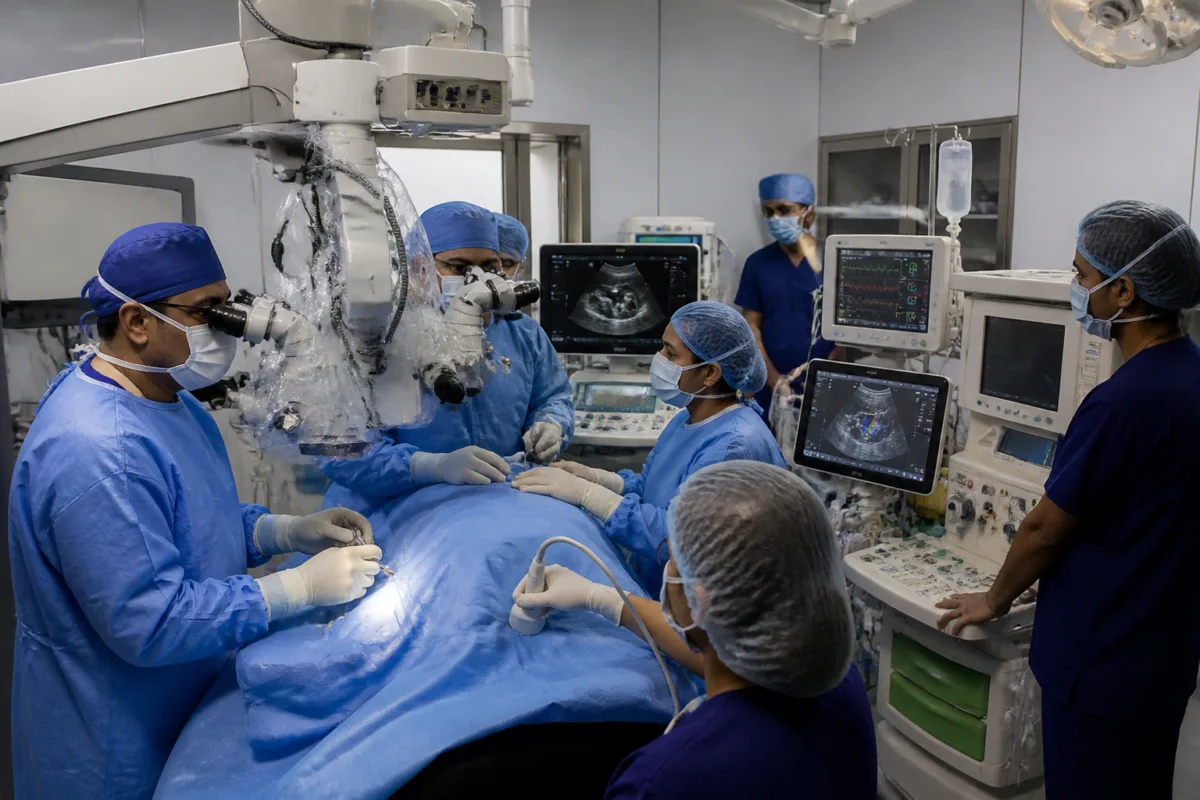
AIIMS Delhi doctors have performed India’s first reported open fetal spinal cord surgery, operating on a 25-week-old foetus with myelomeningocele, a serious congenital defect in which part of the spinal cord and its protective membranes protrude through an opening in the spine.
The six-hour procedure was carried out on 12 November at the Neurosciences Centre, according to AIIMS. More than 30 doctors, nurses and other healthcare workers from multiple specialties were involved in the operation, which aimed to limit continuing damage to exposed nerve tissue before birth.
Myelomeningocele can cause paralysis of the legs, difficulty in movement and hydrocephalus, a condition in which excess fluid accumulates in the brain. The usual treatment is surgery after birth, but nerve damage may already have occurred by then. AIIMS said the fetal procedure was intended to reduce that ongoing exposure and improve some outcomes after delivery.
The operation was led by Professor Deepak Gupta of the neurosurgery department. Professor Neena Malhotra and Professor K. Aparna Sharma managed maternal-fetal medicine and obstetric care. Anaesthesia responsibilities were handled by teams led by Professor Vimi Revery, Professor Rashmi Ramachandra, Professor Mihir Prakash Pandia and Professor Gyanendra Pal Singh.
Specialists from radiodiagnosis, plastic surgery, paediatrics, obstetrics and gynaecology, along with nursing staff, also participated. The preparation took more than five weeks and included detailed fetal examinations, ultrasound and other imaging, counselling for the mother about the illness and surgical risks, anaesthesia planning and practice sessions.
AIIMS said the surgery was conducted using high-capacity microscopy and continuous ultrasound guidance. The institution said the treatment was provided free of cost under the central government’s Janani Shishu Suraksha Karyakram scheme. The mother and foetus will continue to be monitored throughout the pregnancy, delivery and the newborn period.
The procedure is not a complete cure for myelomeningocele. AIIMS said the child will require continued specialist follow-up. The international Management of Myelomeningocele Study, cited in the report, found that 40% of children who underwent fetal surgery required a shunt to drain excess brain fluid by 12 months of age, compared with 82% of those who had surgery after birth. The study also reported some improved motor outcomes and a lower incidence of Chiari II-related displacement of the lower part of the brain.
However, fetal surgery carries risks, including premature delivery and complications linked to the surgical scar on the uterus. For that reason, the procedure is generally reserved for selected cases at specialist centres with the required maternal-fetal, neurosurgical, anaesthesia, imaging and neonatal capabilities.
The case also highlights the importance of prevention and early monitoring. The neural tube develops and closes by about 28 days after conception, often before a pregnancy is detected. Doctors therefore advise folic acid intake before conception, appropriate folate fortification of food and stronger monitoring of data related to neural tube defects. AIIMS will continue follow-up of the mother and child through delivery and the postnatal period.

