


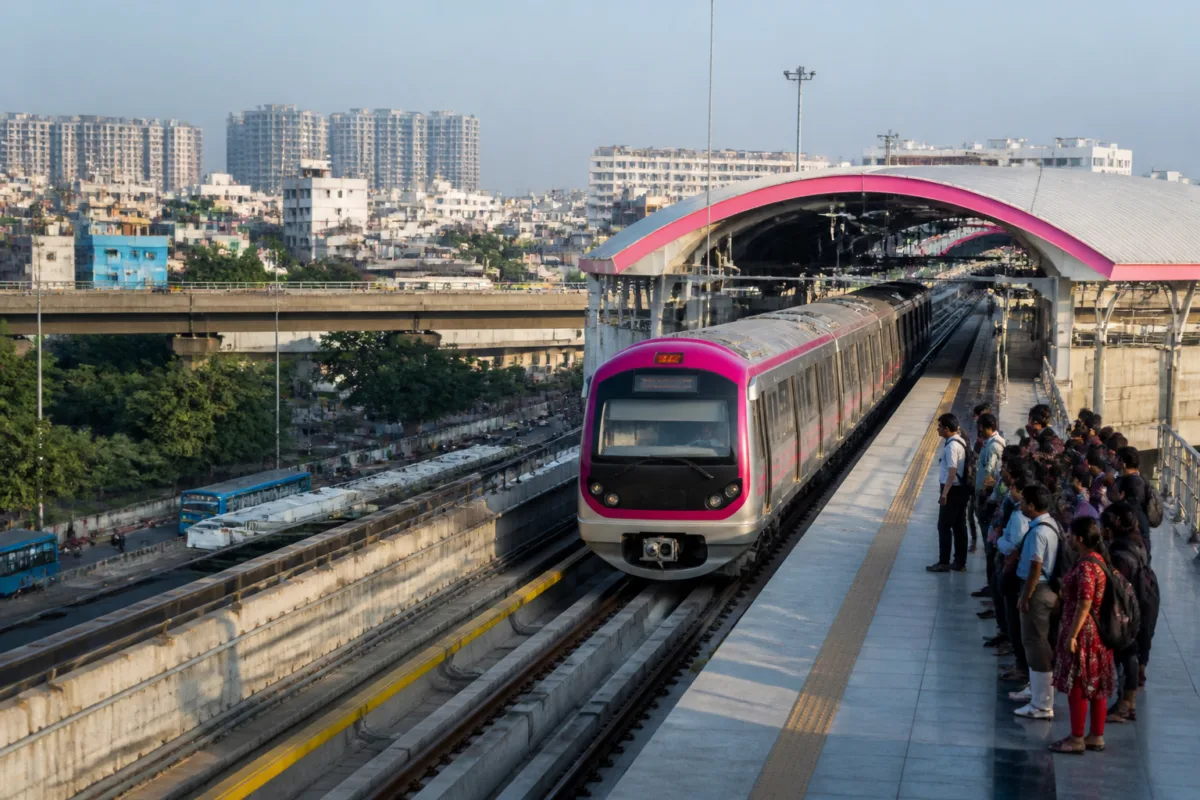
Bengaluru’s Metro network has crossed the 100-km mark after Prime Minister Narendra Modi inaugurated a 7.5-km elevated stretch of the Pink Line, taking Namma Metro’s operational network to 103 km. Commercial services on the six-station section between Kalena Agrahara and SG Palya are scheduled to begin on November 14, with fares ranging from Rs 10 to Rs 30.
The expansion makes Bengaluru the third city in India to cross the 100-km operational Metro network threshold, after Delhi-NCR and Mumbai, according to the details shared at the inauguration. Delhi-NCR has the country’s largest operational network at 416 km, while Mumbai’s network stands at 101 km.
The newly opened elevated section is part of the 21-km Pink Line, which will connect Kalena Agrahara in south Bengaluru to Nagawara in the north. The remaining underground section between Dairy Circle and Nagawara is expected to open next year, completing the corridor’s planned connection across the city.
Bangalore Metro Rail Corporation Ltd (BMRCL) plans to operate five trainsets on the new stretch, with one additional train kept on standby. Trains will initially run at eight-minute intervals during peak hours. The operational section includes six stations and is intended to improve access along Bannerghatta Road, while connecting commuters to the Electronics City corridor through the Yellow Line and to the central business district.
A key feature of the corridor is the Jayadeva interchange station, a six-level structure integrating the Pink and Yellow lines with a double-decker road. At 38 metres, it is among the tallest Metro stations in the country. The interchange is expected to become Bengaluru’s third major Metro transfer point after Majestic and RV Road.
The station’s design and engineering arrangements were explained to the Prime Minister by Karnataka Chief Minister D K Shivakumar and Greater Bengaluru Development Minister Krishna Byre Gowda. The interchange is positioned to serve passengers travelling between Bannerghatta Road, Electronics City and central Bengaluru, while allowing transfers between the two Metro lines.
Modi inaugurated the elevated stretch after flagging off the inaugural train from SG Palya near Dairy Circle. He later travelled to the Bilekahalli-IIMB station with Shivakumar, Governor Sudha Yadav and other dignitaries. The Prime Minister used a National Common Mobility Card for the journey and was briefed on the Metro network, ongoing projects and passenger information systems.
The briefing included real-time BMTC bus arrival updates near Metro stations, a feature intended to help passengers plan onward journeys after completing a Metro trip. The new service therefore forms part of a wider effort to link Metro travel with bus-based public transport.
The elevated stretch has taken several years to complete. It was sanctioned 12 years ago and construction began in 2017, with the section taking nine years to reach inauguration. The opening comes as Bengaluru continues to expand its rail-based public transport network to serve major employment and residential corridors.
At the event, Modi said the Centre had prioritised infrastructure development in Bengaluru because of the city’s role as an engine of economic growth and innovation. He also virtually flagged off the Bengaluru-Mangaluru-Madgaon Vande Bharat Express and referred to other infrastructure and energy projects in Karnataka.
BMRCL’s immediate next step is to begin commercial operations on the new Pink Line stretch, with the initial service plan providing peak-hour trains at eight-minute intervals and fares between Rs 10 and Rs 30.

