


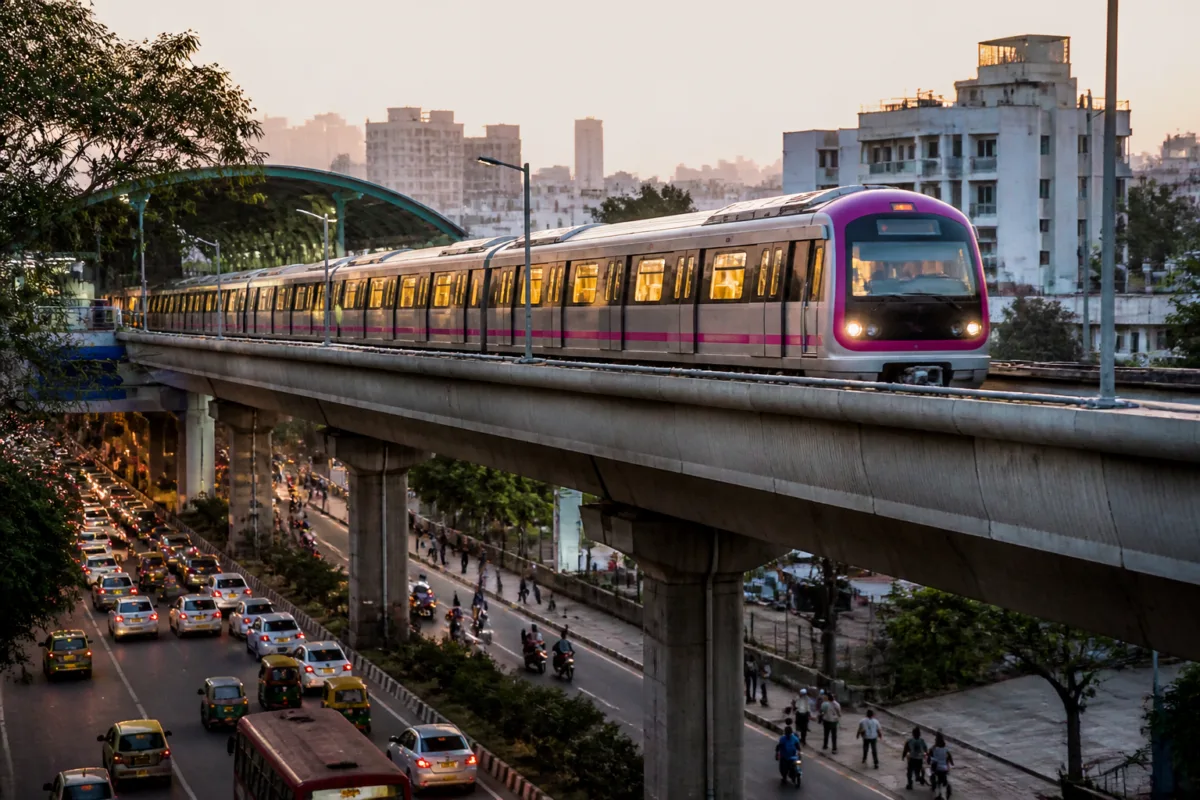
The Bengaluru Metro Pink Line has begun passenger operations on its 7.5-kilometre elevated section between Suddagunte Palya and Kalena Agrahara, giving commuters access to six new stations and a public transport alternative on a congested part of the city.
The section opened for train services after an inauguration attended by Karnataka Chief Minister D.K. Shivakumar and other dignitaries. The launch marks the start of operations on the elevated portion of the Pink Line, with passengers using the new corridor from the first day of service.
Fares on the section have been fixed between ₹10 and ₹30. The minimum fare is ₹10, while the maximum fare is ₹30, according to the report by Prajavani. The fare structure gives commuters an alternative to road-based travel, where costs can vary depending on distance, traffic conditions and the mode of transport used.
The six-station stretch connects Suddagunte Palya with Kalena Agrahara through an elevated alignment. The opening is significant for neighbourhoods along the route because it adds a rail-based connection in an area where daily travel is affected by road congestion. The report did not provide the names of all six stations or a detailed operating timetable.
Passengers who travelled on the new route on its first day spoke about the potential savings in time and the difference in cost compared with auto-rickshaw journeys. Their responses also linked the metro service to the broader problem of Bengaluru’s traffic congestion, with commuters viewing the corridor as a way to avoid delays on the road.
The launch brings the benefits of metro travel directly to residents living and working around the newly connected stretch. For passengers, the immediate considerations are the availability of stations, the ₹10–₹30 fare range and the time saved by avoiding congested roads. For the city’s transport system, the section adds another rail-based option to the network and expands access to mass transit in southern Bengaluru.
The inauguration also placed attention on the difference between building a metro corridor and making it useful for everyday travel. Passenger uptake will depend on how easily commuters can reach the stations, connect with other modes and use the service for regular trips. The material supplied in the report does not include ridership figures, feeder arrangements or details of interchange connections.
With operations now under way, commuters can begin using the six-station elevated section between Suddagunte Palya and Kalena Agrahara. Further assessment of the corridor’s impact will depend on operational data, passenger numbers and the experience of users as regular services continue.

