


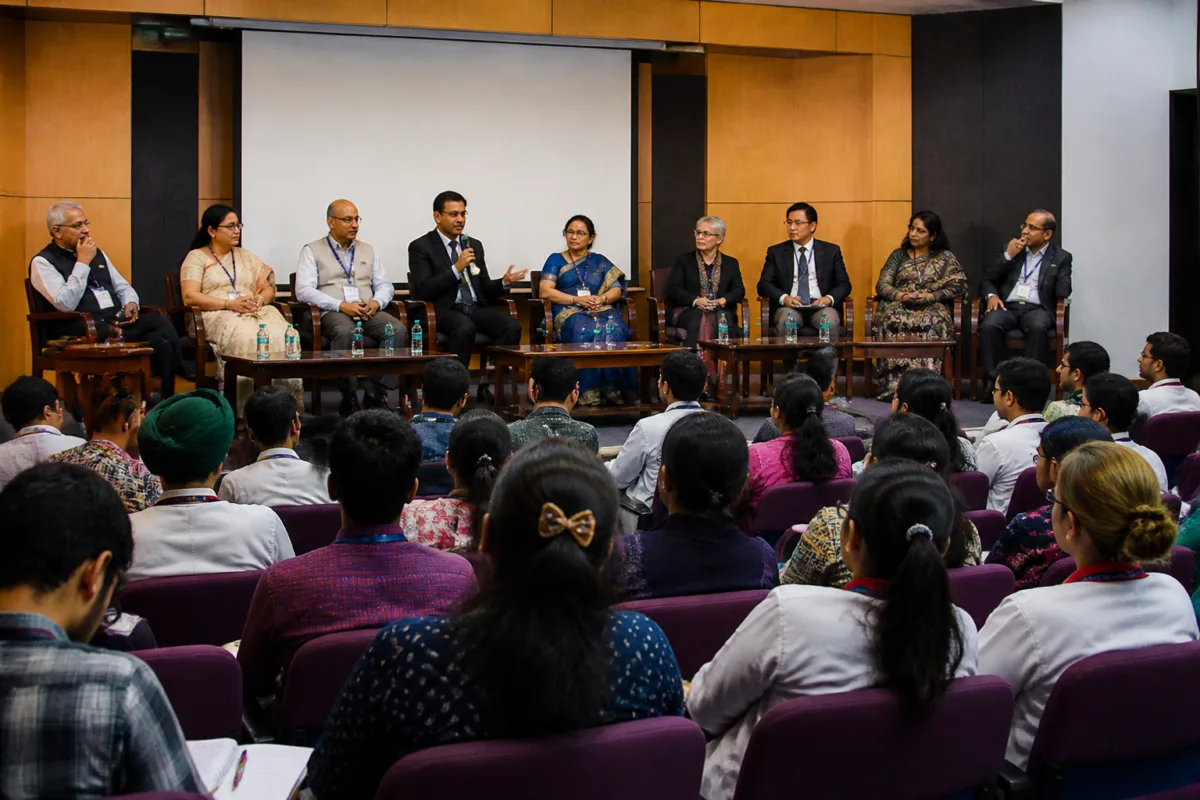
Experts from India, Brazil, South Africa, Kazakhstan and Malaysia called for stronger cooperation on child mental health and the removal of stigma at a conference held at AIIMS Delhi, highlighting the need for early identification in schools, community-based support and greater participation by young people in policymaking.
The 11th Together Against Stigma conference focused on the social barriers faced by children and adolescents experiencing mental-health difficulties. Speakers said fear, discrimination and misconceptions can become a larger obstacle than the condition itself, as families may conceal mental-health concerns, adults may overlook children’s emotions and affected young people may be treated as weak.
A high-level BRICS panel discussion emphasised that children, young people and people who have recovered from mental-health difficulties should have a meaningful role in shaping mental-health policies. The discussion invoked the principle “Nothing About Us Without Us”, under which decisions affecting a group should not be taken without its participation.
According to the report on the conference, experts said young people can help create more open conversations about mental health in families, schools and communities by sharing their experiences. Their participation, speakers said, could also help challenge discriminatory attitudes and make it easier for children to seek support.
Schools were identified as an important setting for the early detection of mental-health concerns. The conference cited Brazil’s efforts to train teachers to recognise signs of psychological distress among students and connect schools with public-health services. Such links can help children access assistance when difficulties become visible, although the report did not specify a common implementation model or funding arrangement for other countries.
The experts also called for a review of discriminatory laws and systems, stronger community-based treatment and awareness campaigns based on research. The conference referred to studies by the George Institute for Global Health India, including work involving adolescents in urban slums and tribal communities. The report said that awareness initiatives designed around the circumstances of these communities improved attitudes towards people with mental illness and helped reduce depression and anxiety among adolescents.
Institutional coordination was another focus of the discussions. NIMHANS director Dr Y.C. Janardhan Reddy said NIMHANS is serving as the coordinating centre for the BRICS Network of Centres of Excellence. The network is intended to support the exchange of research, training and expertise among member countries.
Reddy also outlined efforts to strengthen mental-health services across India through the National Digital Academy. The conference did not announce a specific national deadline for implementing the proposals, but the discussions placed school systems, public-health services, communities and young people within the same support framework. The next stage will depend on how the participating institutions translate the conference’s commitments into training, referral systems, research cooperation and accessible local services.

