


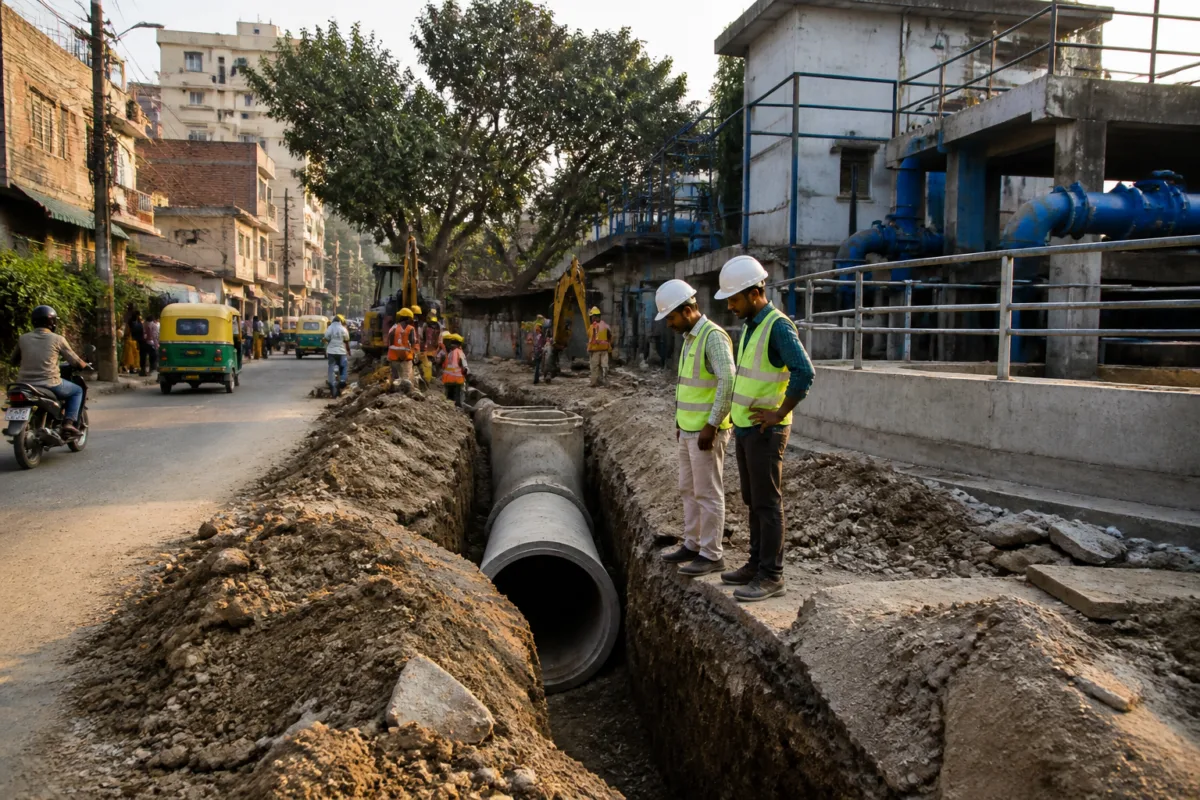
The Delhi government has approved 10 Delhi Jal Board sewer projects worth Rs 1,629.76 crore, with more than 1,000 kilometres of new sewer lines planned for colonies and villages across the capital, according to a report by Jagran – New Delhi.
The projects are intended to expand Delhi’s sewer network and address recurring sewage-related problems in areas that remain outside or inadequately connected to the existing system. The report said the work would benefit millions of residents, although it did not provide a project-wise breakdown of the locations, beneficiaries or implementation schedule.
A key component of the plan is the construction of new pumping stations at Rajpur Khurd and Maidangarhi. These facilities are expected to help move wastewater from connected households to sewage treatment plants. The stated objective is to improve the flow of domestic sewage through the treatment system and reduce the discharge of untreated waste into the Yamuna.
The sewer expansion comes as Delhi continues to face the challenge of connecting unauthorised colonies, village settlements and other built-up areas to formal civic networks. In such locations, gaps in underground infrastructure can leave households dependent on local disposal arrangements, while overflows and uncollected sewage can affect roads, drains and nearby water bodies. The supplied report, however, does not specify the present length of Delhi’s sewer network or identify the exact settlements covered by the 10 projects.
The Delhi Jal Board is also reported to be preparing a public awareness campaign to reduce water wastage. The campaign will be conducted in the command area of the Chandrawal Water Treatment Plant, alongside efforts to improve the water supply system serving that area. The report did not provide details of the campaign’s launch date, outreach plan or monitoring mechanism.
The pumping stations are significant because sewer lines alone do not guarantee that wastewater will reach treatment facilities. Network performance also depends on pumping capacity, connections from individual properties, regular maintenance and the availability of treatment capacity. The announcement links the new infrastructure to cleaner wastewater flows, but the supplied information does not establish the treatment plants that will receive the additional sewage or the capacity available for the expanded network.
The projects therefore combine network expansion with supporting infrastructure and demand-side awareness. Connecting villages and colonies could extend formal sewer services to residents who currently face service gaps, while the pumping stations could address the movement of wastewater in areas where gravity-based flows are insufficient. The practical impact will depend on how the projects are sequenced and when households are connected after the main lines are laid.
The report did not state the tendering process, construction deadlines, project-wise costs or completion milestones. Delhi Jal Board’s next steps, including the release of detailed project plans and implementation timelines, will determine when residents in the identified areas can expect the proposed sewer connections and related improvements.

