


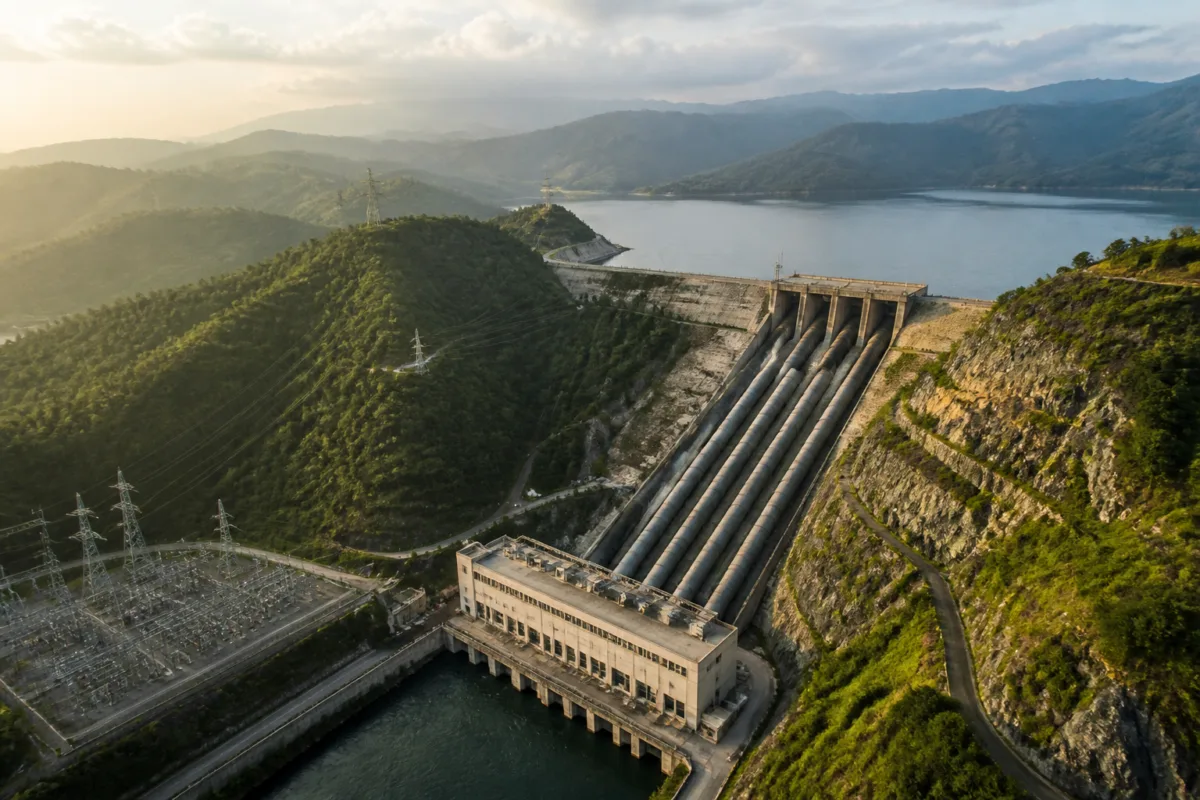
India’s energy storage scheme will provide Rs 145 billion in viable gap funding for 92GWh of grid-scale storage capacity, with the Union Cabinet’s approval expected to accelerate pumped storage projects and support the integration of renewable power. The programme will be implemented over FY27-FY31 and has a total investment outlay of Rs 976 billion.
According to Nomura, the scheme is likely to benefit pumped storage project developers, particularly companies with projects already under construction. Of the 92GWh capacity supported, 60GWh will come from pumped storage projects, 30GWh from battery energy storage systems and 2GWh from emerging storage technologies.
The government’s stated objectives are to accelerate renewable energy integration, strengthen grid stability and support reliable and affordable round-the-clock electricity supply. The programme is also intended to help India meet its estimated requirement of 411GWh of grid-scale energy storage capacity by FY32.
The viability gap funding will amount to 15% of the programme’s total investment outlay. Allocation will take place through tariff-based competitive bidding, according to the report. The structure is designed to reduce the financial gap involved in developing large storage assets, which are becoming increasingly important as electricity generation from variable renewable sources expands.
Nomura described the latest programme as a substantial increase over earlier government-backed funding initiatives for battery storage. The two earlier schemes together covered around 43.8GWh of capacity with a combined VGF outlay of Rs 91.6 billion. The first battery storage scheme, announced in September 2023, covered 13.8GWh with a budgetary outlay of Rs 37.6 billion. A second scheme announced in June 2025 covered 30GWh with an outlay of Rs 54 billion.
The latest programme also includes a domestic content requirement for battery energy storage projects seeking support. Such projects will have to meet a minimum domestic content requirement of 40%, a provision aimed at promoting domestic manufacturing and assembly while reducing dependence on imported storage equipment.
However, the larger allocation is focused on pumped storage projects. Nomura identified 11 pumped storage projects under construction with a combined capacity of 15,870MW. These include Karnataka Power Corporation’s 2,000MW Sharavathy project, Greenko’s 1,920MW MP30 Gandhisagar project, Tata Power’s 1,000MW Bhivpuri project, JSW Energy’s 1,500MW Bhavali project and Adani Green’s 1,500MW Tarali project.
Other projects identified in the report include Upper Sileru, Kundah, Chitravathi, Gandikota, Saundatti and Karjat, also known as Saidongar-1. Their expected commissioning dates range from December 2026 to May 2032. The funding programme will therefore connect near-term government support with a project pipeline whose implementation will extend across several years.
For India’s electricity system, the programme places storage infrastructure alongside generation and transmission as a core requirement for scaling renewable energy. The immediate implementation milestones will be the competitive bidding process and the development of the supported projects during the FY27-FY31 programme period.

