


The Union Cabinet’s approval of a ₹2,814-crore scheme for critical mineral processing is more than an industrial subsidy announcement. It is an attempt to address a less visible weakness in India’s transition to electric mobility, battery storage and advanced manufacturing: the country may secure access to mineral resources, but still lacks enough domestic capacity to convert them into high-purity materials that industry can use.
The scheme, approved at a Cabinet meeting chaired by Prime Minister Narendra Modi, will support four processing plants—two for lithium and two for nickel. The government will provide a capital subsidy of up to 30% of eligible investment, with the programme scheduled to run from financial year 2026-27 to 2030-31. The stated objective is to reduce dependence on imported refined and high-purity mineral materials and increase value addition within India.
That distinction between mining and processing is central to understanding the policy. Extracting an ore is only the first step in a supply chain. The material must then be processed, refined and converted into compounds of sufficient quality for use in batteries, electronics, industrial equipment and defence applications. If this stage remains concentrated in a small number of countries, a country can possess mineral resources and still remain vulnerable to external supply disruptions.
The scheme therefore targets the middle of the supply chain. It does not, on the evidence supplied, represent a complete domestic resource strategy or guarantee that India will become self-sufficient in critical minerals. Instead, it creates financial support for a limited number of large processing facilities and seeks to establish industrial capacity that can serve as a domestic source of refined materials.
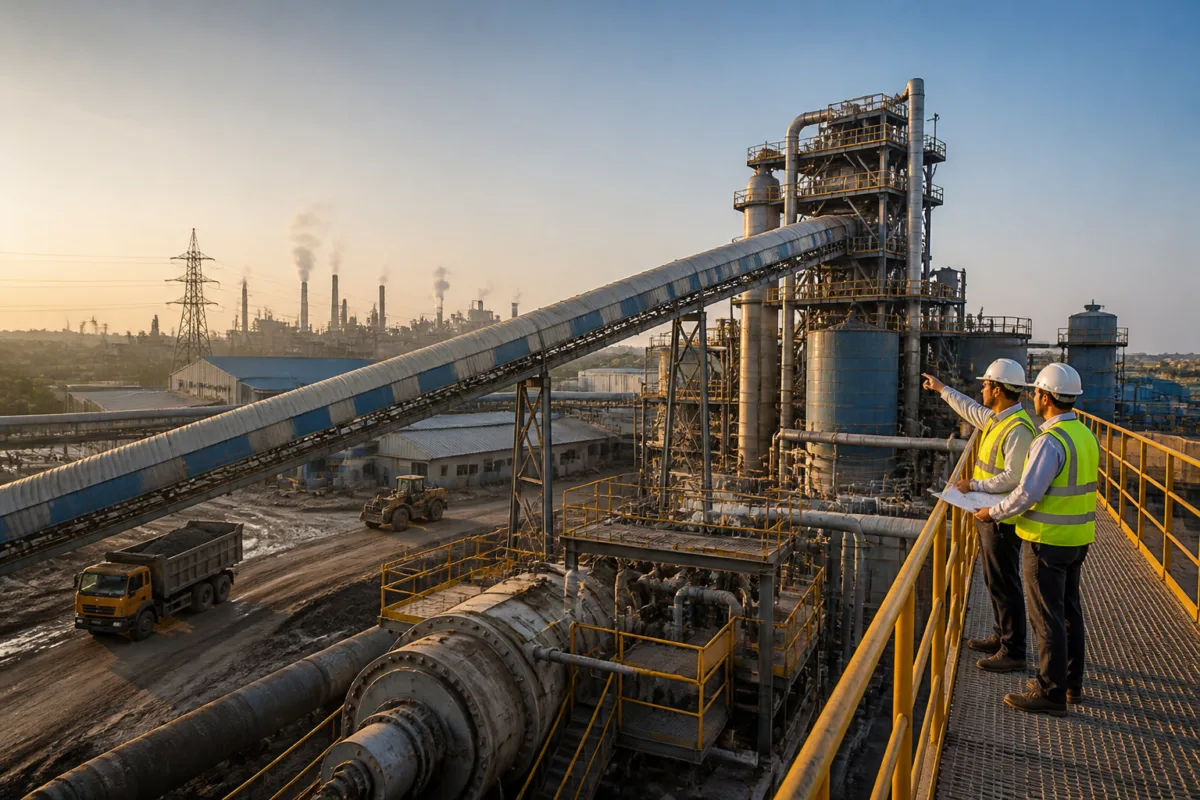
The scale and design of the proposed plants show the government’s preference for commercially significant facilities rather than small demonstration units. Each lithium plant must have a minimum processing capacity of 30 kilotonnes, or 30,000 tonnes. Each nickel plant must have a minimum capacity of 50 kilotonnes, or 50,000 tonnes. The facilities will process ores or intermediate products into high-purity compounds suitable for batteries and other industrial uses.
Nickel processing could also generate cobalt as a by-product, according to the supplied report. Cobalt is used in lithium-ion batteries, making this an important link between the scheme’s named mineral categories and the wider battery-material chain. However, the report does not establish the expected quantity of cobalt production, the specific technologies to be used or the locations of the proposed facilities. Those details will matter when the scheme moves from policy approval to project implementation.
The financial architecture is designed to limit the government’s exposure while attracting private investment. For lithium, the maximum government support is ₹500 crore per plant, while the maximum support for each nickel plant is ₹900 crore. These are ceilings rather than guaranteed payments. Actual assistance will depend on eligible investment and compliance with the scheme’s conditions.
The total allocation of ₹2,814 crore is also not simply a construction budget distributed equally among four projects. Companies will be selected through a two-stage process. Technical eligibility will be assessed first. Companies that meet the technical conditions will then participate in financial bidding. Two beneficiaries will be selected for each mineral, and preference will be given to companies seeking the lowest capital support from the government under the least-cost criterion.
The subsidy will be released in three instalments linked to project milestones. This arrangement is intended to connect public support with measurable progress in establishing the plants. It also means that the announcement of the scheme does not immediately create operating capacity. The impact will depend on the technical screening, financial bids, construction progress and eventual commissioning of the facilities.
## Why processing capacity matters to urban industries
The urban relevance of the policy lies in the systems that depend on advanced materials. Electric vehicles, mobile phones, electronics, industrial machinery and defence equipment all require mineral inputs at different points in their manufacturing chains. Battery production is particularly important for cities because it connects transport, electricity and industrial infrastructure.
India’s electric mobility ambitions require more than vehicle assembly and charging stations. Batteries depend on a chain that includes mineral extraction, chemical processing, cell manufacturing, pack assembly, vehicle integration and recycling. A weakness at the processing stage can raise costs or expose manufacturers to supply interruptions even when demand for electric vehicles is growing.
The same applies to battery energy storage systems. These systems store electricity generated by sources such as solar and wind and release it when required. As electricity systems add more variable renewable generation, storage becomes part of the infrastructure needed to balance supply and demand. The scheme does not itself establish battery factories or storage projects, but domestic access to processed lithium, nickel and related materials could support industries that build them.
This is why critical mineral policy cannot be separated from urban infrastructure policy. Metro systems, electric buses, private electric vehicles, charging networks, data centres and renewable-energy installations all depend on a larger industrial ecosystem. The physical infrastructure may be located in cities, but its resilience is partly determined by processing capacity located elsewhere in the country and by supply chains that cross national borders.
## China’s position exposes the supply-chain risk
The supplied report cites International Energy Agency data stating that China accounts for more than 90% of global refining of rare earths and battery-grade graphite. The figure is not a direct measure of China’s share of every mineral named in the scheme, but it illustrates the concentration of processing capacity in a few countries.
This concentration creates a different risk from ordinary import dependence. If a country imports a finished product, a disruption affects availability of that product. If processing capacity is concentrated abroad, a disruption can affect multiple industries at once because the same refining infrastructure feeds batteries, electronics, energy equipment and other manufacturing chains.
Political tensions, export restrictions or interruptions in shipping can delay supplies and increase prices. The supplied report states that India remains substantially dependent on imports for refined and high-purity mineral materials. The proposed plants are intended to create an alternative domestic source, but four facilities will not eliminate international exposure. Their immediate significance is likely to be the creation of additional capacity and industrial expertise, not the end of dependence on overseas supply.
The policy also reveals the limits of a subsidy-led approach. Capital support can make a project financially viable, but processing plants require reliable feedstock, specialised technology, energy, water, environmental management and downstream buyers. The supplied material specifies the subsidy, capacity thresholds and selection process, but does not provide details on mineral sourcing, environmental safeguards, power requirements, water use or the expected offtake arrangements.
These questions will shape whether the scheme produces functioning supply-chain capacity or only approved projects. A plant must receive suitable input materials consistently and produce compounds that meet the specifications of battery and industrial manufacturers. The financial bidding process may reduce the public cost of support, but the lowest subsidy request alone cannot establish whether a facility will integrate effectively with downstream industries.
## A targeted intervention, not a complete mineral strategy
The scheme’s five-year implementation period gives the government time to select beneficiaries and link payments to construction milestones. Its design also indicates a preference for a competitive allocation of support rather than an open-ended subsidy. Two lithium and two nickel plants create a defined target against which implementation can be assessed.
At the same time, the policy should be read as one layer of a broader critical-mineral strategy. Processing is necessary, but it must connect with exploration, mining, imports of intermediate materials, chemical manufacturing, battery production and recycling. The supplied report does not detail how the new plants will be linked to these other stages. That institutional coordination will be important because responsibilities can be spread across mining, industry, transport, energy and strategic manufacturing agencies.
The scheme also places value addition at the centre of the intervention. Instead of exporting or importing materials at an earlier stage of processing, the government wants a larger share of the transformation into high-purity compounds to take place in India. If successful, that could build domestic technical capability and retain more economic activity within the country. It could also give Indian manufacturers another source of supply during periods of global disruption.
What the Cabinet approval confirms is the government’s recognition that mineral security is an infrastructure issue as much as a mining issue. What remains uncertain is how quickly the four plants will be selected, built and commissioned, whether they will receive dependable feedstock, and how much of the processed output will serve Indian battery, electronics, energy and defence industries.
The next milestones are therefore administrative and industrial rather than rhetorical: technical qualification, financial bidding, beneficiary selection, release of the three subsidy instalments and completion of the minimum-capacity plants. The scheme’s success will ultimately be measured not by the size of its allocation, but by whether it creates reliable domestic processing capacity that connects India’s mineral resources with the urban technologies and infrastructure systems increasingly dependent on them.

