


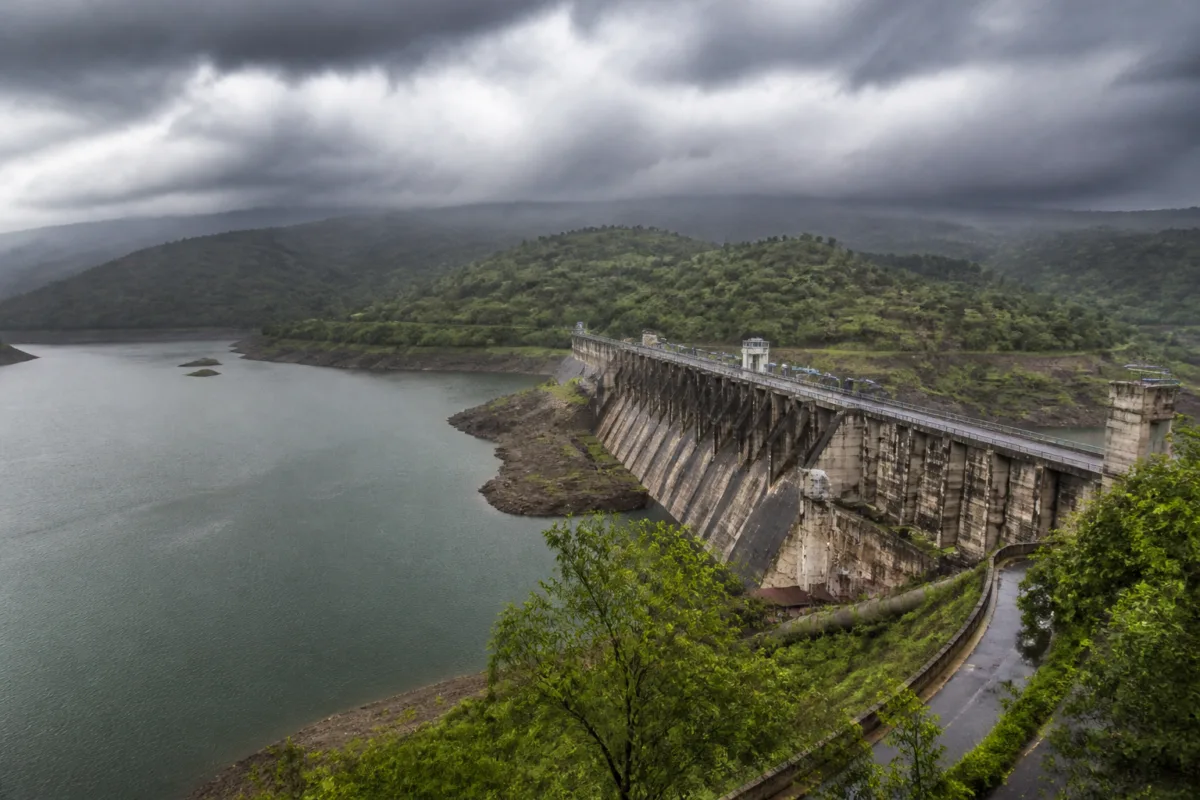
Khadakwasla dam water storage has continued to decline despite heavy rain in parts of Pune, as the four-dam system’s main catchment areas received little or no rainfall and water releases continued for drinking water and agriculture. The reservoir chain had 23.47 TMC of water, or 80.52% of its live storage, at 5pm on Monday, according to a report by Pudhari – Pune.
The Khadakwasla system comprises the Khadakwasla, Panshet, Varasgaon and Temghar dams and supplies water to Pune city, the surrounding district and agricultural areas. The report said the system held about 4.93 TMC less water than during the same period last year, increasing concern over the widening deficit.
Heavy rain was recorded in areas below the Khadakwasla dam wall, including Khadakwasla, Nanded, Dhayari, Kirkatwadi and the Sinhagad Road corridor. Roads were inundated and streams and drainage channels reportedly overflowed. However, the rain did not extend to the upper catchments that feed the reservoirs.
The Khadakwasla dam wall recorded 12 millimetres of rain, while the catchment areas of Panshet, Varasgaon and Temghar received less than one millimetre, the report said. The contrast has left nearby urban areas experiencing intense rainfall while the storage system receives little inflow.
Vires Raut, a branch engineer at Khadakwasla dam, said the area below the dam had received heavy rain for about a week but rainfall in the dam catchments remained sporadic. As a result, the reservoir storage had not increased, he said.
Water is currently being released from the upstream reservoirs into Khadakwasla dam. Panshet and Varasgaon are each releasing 600 cusecs, while Temghar is releasing 260 cusecs. These releases are reducing the storage levels in the three upstream reservoirs, while the water level at Khadakwasla depends on the volume received from them.
All four reservoirs had reached 100% storage after strong rainfall in July and August. The subsequent pause in rainfall, followed by unseasonal showers that largely missed the catchments, has reversed that position. The immediate operational challenge is therefore not the absence of rain across Pune, but the mismatch between rainfall in built-up areas and rainfall over the catchments that sustain the city’s water supply.
The reported storage level and continuing releases will remain key indicators for Pune’s drinking-water and agricultural supply planning. The dam authorities’ next assessments will depend on rainfall in the upper catchments and the rate at which water continues to be released from Panshet, Varasgaon and Temghar.

