


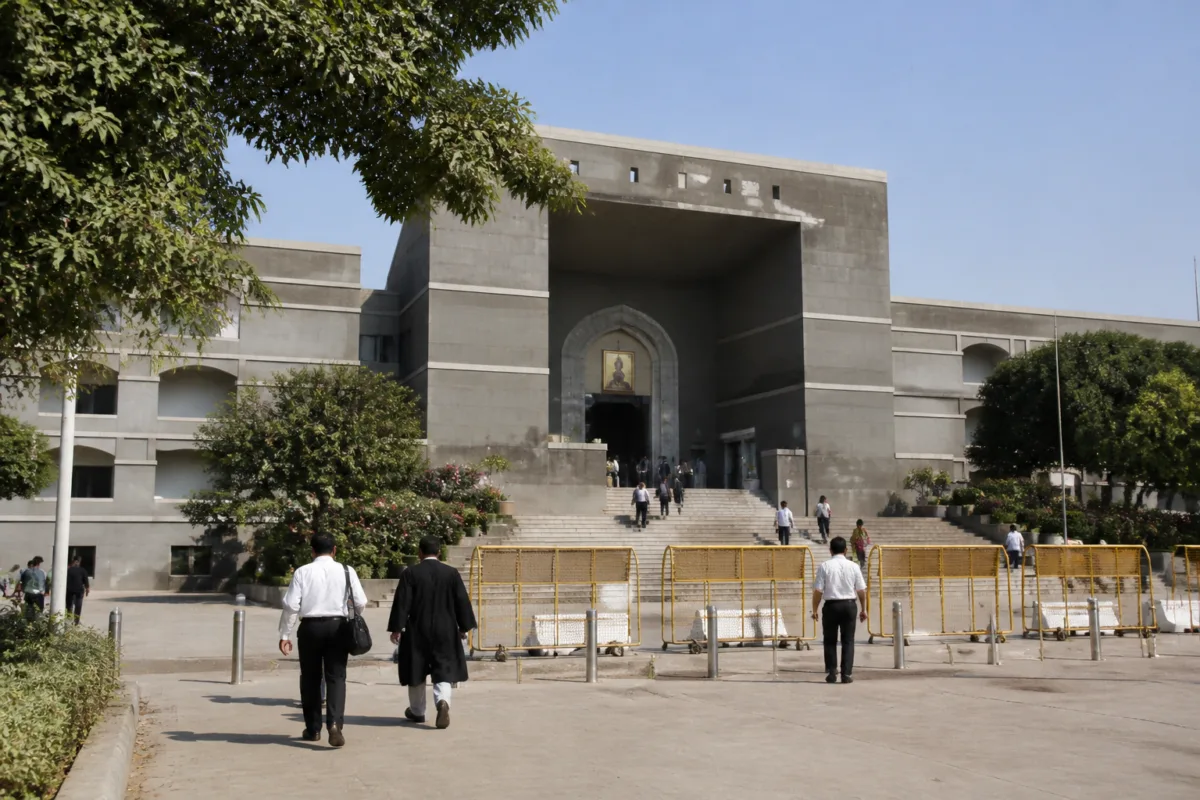
The Gujarat High Court has sought clear answers from the state government over why an assurance to provide alternative arrangements for people displaced by demolitions in Surat’s Nasirnagar area was allegedly not implemented by a municipal office-bearer.
During a hearing on Friday, Justice Nikhil Kariel questioned whether the Surat Municipal Corporation’s standing committee chairman had disregarded the advice and assurance given to the court by the Advocate General, the state’s highest law officer, Nav Gujarat Samay reported.
The court asked whether the municipal chairman considered himself above the Advocate General by not acting on the assurance made in court. It also asked the state government what action it proposed to take if the conduct was considered misconduct.
The central issue before the court was not limited to the merits of the demolition dispute, according to the report. Justice Kariel said the matter had also become one of principle: whether an elected or appointed office-bearer could adopt a position contrary to an assurance given to the court by the state’s law officer.
The court’s questions place the responsibility for answering the issue on the state government. It asked whether state officials and office-bearers were permitted to disregard the Advocate General’s advice and, if not, what consequences followed when such conduct occurred.
The state government told the court that such behaviour was not permitted. The judge then asked what action the government proposed in this particular case, given the alleged difference between the Advocate General’s assurance and the position taken by the municipal office-bearer.
The report said the Advocate General had assured the court that people displaced by the demolition would be provided alternative arrangements. It does not specify in the available account the nature, location or eligibility criteria of those arrangements, nor does it detail the number of affected residents.
The court also indicated that the state’s Chief Secretary should pay attention to the matter. It directed the government to provide clear answers at the next hearing, scheduled for December 4.
For residents affected by urban demolition, the proceedings highlight the importance of converting assurances made in court into an identifiable rehabilitation process. Alternative accommodation or another form of support can have practical consequences for access to housing, work, schools and basic services, although the available report does not provide details of the arrangements proposed in Nasirnagar.
The hearing also raises an institutional question for municipal administration. The issue before the court, as reported, is whether a municipal functionary can depart from a position represented to the judiciary by the state’s senior law officer without a transparent decision or consequence. The court has not yet recorded a final finding on the merits of the case or ruled on whether the chairman committed misconduct.
The next hearing is expected to clarify the state government’s position on the alleged non-compliance, the proposed response to the municipal office-bearer’s conduct and the status of alternative arrangements for those displaced by the demolitions.

