


The Greater Bengaluru Authority is preparing a citywide property-tax survey covering 23.47 lakh built-up and vacant properties across Bengaluru’s five city corporations, in an effort to identify underpayment and properties outside the tax system.
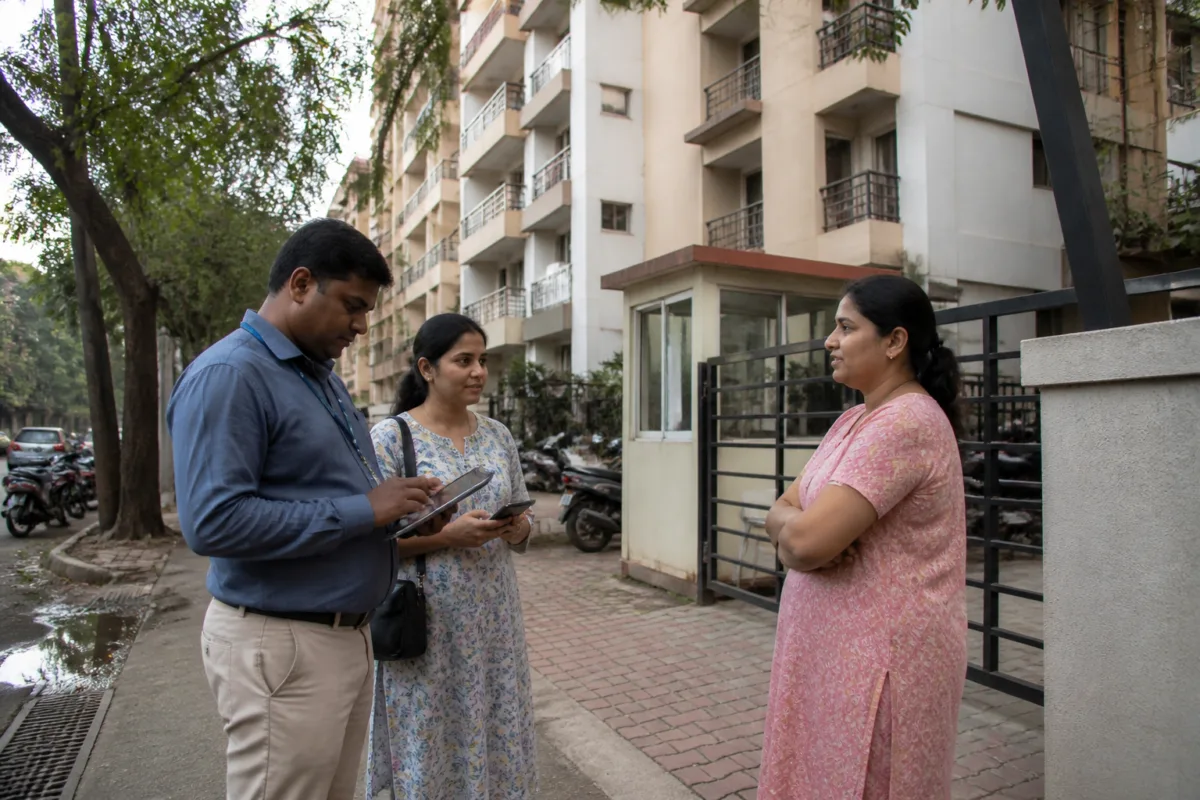
The exercise is expected to begin early next year and will be carried out by a private agency with 1,585 outsourced employees. Field teams are expected to visit every dwelling unit, verify property-tax identification numbers, record unit-level information, use GPS geo-tagging and collect data through prescribed forms and mobile applications. The agency will also be responsible for doorstep delivery of e-khatas, according to the reported scope of work.
The Greater Bengaluru Authority suspects that a significant number of property owners are declaring rented homes as self-occupied. Under the existing system, owners of tenanted properties are required to pay twice the tax applicable to self-occupied properties. The authority also plans to examine properties where tax has allegedly been under-declared because of incorrect zonal classification or inaccurate built-up-area details.
Munish Moudgil, the GBA’s Special Commissioner for Revenue, estimated that about seven lakh properties may be outside the tax net. He said the agency hiring process was under way and that property-tax identification would be checked during the survey.
The authority has set aside Rs 25 crore for the exercise. Its scale reflects the gap between the properties currently covered by the tax system and the wider housing base reported for the greater Bengaluru area. A recent survey estimated about 47.86 lakh households in the area, while the GBA’s current property-tax ambit contains 23.47 lakh built-up and vacant properties. The figures are not directly equivalent because households and taxable properties are different categories, but the comparison has prompted the authority to investigate whether properties are missing from the tax register.
The proposed doorstep verification is also a shift from earlier technology-led attempts. The GBA and the erstwhile Bruhat Bengaluru Mahanagara Palike used GIS-based systems and later a drone survey to identify possible tax under-declaration. The report says those efforts had limited success. The new plan therefore combines digital tools with physical visits to establish property-level information.
For residents, the survey could bring greater scrutiny of occupancy status, property size and zoning classification. It could also create questions about how field data will be collected, protected and used, particularly in apartment complexes and rented homes. The report does not provide details of a public data-access policy, a formal appeals process or safeguards governing the use of information gathered during visits.
Citizens cited in the report have suggested that the GBA should first make property-tax details public and create a mechanism for anonymous complaints. They also said apartment associations could help identify rented properties. Such a system could supplement field verification, but the report does not indicate whether the authority has accepted these suggestions.
The survey’s stated objective is to improve tax compliance. Its wider significance will depend on whether the authority can convert the collected information into accurate assessments, resolve disputes and sustain enforcement after the fieldwork ends. The exercise will also test whether a large administrative operation can produce a more complete and reliable property-tax base than previous mapping and aerial-survey efforts.

