


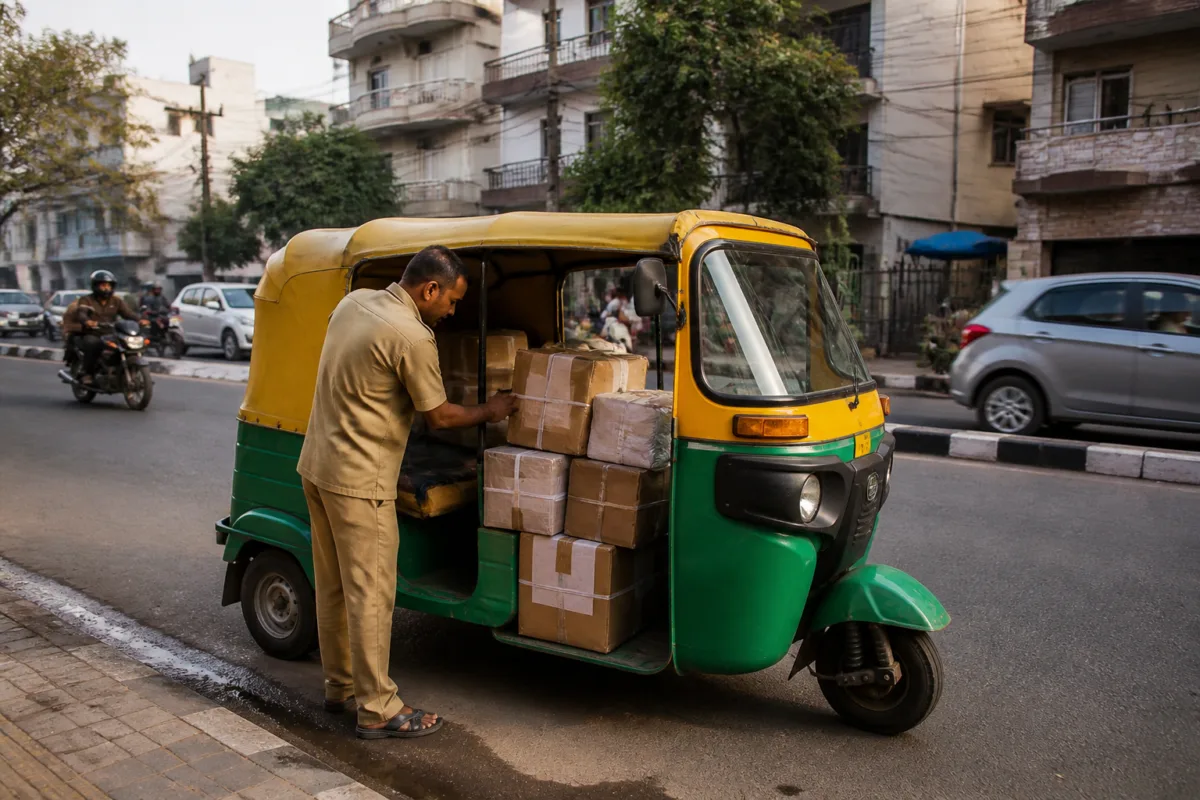
A proposal to use Bengaluru parcel autos for dedicated goods deliveries is highlighting a regulatory gap in urban logistics, even as goods-vehicle operators oppose the practice and the Transport Department says passenger autos are currently not permitted to provide such services.
The proposal was made by Uttam Digga, co-founder and CEO of logistics platform Porter, at the Ministry of Road Transport and Highways’ RIDE – Moving India Forward event in Delhi on November 18. Digga suggested that passenger auto-rickshaws could be used for consignments weighing between 25 kg and 250 kg under a regulated framework.
The proposed system is intended to address shipments that are too heavy for two-wheelers but too small to justify hiring a dedicated goods vehicle. Digga said dual use of commercial passenger vehicles could reduce transportation costs for small businesses and provide auto drivers with an additional source of income, without adding another vehicle to city roads.
However, Bengaluru’s existing regulatory position does not permit passenger autos registered as contract carriages to operate as goods carriers. Under the Motor Vehicles Act, 1988, and the Karnataka Motor Vehicles Rules, they are permitted to carry passengers and their personal luggage, according to the report.
A Transport Department official said enforcement drives had been conducted since June against passenger autos being used to transfer goods. The official said the practice appeared to be popular among auto drivers, but added that passenger autos were not currently permitted to provide such services. Any future regulatory framework, the official said, would depend on provisions in the aggregator policy.
The dispute has also exposed competing interests within Bengaluru’s three-wheeler economy. In June, hundreds of goods-auto drivers protested outside Porter’s office in Adugodi. They alleged that logistics and ride aggregators were using passenger autos for deliveries in a way that affected their livelihoods and created unfair competition. The drivers also raised concerns about commissions and pricing.
Three-wheeler parcel services are currently available on platforms including Porter, Uber and Rapido, according to the report. This has created a gap between platform availability and the rules governing the vehicles being used for deliveries.
Raju N, president of the Nonda Chalakara Vedike, said the association had been promised stronger action after the June protest. He alleged that only limited enforcement had followed and that the service remained available on online platforms, with thousands of auto drivers choosing to participate. He said the association was considering legal action against the Transport Department.
The policy question is therefore not only whether passenger autos can carry goods, but also how such a change would affect vehicle classification, driver protections, platform commissions and competition between passenger and goods-auto operators. Any formal move would need to clarify those issues before the proposed model could operate within Bengaluru’s transport rules.

