


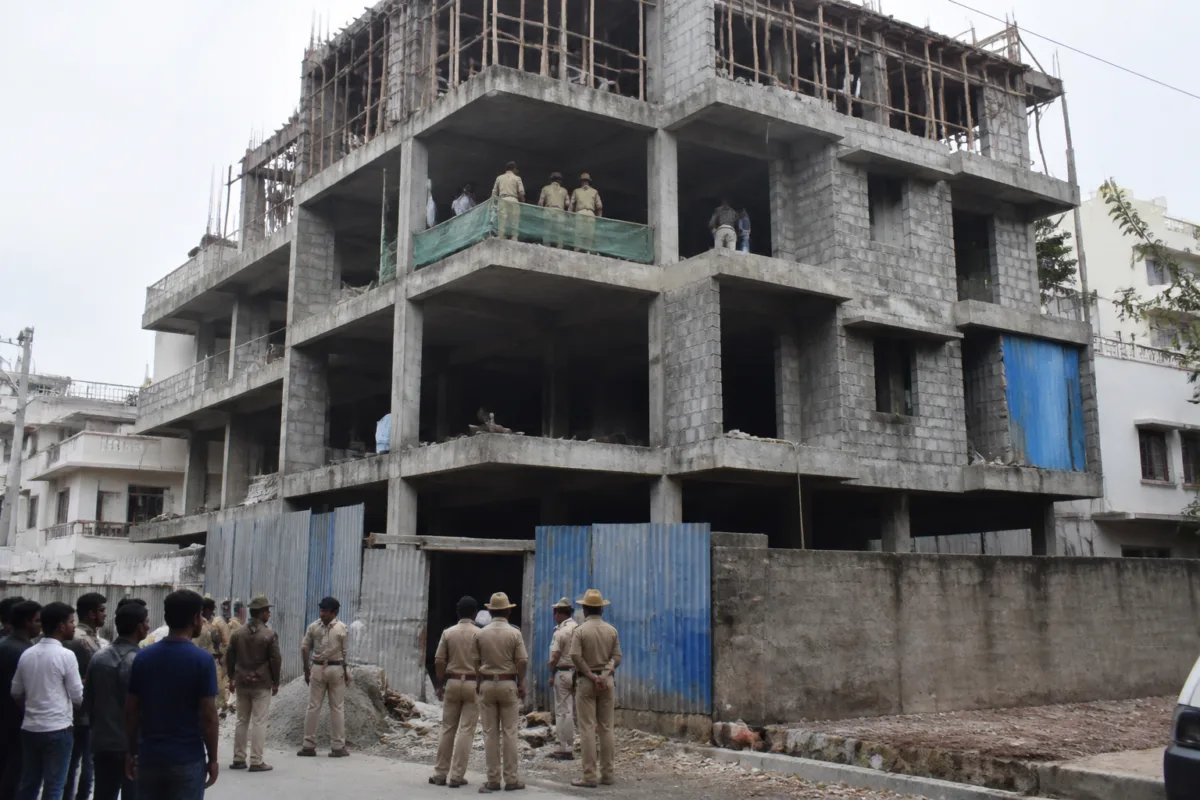
The detention of a man in connection with a blast at an under-construction building in Bengaluru has shifted the case from an unexplained construction-site incident to an investigation involving alleged movement of a bag, technical evidence and the National Investigation Agency (NIA). The development also draws attention to a recurring urban-security challenge: construction sites are active, lightly monitored spaces where workers, guards, contractors and outsiders can interact with limited oversight.
According to a report by Prajavani, East Division police detained Jalal, a young man, in Maski in Raichur district. Police said the detention was based on technical evidence and that he was being questioned to determine his role in the incident. Investigators suspect that Jalal brought a bag to the site’s security guard, Allauddin. The report does not establish what the bag contained, whether Jalal has been formally arrested, or whether investigators have identified the material that caused the blast.
The explosion took place on October 20 on the fourth floor of a building under construction on Jarmia Road, within the limits of Pulakeshinagar police station. The blast injured Allauddin and a worker, Suraj, in the head and facial areas. Both were taken to Bowring Hospital for emergency treatment. Suraj was seriously injured and was continuing to receive treatment, according to the report.
The case is significant for Bengaluru’s built environment because the incident occurred inside a partially completed building rather than in an established industrial facility or a public transport location. Construction sites often contain unfinished floors, temporary access arrangements, electrical systems under installation, stored materials and changing groups of workers. These conditions can complicate both routine safety management and the reconstruction of an incident after it occurs.
The report indicates that the police investigation is focused on establishing Jalal’s role rather than presenting his involvement as proven. Police said he was detained on suspicion that he had delivered a bag to Allauddin, while an investigating officer said the inquiry was continuing to determine what role he played. That distinction is important because detention for questioning does not by itself establish criminal responsibility.
The use of technical evidence suggests that investigators are examining digital or other technical leads connected with the incident, although the supplied report does not specify what evidence was collected or how it linked Jalal to the site. It also does not state whether forensic teams have concluded what caused the explosion, whether the bag was recovered, or whether any explosive or other hazardous substance has been identified.
The presence of the NIA adds a national-security dimension to the investigation, but the report provides no explanation of the agency’s specific mandate in this case or whether it has formally taken over any part of the inquiry. It states only that NIA officials are also investigating the incident. The division of responsibility between the city police and the central agency therefore remains unclear in the available information.
For residents and workers, the immediate impact has been physical injury and the continuation of a criminal investigation at a construction site in a densely occupied urban setting. The report does not provide details about damage to neighbouring properties, evacuations, disruption to local traffic or whether the building has been sealed. It also does not identify the developer, contractor, building owner or the authority responsible for site supervision.
Those missing details matter because a construction-site blast can involve several overlapping systems of responsibility. Police investigate the cause and potential criminal liability. Medical authorities treat the injured. Building owners and contractors control site access and worker safety. Municipal and labour authorities may have responsibilities related to building permissions, occupational safety and compliance with construction conditions. The supplied report does not establish whether any of these agencies have issued separate findings or notices.
The incident also illustrates why security and safety at construction sites cannot be treated solely as a private contractual matter. A site guard may be the first person to receive materials, packages or instructions from people outside the workforce. At the same time, workers may be exposed to risks created by stored substances, temporary wiring, machinery or incomplete safety systems. The available report does not indicate which of these possibilities, if any, is relevant to the Bengaluru blast, and no conclusion about the cause should be drawn before the investigation is completed.
The case raises a narrower but important administrative question: how are active construction sites documented and monitored after work begins? Permissions may identify the building, developer and contractor, but day-to-day conditions change as construction advances. Security personnel, subcontractors and material deliveries may not remain the same throughout the project. Whether the site maintained visitor records, package controls, surveillance systems or a documented chain of custody for materials is not stated in the report.
The injuries to Allauddin and Suraj also underline the vulnerability of people who work at unfinished buildings. Security guards and construction workers are physically present at locations where structural, electrical and material-related risks may coexist. The report does not say whether the injured men were employed directly by the project owner or through contractors, nor does it provide information on compensation, insurance or workplace-safety compliance.
Public understanding of the case will depend on the next verified findings. Investigators will need to establish what caused the explosion, identify the material or device involved if one existed, reconstruct how it reached the fourth floor, and determine who had access to the site. They will also need to clarify whether the incident was limited to the individuals already identified or connected to a wider chain of activity. None of those questions is answered by the current report.
The detention in Maski is therefore an investigative development, not a final explanation of the blast. The police have attributed the detention to technical evidence and a suspected delivery of a bag, while continuing to determine Jalal’s role. The NIA’s parallel involvement indicates that the authorities are examining the incident beyond an ordinary site accident, but the basis and scope of that involvement remain unspecified.
The next milestones are the outcome of questioning, forensic findings on the blast, the medical condition of the injured workers and any formal statement from the police or NIA. Until those findings are released, the confirmed facts are limited to the October 20 explosion at the under-construction building, the injuries to two people, the detention of Jalal in Maski and the ongoing investigation by East Division police and NIA officials.

