


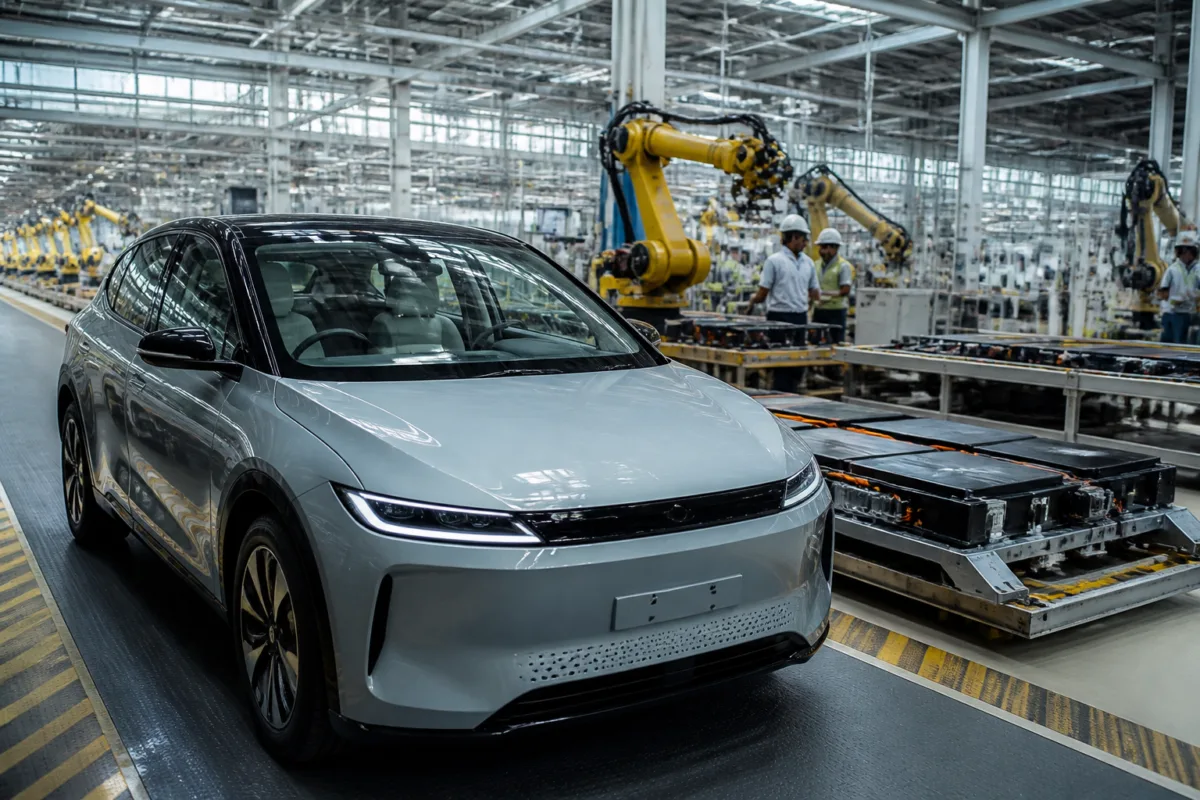
Volkswagen’s reported pause on further India electric-vehicle investment exposes the difficulty global automakers face in building an affordable, locally manufactured EV business in a market where demand is rising but scale and cost remain decisive. The German group is said to be waiting for greater clarity on a potential partnership with Sajjan Jindal’s JSW Group before committing more funds, according to a report by Economic Times citing people familiar with the matter.
The central claim has not been publicly confirmed by Volkswagen or JSW. The two companies did not respond to separate requests for comment cited in the report. The reported pause should therefore be treated as an attributed account rather than an officially announced investment decision.
The development matters because Volkswagen Group currently sells no battery-powered passenger cars in India through its Volkswagen or Skoda brands, even as the country’s electric-car market is expanding and more manufacturers prepare to compete. Any delay would leave the group without a mass-market EV offering while domestic and international rivals strengthen their positions.
According to the report, Volkswagen has completed preliminary design work that could allow it to move relatively quickly once discussions with JSW are concluded. The proposed programme would use a low-cost electric-vehicle architecture originally developed for China. The company is nevertheless waiting for a clearer business plan before committing additional investment.
The reported approach reflects the cost structure of India’s EV market. A vehicle architecture developed elsewhere cannot automatically produce a competitive Indian car. The report says Volkswagen would need to increase the use of Indian components and manufacture the vehicle locally to reduce costs sufficiently. That requirement places localisation, supplier capability and production scale at the centre of the proposed partnership.
Volkswagen and JSW announced last month that they were exploring a venture to develop, build and market passenger vehicles in India and for export. The possible scope includes internal-combustion engine vehicles, battery-electric vehicles, plug-in hybrids and hybrids. The reported discussions therefore extend beyond a single EV model and could shape how the two companies divide investment, manufacturing responsibilities and market risk.
For JSW, the potential arrangement would add an international automotive partner to its existing involvement in the sector. JSW is already associated with SAIC Motor’s MG brand in India, which is identified in the report as one of the companies competing for a share of the country’s EV market. For Volkswagen, a local partner could help share development and manufacturing costs while improving access to Indian suppliers and market knowledge.
The companies’ search for a partnership follows nearly two years of efforts by Volkswagen to find an Indian collaborator. Earlier discussions with Mahindra ended without an agreement, according to the report. Volkswagen had also decided last year to reduce the cost of developing EVs in India by a third while looking for a local partner.
This history shows that the issue is not simply whether Volkswagen wants to sell electric cars in India. It is whether the company can establish a business model that matches Indian price sensitivity, local-production requirements and the investment discipline imposed by its global restructuring. The reported pause suggests that the partnership and the commercial plan are closely linked.
The global context is also significant. Volkswagen is pursuing a cost-cutting drive amid weak demand in Europe and stronger competition from Chinese automakers. The company is seeking to reduce investment by about 15% and has outlined plans to eliminate tens of thousands of jobs, according to the report. These pressures make new-market spending subject to tighter scrutiny, including projects that may be strategically important but require substantial upfront expenditure.
India’s market presents a contrasting signal. Electric passenger-vehicle sales nearly doubled year on year in September to more than 35,000 units, according to the country’s car registration database as cited in the report. The market remains relatively small, but the pace of growth has accelerated as more affordable models become available.
That combination creates a difficult entry equation for established manufacturers. A company entering early can build supplier relationships, brand recognition and production capability, but it must also absorb the cost of developing and localising vehicles before volumes are guaranteed. Waiting can reduce immediate financial exposure, but it risks allowing competitors to establish stronger positions in a market where affordability is becoming increasingly important.
The competitive field cited in the report includes Tata Motors Passenger Vehicles, Mahindra & Mahindra, MG, VinFast, Tesla and BYD. Tata Motors and Mahindra are Indian manufacturers with existing market visibility, while MG’s presence is linked to SAIC and the proposed Volkswagen-JSW discussions. The arrival or expansion of additional global players could intensify competition for customers, charging access, suppliers and skilled automotive labour.
The policy environment is another factor. Tighter fuel-efficiency rules have increased pressure on automakers to electrify their product lines, according to the report. Such rules can encourage investment, but regulation alone does not resolve the commercial challenges of battery costs, local sourcing, manufacturing scale or consumer affordability.
The proposed Volkswagen-JSW venture is described as covering vehicles for India and exports. Export potential could improve the economics of a locally manufactured platform by spreading production across more markets. However, the supplied report does not establish which export destinations would be served, how much investment would be required or whether a formal joint venture agreement has been completed.
That uncertainty is important. The report establishes that Volkswagen and JSW announced exploratory discussions, that Volkswagen has completed preliminary design work and that the German automaker is reportedly waiting for a clearer business plan. It does not establish that investment has been formally cancelled, that the partnership will definitely proceed or that a particular vehicle or launch timeline has been approved.
The reported pause also raises a broader question about the role of partnerships in India’s transition to electric mobility. Global automakers bring technology, platforms and brand capability, while local partners can contribute market access, manufacturing knowledge, supplier relationships and capital. But combining those strengths requires agreement on who will bear development costs, how much localisation is commercially viable and whether expected sales justify the investment.
For cities and consumers, the outcome will be visible through the availability and price of electric cars rather than through corporate announcements alone. A delayed Volkswagen entry would not stop India’s EV transition, given the number of manufacturers already competing in the market. It could, however, reduce near-term brand choice and postpone the arrival of another global platform that might have expanded competition in the passenger-vehicle segment.
The evidence currently supports a cautious conclusion. Volkswagen appears to have prepared design work for a possible India EV programme and is exploring a broad vehicle partnership with JSW, but the company’s next investment decision is reportedly on hold pending a clearer business plan. Confirmation from Volkswagen or JSW, details of any signed agreement, the proposed production location, localisation targets and a vehicle launch schedule will determine whether the reported pause becomes a temporary delay or a larger restructuring of the India strategy.

