


Bengaluru Metro is preparing to refurbish its oldest trains after they reach 15 years of service or cross 10 lakh kilometres, a move aimed at keeping the first-generation fleet operational for another decade while reducing replacement costs.
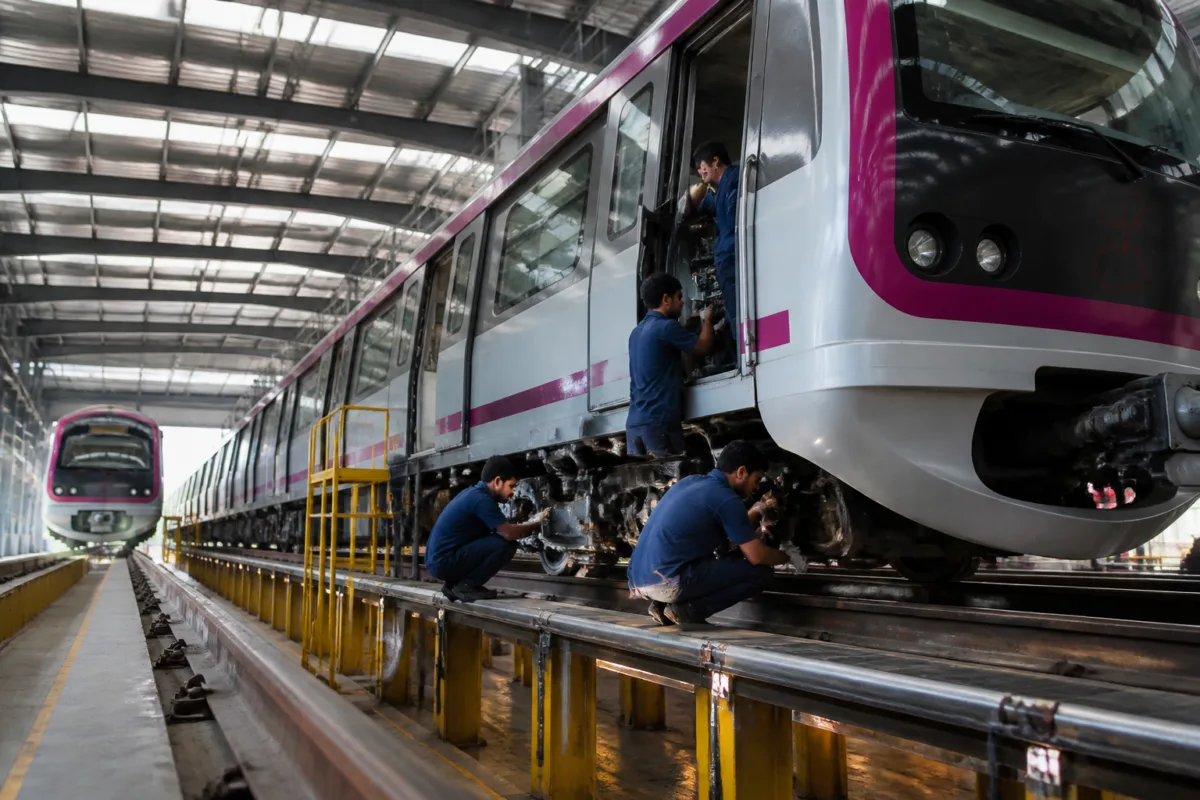
The Bangalore Metro Rail Corporation Limited (BMRCL) is conducting capacity tests and detailed technical inspections of the trains at its Peenya and Baiyappanahalli depots. Officials said most of the trains remain fit for operation, but some components will need to be repaired or replaced to support continued service.
The trains were part of Bengaluru Metro’s initial fleet, introduced when services began between M.G. Road and Baiyappanahalli on the Purple Line in 2011. The network was subsequently extended on the Green Line from Peenya to Sampige Road and on the Purple Line from Magadi Road to Mysuru Road. The early trains have now begun reaching the point at which comprehensive mid-life maintenance is required.
BMRCL officials said the inspection will cover mechanical, electrical and safety systems. These include traction motors, propulsion equipment, cables, batteries, wheels, axles, braking systems, doors, passenger safety equipment, air-conditioning and ventilation units, signalling controls and onboard electronic systems. Passenger seats, interiors and other coach equipment will also be examined.
B.L. Yashwanth Chavan, BMRCL’s chief public relations officer, said the condition of individual components would determine whether they are repaired or replaced. Components that can be restored will be repaired, while those that have reached the end of their usable life will be changed, according to the report.
The refurbishment is expected to extend the operational capability of the upgraded trains by about 10 years. BMRCL described the programme as the first major mid-life comprehensive renewal being undertaken for Bengaluru Metro’s first-generation rolling stock.
The corporation currently operates 57 trains on the two corridors. Four new trains manufactured by the CRRC-Titagarh workshop have already arrived, while 21 more trains are expected to be added to the Green Line in the coming period. The additional rolling stock will give BMRCL greater flexibility to withdraw older trains from service temporarily for inspection and refurbishment.
BMRCL officials said the entire fleet cannot be removed from service at the same time. The work will therefore be carried out in phases, allowing train operations to continue while individual units undergo maintenance.
The financial difference between replacement and refurbishment is significant. A new six-coach train costs at least ₹50 crore, while refurbishing a six-coach older train is estimated to cost about ₹15 crore. The programme could therefore save approximately ₹35 crore for each train that can be economically upgraded rather than replaced.
The plan places fleet maintenance at the centre of Bengaluru Metro’s next operational phase. As the network expands and its earliest trains accumulate more kilometres, the condition of rolling stock will determine how effectively BMRCL can maintain services without relying only on new train procurement. The corporation’s ongoing inspections and phased refurbishment programme will establish which trains can continue operating after their components are assessed.

