


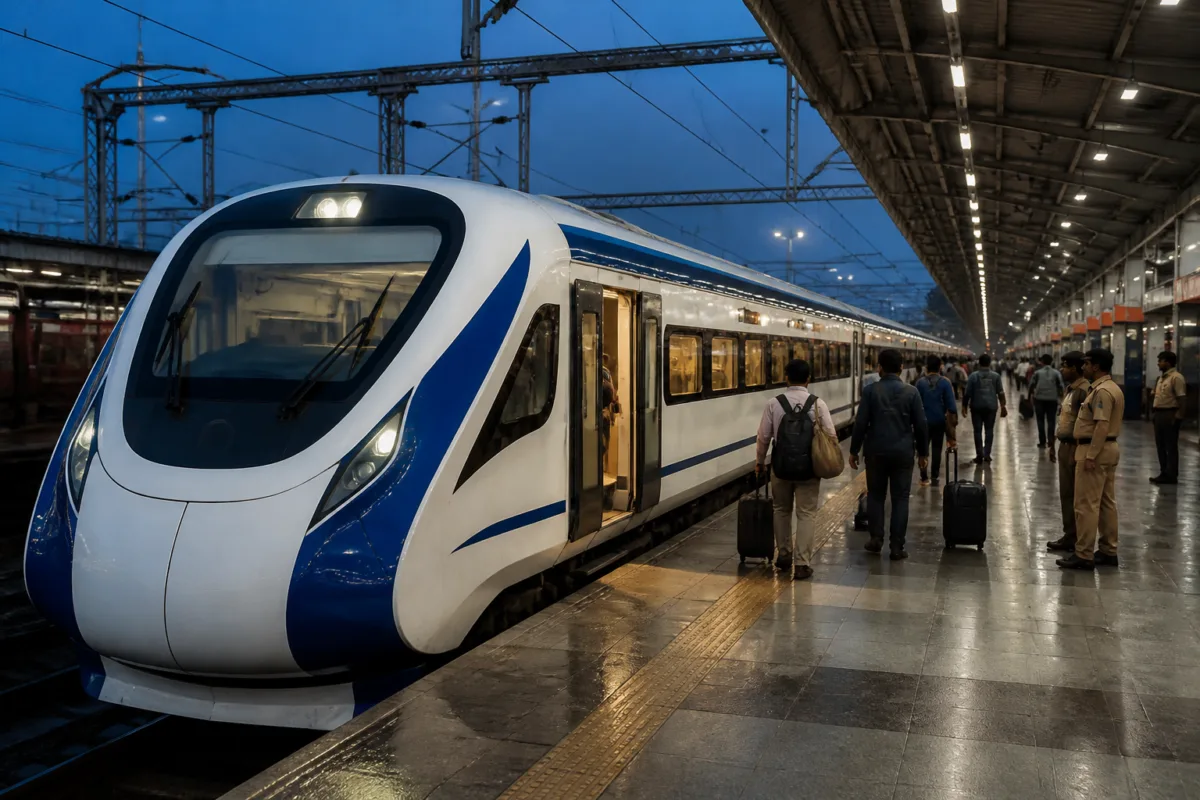
The Bengaluru-Mumbai Vande Bharat sleeper train could begin with an inaugural special run on November 1, offering a faster overnight rail connection between the two major cities and potentially reducing the current journey time from about 24 hours to nearly 16 hours.
South Western Railway has proposed November 1, Karnataka Rajyotsava, for the launch of the service, according to railway sources cited in the report. The inaugural train is likely to be flagged off by Railway Minister Ashwini Vaishnaw. However, Indian Railways has not yet announced the date for regular commercial operations.
The service is expected to be the first Vande Bharat sleeper train to operate in southern India. It is likely to run as train numbers 27651 and 27652, with a 16-coach formation comprising 11 AC three-tier coaches, four AC two-tier coaches and one AC First Class coach. The configuration would provide 823 berths.
Proposed fares for the 1,118-km journey are expected to range from Rs 2,600 to Rs 4,250, depending on the class of travel. The final fare structure has not been released. Timings are also yet to be confirmed, although the train is expected to leave KSR Bengaluru at 10 pm and reach Mumbai’s Chhatrapati Shivaji Maharaj Terminus at 1:50 pm the following day. The return service could depart CSMT at 10:30 pm and arrive in Bengaluru at 2:50 pm.
The proposed route will pass through Anantapur, Guntakal, Raichur, Kalaburagi, Solapur and Kalyan before reaching Mumbai. At present, the Udyan Express is the main daily direct rail service between Bengaluru and Mumbai and takes approximately 24 hours. The proposed sleeper service would provide a quicker overnight alternative on a route that currently has limited faster rail options.
An official cited in the report said the service could not be introduced in October because the model code of conduct was in force for the Karnataka Legislative Council elections. The proposed November 1 launch date would therefore mark a significant addition to the intercity rail network, although its operational schedule remains subject to final approval.
The sleeper train is designed for speeds of up to 160 kmph and has recorded a maximum testing speed of 180 kmph. Much of the Indian Railways network, however, does not currently have the infrastructure required to support sustained operations at those speeds. The actual journey time will depend on route capacity, track conditions, signalling and stoppage patterns.
The coaches are equipped with features intended to improve overnight travel, including redesigned upper berths, dedicated night lights, visual passenger information displays, CCTV surveillance and modular pantry units. They will also have aircraft-style bio-vacuum toilets, a separate accessible toilet with a baby-care station and showers with hot water in the AC First Class coach.
Safety and operational systems include the indigenous KAVACH anti-collision system, regenerative braking, automatic inter-coach doors, sealed gangways, individual reading lights, charging points and refreshment tables. A Centralised Coach Monitoring System and emergency communication facility will allow passengers to contact the driver when necessary.
The final inauguration date, commercial launch schedule, fares and timings are expected to be announced by the railway authorities. Separately, the Integral Coach Factory is developing its own version of the Vande Bharat sleeper train.

