


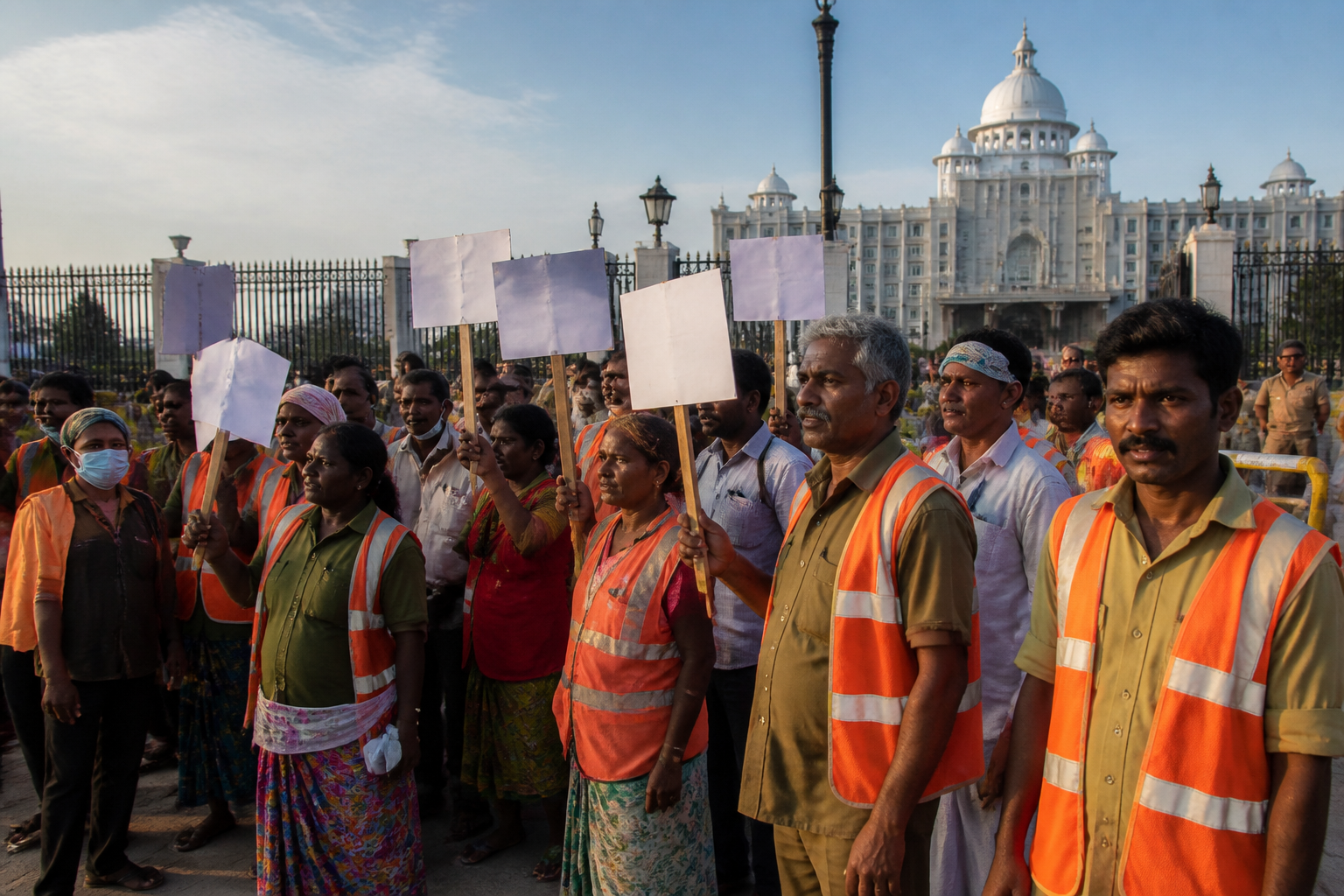
Around 150 sanitary workers and scavengers attached to police stations across Telangana protested at the Secretariat on Tuesday, seeking payment of salaries they said have remained unpaid for 20 months. The workers maintain sanitation at police stations across the State and said the delay has affected about 4,500 people.
The workers are enrolled as part-time staff and receive a minimum monthly salary of Rs 5,200, according to the report. They said repeated assurances from senior officials that the dues would be credited the following month had not resulted in payment.
“For the last 20 months, our salaries have not been paid. Every time we raise the issue, senior officers assure us that the salary would definitely be credited the next month. But it has not been paid so far,” one sanitary worker said at the Secretariat.
The protest places attention on the administrative arrangements behind sanitation services at police stations. Although the workers perform routine cleaning and maintenance duties at government facilities, their payment is linked to part-time employment arrangements, according to the workers’ account.
The workers said they had met Deputy Chief Minister Mallu Bhatti Vikramarka and Revenue Minister Ponguleti Srinivas Reddy and appealed for the release of their pending salaries. They also said they had visited Praja Bhavan, but were told that the government would have to clear the dues.
A woman worker said the monthly payment had increased over time from Rs 150 to Rs 500, then to Rs 3,000, before reaching Rs 5,200 under the previous BRS government. She said the current amount remained difficult to manage against monthly household expenses, particularly with the alleged 20-month gap in payment.
The workers had sought to meet Chief Minister A Revanth Reddy at the Secretariat on Tuesday. After learning that he was in New Delhi, they wanted to meet Home Secretary Shikha Goel and submit an appeal. The workers’ next request was therefore directed towards securing administrative action on the pending salaries.
The case also raises questions about accountability for essential sanitation work in public institutions. The workers said they had repeatedly approached officials, while the report did not include a response from the government or the police department confirming the reasons for the delay or specifying a payment timeline. No official schedule for clearing the alleged dues was provided in the report.
