


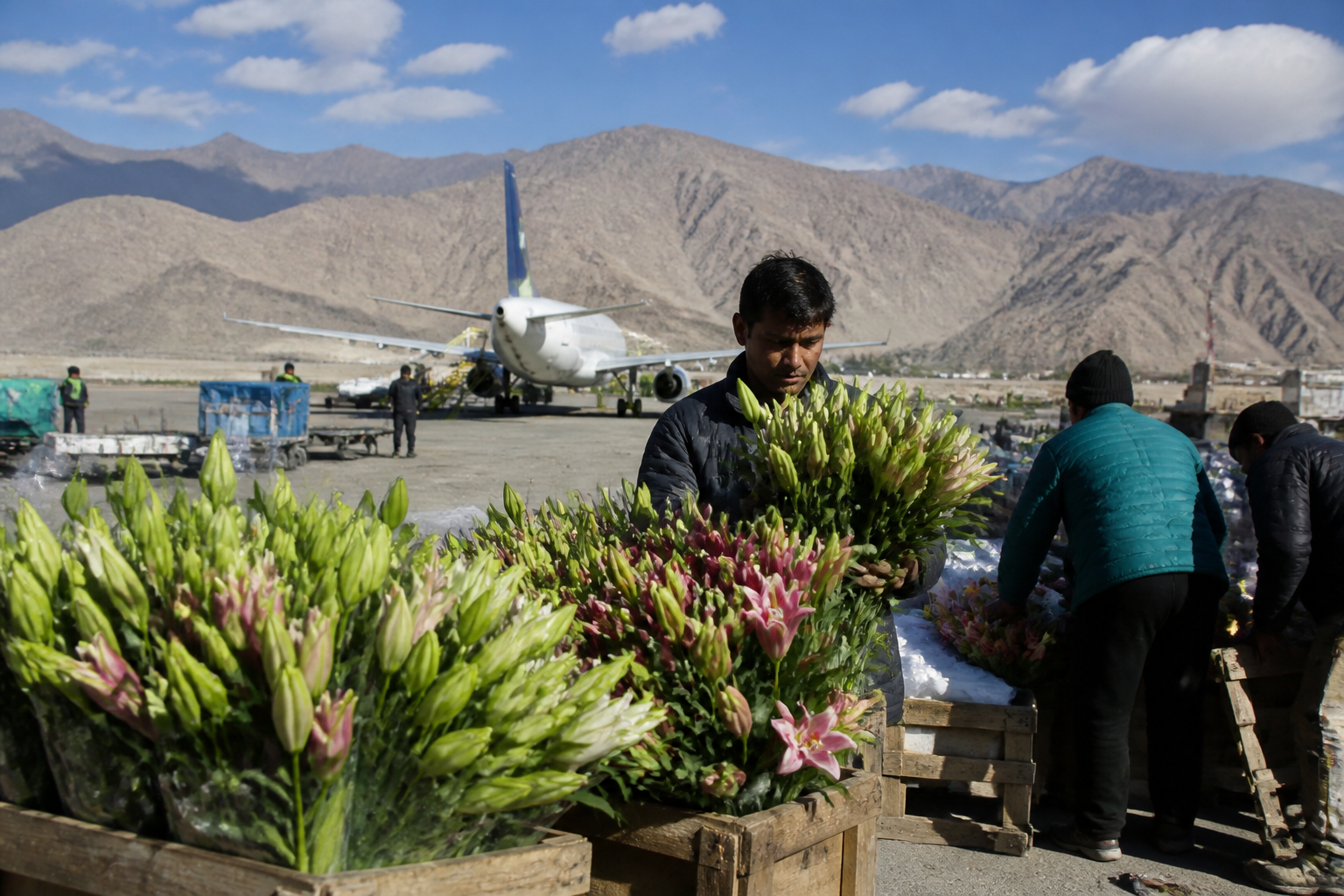
Ladakh floriculture has entered national markets with the first air shipment of 15,000 A-grade liliums grown in the Union Territory, transported from Leh airport to the national capital on Tuesday. Lieutenant Governor V K Saxena flagged off the consignment, describing the initiative as a step towards commercial floriculture and new livelihood opportunities for local communities.
The shipment was sent from Leh airport after the flower-growing initiative was executed in 60 days, according to Saxena. The consignment marks the first reported movement of Ladakh-grown liliums by air to national markets, linking flower production in the high-altitude Union Territory with buyers outside the region.
In a post on X, Saxena said the consignment represented a move towards creating new livelihoods and an “aesthetic revolution” through commercial floriculture. He said the initiative was inspired by Prime Minister Narendra Modi’s vision of improving the financial empowerment of farmers and young people through agricultural diversification.
The development places logistics at the centre of Ladakh’s emerging floriculture model. The flowers were moved through Leh airport, allowing the crop to be transported from the Union Territory to the national capital as a time-sensitive commercial consignment. The supplied report does not specify the destination markets, buyers, prices, number of growers involved or the revenue generated from the shipment.
Saxena said the initiative would create new economic opportunities and promote rural entrepreneurship in Ladakh. Commercial floriculture could provide an additional livelihood avenue in a region where the administration is seeking to diversify economic activity beyond existing sectors. However, the available information does not establish the scale of the programme, its production capacity or whether further consignments have been scheduled.
The Lieutenant Governor also linked the flower fields to tourism and film production. He said the fields could become sought-after destinations for tourists and film shoots, creating a convergence between profitable agriculture and sustainable tourism. This presents the flower-growing areas not only as production sites but also as potential visitor attractions within Ladakh’s wider tourism economy.
The initiative also introduces a new visual and land-use dimension to the region’s agricultural landscape. Saxena said the flower fields would add “multi-hued dimensions” to Ladakh’s otherwise rugged landscape. The statement does not provide details about the land brought under cultivation, the varieties grown, water requirements, cultivation methods or safeguards for environmental sustainability.
For Ladakh’s producers, the air consignment establishes a commercial link between local cultivation and national flower markets. Its longer-term significance will depend on whether the model can be expanded while maintaining reliable logistics, market access and suitable production conditions. The next stages of the initiative, including future shipments and the participation of local farmers and youth, have not been detailed in the supplied announcement.
