


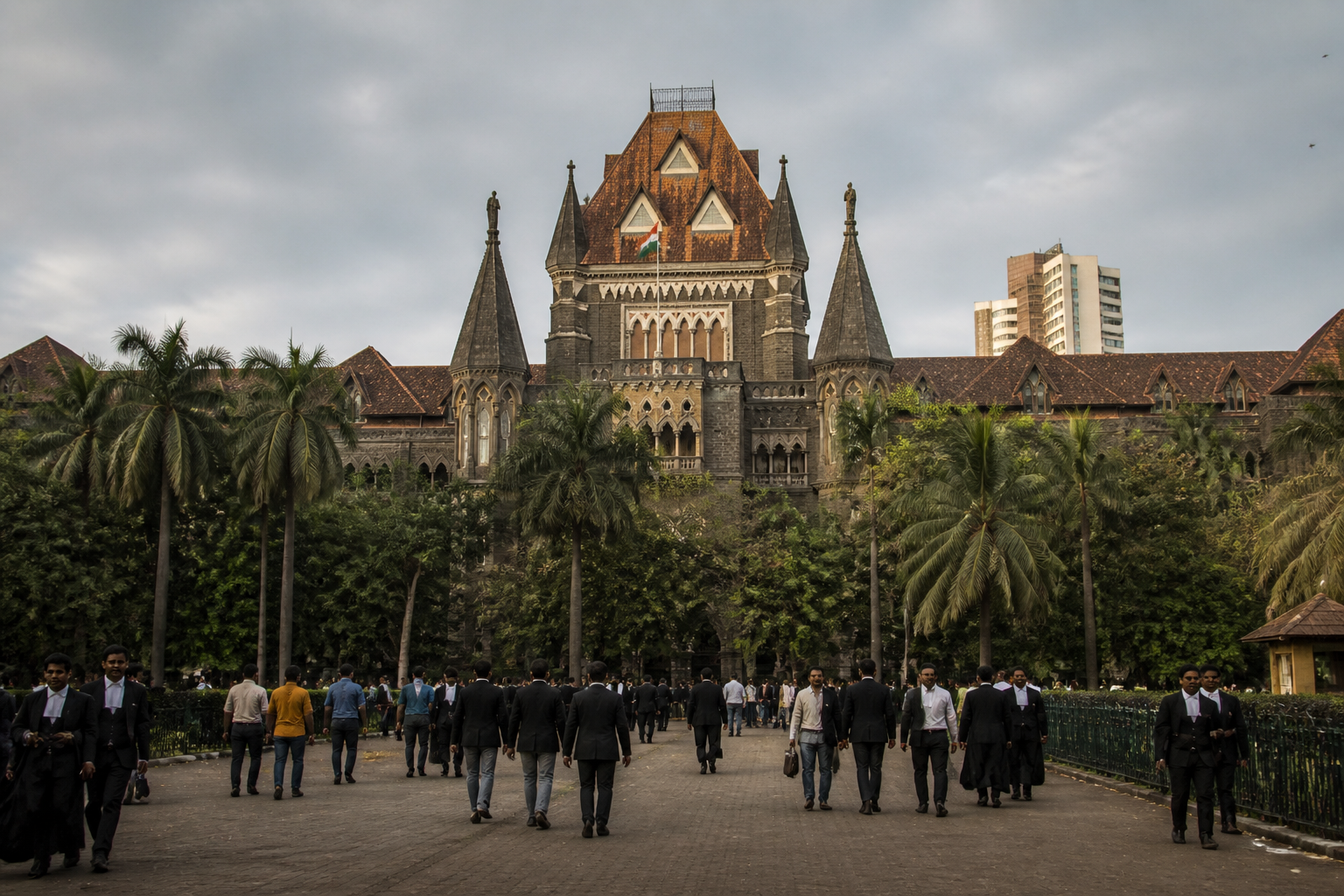
Maharashtra’s judicial system is expanding on paper while operating with less than half of its sanctioned judicial strength. An affidavit filed by the state Law and Judiciary Department shows that only 2,116 of 5,195 sanctioned judicial posts were filled in 2026, leaving nearly 60 per cent vacant. The Bombay High Court has described the situation as “glaring” at a time when the state’s district, sessions and magistrate courts carry more than 61 lakh pending cases.
The figures expose a gap between creating court capacity administratively and making that capacity functional on the ground. Sanctioned posts represent the staffing strength approved for the judiciary. Working strength represents the officers actually available to hear cases. In Maharashtra, the difference between the two has widened sharply even as the sanctioned cadre has grown.
The issue came before the Bombay High Court during hearings on pleas concerning appointments to civil judge junior division and Judicial Magistrate First Class posts. Chief Justice Mahesh Chandra Tripathi said he had encountered the shortage while reviewing judicial infrastructure and cadre strength earlier in September. He said the court had constituted a committee to examine the situation and communicate it to the Public Service Commission.
The affidavit was filed in response to an interim application in a public interest litigation filed by activist Vihar Shivajirao Durve. The petition seeks directions for setting up fast-track courts to address the pendency of cases involving crimes against women and children. The state also faces a shortfall in functional fast-track courts, adding a specialised capacity problem to the wider vacancy crisis.
The staffing trend is significant because it shows that the present problem is not simply a recent failure to recruit. In 2014, Maharashtra had 1,909 sanctioned judicial posts, of which 1,643 were filled. The working strength was therefore 86.07 per cent of the sanctioned cadre. The state then expanded its sanctioned strength through circulars issued in 2024. It reached 5,196 posts in 2025, but the working capacity was 2,054 officers, or 39.53 per cent.
In 2026, the sanctioned strength stood at 5,195 posts and the number of filled positions rose to 2,116. That lifted the working strength marginally to 40.73 per cent, but left nearly three out of every five approved posts vacant. Compared with 2014, the share of filled posts has fallen by more than 45 percentage points, even though the sanctioned cadre has more than doubled.
This distinction matters for how court performance is assessed. A state may announce additional posts, courtrooms or fast-track arrangements, but those measures do not automatically create more hearings unless judicial officers are appointed and supported by the necessary administrative infrastructure. Vacant positions can leave courtrooms underused, increase the load on serving judges and make case scheduling more difficult.
The Bombay High Court’s concern is also directed at the sequence in which judicial expansion is being pursued. Chief Justice Tripathi questioned a proposal to create around 3,000 additional judicial posts when thousands of existing positions remain vacant. “Out of 5,000-odd posts, we have only nearly 2,500 judicial officers. Where is the justification to increase the number?” he asked during the hearing.
He also linked any expansion to the infrastructure and administrative support required to make new posts operational. “We have to provide the infrastructure and other accessories also. That would be tremendously dependent upon state facilitation,” he said. The observation places the vacancy issue within a larger institutional chain involving recruitment, court buildings, staff, technology, records, prosecution arrangements and state-level administrative support.
The court’s comments therefore raise a question beyond the immediate appointment process: whether the government’s capacity to sanction judicial positions is being matched by its capacity to operationalise them. A sanctioned post without a serving officer does not reduce the number of pending cases. Nor does a new court designation, including a fast-track court, necessarily deliver faster adjudication unless the court has judges, staff, space and a functioning administrative system.
The scale of the backlog gives the vacancy figures their public significance. According to the National Judicial Data Grid, Maharashtra’s district, sessions and magistrate courts have more than 61 lakh pending cases. The supplied material does not provide a case-wise breakdown showing how much of this pendency is directly attributable to vacancies. It does, however, establish that the staffing shortage exists alongside a very large subordinate-court caseload.
That distinction is important. Pendency is shaped by several factors, including the number of cases entering the system, adjournments, investigation and prosecution timelines, the availability of witnesses, judicial vacancies and the capacity of court administration. The available figures cannot establish that vacancies alone caused the entire backlog. They do show that the system is attempting to process a substantial volume of litigation with fewer than half of its sanctioned judicial officers in place.
The proposed focus on cases involving crimes against women and children adds another layer. Fast-track courts are intended to provide greater institutional attention to specified categories of cases, but the PIL before the High Court indicates that the state does not yet have the required number of functional fast-track courts. If the existing court system is already short of officers, creating specialised courts raises the same question of staffing and infrastructure: whether designation can be converted into actual additional capacity.
Maharashtra’s experience also illustrates the difference between numerical expansion and effective capacity. The sanctioned strength increased from 1,909 posts in 2014 to more than 5,000 in 2025 and 2026. Yet the proportion of filled posts declined from 86.07 per cent to 40.73 per cent. The data indicates that expansion outpaced recruitment and appointment, leaving the state with a larger approved system but a smaller operating share.
The administrative responsibilities are distributed across institutions. The state Law and Judiciary Department submitted the affidavit containing the staffing figures. The Bombay High Court is addressing the issue on its administrative and judicial sides, including through a committee and proceedings concerning appointments. The Public Service Commission is relevant to the recruitment process for at least some judicial posts. The Chief Justice also pointed to the state’s role in providing infrastructure and associated support.
This distribution can make accountability difficult to locate. Recruitment may be delayed at one stage, while court buildings, staff or equipment may not be ready at another. A court may therefore have a sanctioned position but no appointed officer, or an appointed officer without sufficient supporting capacity. The affidavit and the High Court’s observations do not provide a complete diagnostic breakdown of delays at each stage, but they identify the combined effect: a large difference between approved and functioning judicial strength.
The debate over 3,000 additional posts should consequently be read alongside the existing vacancy numbers rather than separately from them. The proposal may reflect a legitimate assessment of future judicial demand, but the High Court’s question is whether expansion can be justified before the current cadre is made functional. The answer depends on the government’s recruitment, appointment and infrastructure plans, none of which are fully detailed in the supplied material.
For citizens, the institutional issue appears as delay, repeated listings and limited access to timely hearings, although the supplied report does not quantify the individual experience of litigants. For the justice system, the immediate challenge is measurable: more than half of sanctioned judicial posts are vacant, the working strength is about 40.73 per cent and district courts face over 61 lakh pending cases.
The evidence confirms a structural capacity gap rather than a simple shortage of approved posts. Maharashtra has expanded its formal judicial establishment but has not filled it at the same pace. The next developments to watch are the committee’s engagement with the Public Service Commission, the state’s response on filling existing vacancies, the availability of functional fast-track courts and the administrative plan for any proposed increase in judicial strength.
