


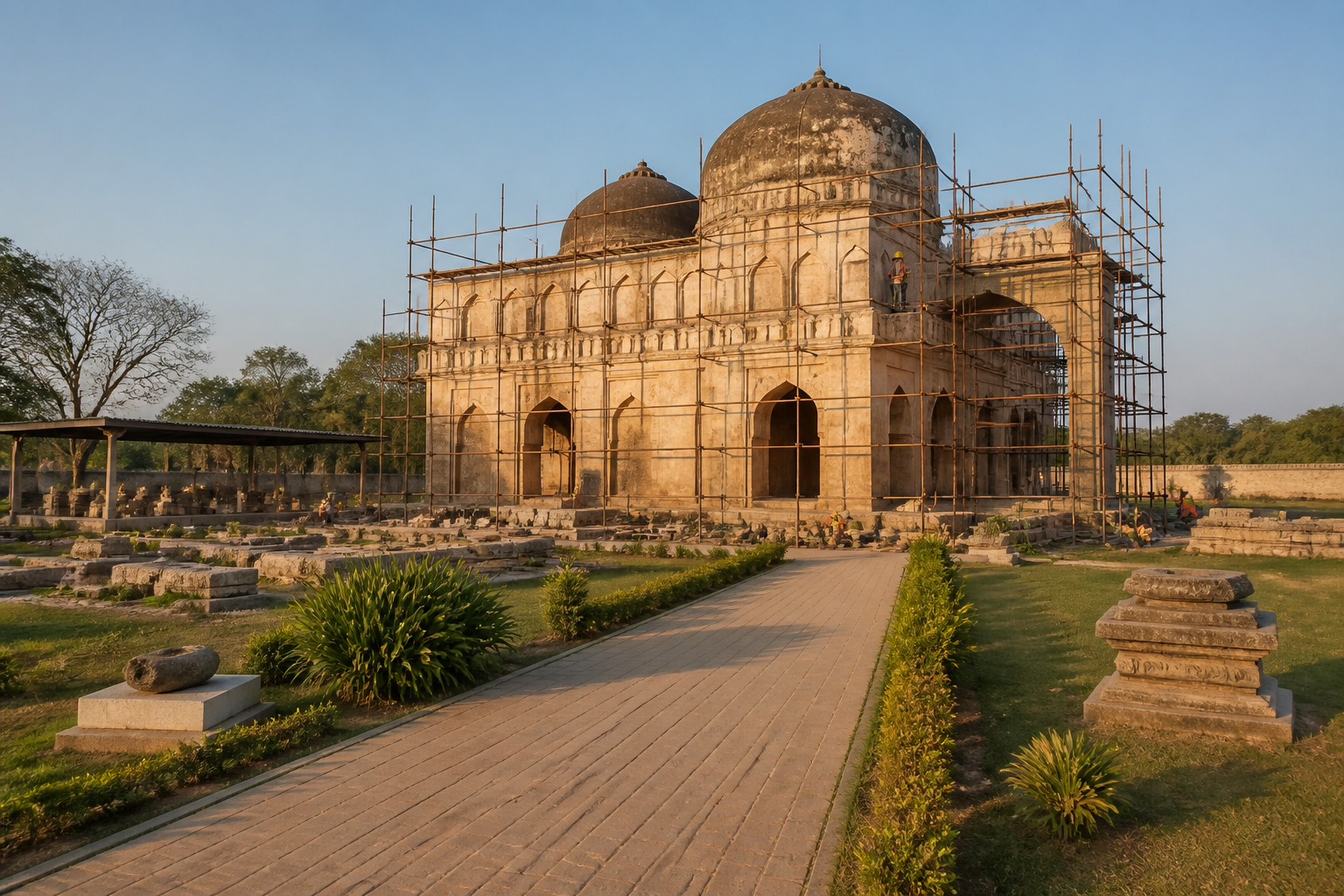
The Archaeological Survey of India plans to reopen the Kondapur site museum in Sangareddy in November, restoring public access to nearly 8,900 antiquities after the museum remained closed for three years following a ceiling collapse.
The museum, located around 100 km from Hyderabad, is undergoing restoration and renovation works intended to improve both the building and the visitor experience. The ASI is also planning interactive platforms and landscaping as part of an effort to develop the archaeological site as a weekend heritage destination.
ASI Hyderabad Circle superintending archaeologist Nihil Das said the museum was closed after a portion of its ceiling collapsed in 2023. “It took some time to prepare a detailed project report for executing renovation works, which have now been half completed. We are planning to inaugurate it in the month of November,” he told Deccan Chronicle.
The closure kept one of the region’s important archaeological collections away from tourists, students and heritage enthusiasts. The planned reopening will bring back public access to objects that document the life, technology, art and trade networks of people who lived at the ancient settlement.
The Kondapur archaeological site dates to the Satavahana period, between 200 BCE and 200 CE. The museum’s collection includes terracotta figurines, pottery, beads, coins, bone and shell objects, metal artefacts, pendants, inscribed pottery, prehistoric stone tools and fossils. One of the notable exhibits is a Buddhapada, or stone representation of the Buddha’s footprints.
The artefacts were recovered during excavations conducted in 1940-41 under the Department of Archaeology of the erstwhile Hyderabad State during the rule of the Nizam, and again in 1948-49. The discoveries were initially preserved in a small museum at the archaeological site. After the integration of Hyderabad State into the Indian Union, the archaeological establishment underwent administrative changes and the museum came under the ASI in 1952.
The collection was later shifted to the present building, which includes a central hall and two galleries. The central hall displays material ranging from pottery and terracotta figurines to coins and inscribed pottery, while the galleries contain prehistoric stone tools, fossils and other objects of historical and artistic significance.
The restoration comes as the ASI seeks to improve the site’s overall ambience and make the museum more accessible as a public heritage destination. The reopening will depend on the completion of the remaining renovation work and the planned inauguration in November.
