


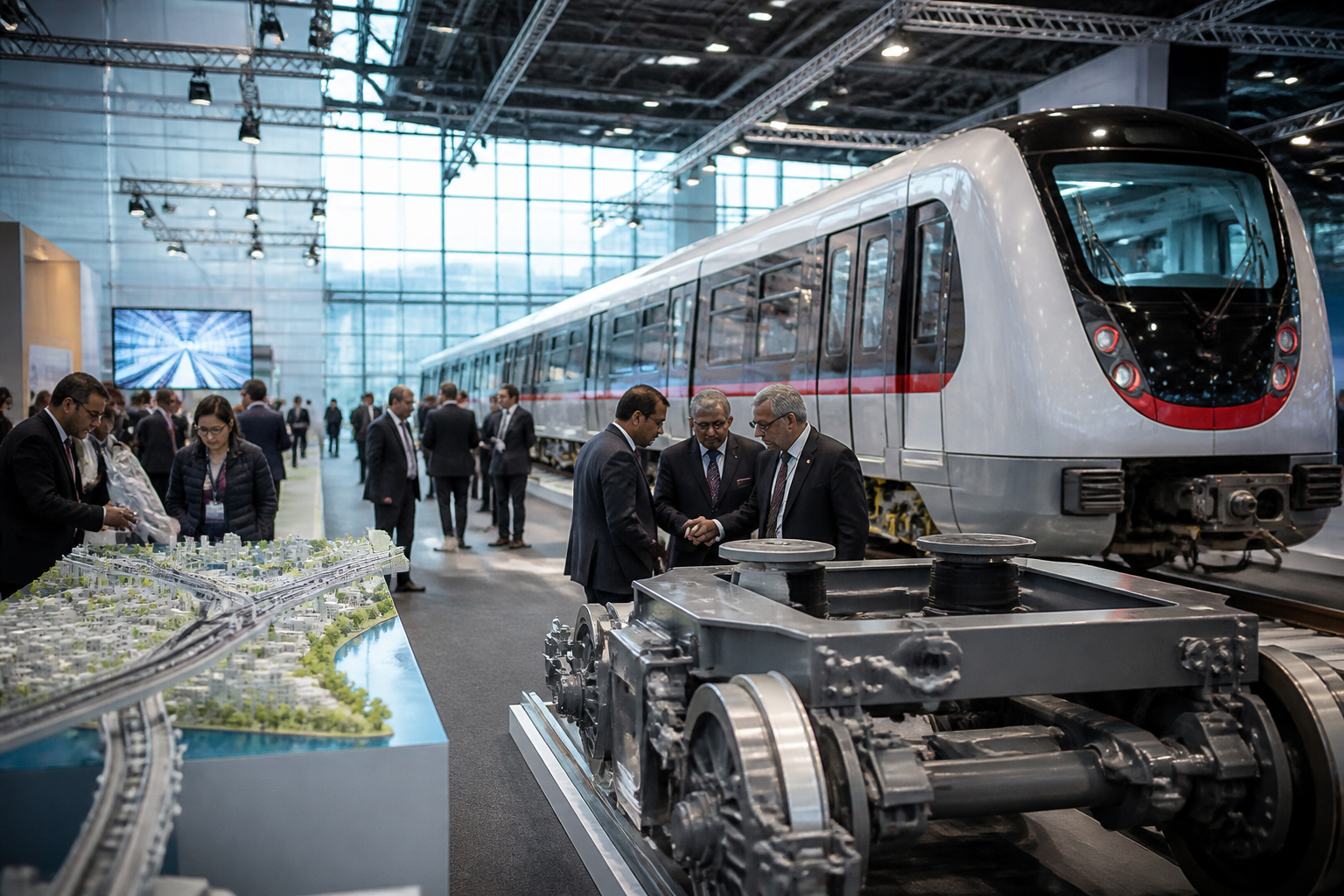
Delhi Metro’s planned global expansion is moving from ambition to market-building, with its wholly owned subsidiary Delhi Metro International Limited (DMIL) preparing to present its capabilities at InnoTrans 2026 in Berlin. The move is significant because it positions an Indian metro institution not merely as an operator of a large domestic network, but as a potential provider of operations, maintenance, consultancy and project-management expertise to cities beyond India.
DMIL’s participation in the international rail trade fair is not being framed as a new metro construction announcement in Delhi. It is a commercial and institutional expansion effort. According to the report, the company has taken part in five international tenders over the past three months and is examining opportunities in West Asia, selected European markets, Africa and, eventually, North America. The central question is therefore not whether Delhi Metro can build influence abroad, but whether its operating experience can be translated into contracts and partnerships in very different urban, regulatory and financial environments.
From metro operator to international service provider
Delhi Metro Rail Corporation (DMRC) has historically been understood through the infrastructure it operates in the National Capital Region. The network currently extends beyond 416 kilometres, includes more than 300 stations and handles approximately 6.5 million passenger journeys each day, according to the supplied report. Those figures provide the institutional foundation for DMIL’s pitch: a large operating network, experience with complex urban transport systems and exposure to the practical demands of maintaining daily passenger services.
DMIL’s proposed role is broader than selling equipment or participating in a single construction package. DMRC Principal Executive Director for Corporate Communications Anuj Dayal said the company would use InnoTrans to demonstrate capabilities in operations and maintenance, consultancy, project management and advisory services. The company is also seeking discussions with transit authorities, infrastructure companies, technology providers, operators and other mobility stakeholders.
That range matters. Metro systems are often assessed publicly through visible assets such as stations, trains and viaducts, but their long-term performance depends on less visible institutional functions. Operations control, asset maintenance, project coordination, procurement, safety procedures and integration between different technical systems determine whether a network remains reliable after construction is complete. DMIL’s international proposition is built around this operating knowledge rather than only around physical construction.
Why internationalisation is a different challenge
A domestic metro network can develop through a particular legal, financial and administrative framework. An international advisory or operating assignment requires the same expertise to work across different procurement rules, labour systems, regulatory authorities, financing structures and local transport priorities. The supplied material does not identify the five tenders in which DMIL has participated, their locations, contract values or outcomes. That absence is important: tender participation demonstrates an attempt to enter the market, but it is not evidence of a secured international contract.
The company’s stated geographical focus also shows that it is approaching internationalisation as a portfolio of opportunities rather than as a single-market strategy. West Asia and selected European markets are being explored in the near term, while North America is described as a market for future assessment. Africa is another potential region, with opportunities possibly pursued alongside local companies and the Indian government.
Each of these regions contains cities with different levels of existing transit capacity and different approaches to public infrastructure. The report does not provide details of the specific cities, authorities or projects under consideration. As a result, the present evidence supports a conclusion about strategic direction, not about the likely success of individual bids. DMIL has begun looking outward; the commercial and operational results remain to be established.
The value of operating experience
Sanjay Jhamuar, DMIL’s chief executive officer, described InnoTrans 2026 as an opportunity to demonstrate the expertise of DMRC and DMIL and to engage with transit authorities, infrastructure partners and mobility-sector leaders. He also said the company sees opportunities to take its engineering expertise and real operating experience into international markets, while learning from practices being developed elsewhere.
The emphasis on real operating experience is central to the institution’s international positioning. A city considering a new metro or seeking to improve an existing one may require more than a design consultant. It may need help managing the transition from project delivery to daily operations, coordinating multiple contractors, maintaining assets and adapting systems to changing mobility requirements. DMIL is presenting itself as an organisation that can contribute across these stages.
However, the distinction between experience and transferability cannot be ignored. Running a large network in Delhi does not automatically establish that the same methods will work in another city. International assignments typically require local partnerships, adaptation to local institutions and clarity over responsibility between the transit authority, contractors, technology suppliers and advisers. The source indicates that DMIL wants to build such partnerships, but it does not yet provide evidence of completed overseas work through the subsidiary.
InnoTrans as a market-making platform
The Berlin event gives DMIL access to a concentrated international audience from the rail and urban transport sector. The supplied report describes InnoTrans as the world’s largest biennial trade fair focused on the rail transport industry. For DMIL, the value of attendance is therefore not limited to visibility. It creates a setting in which a public-sector-origin institution can meet potential clients, suppliers and partners in the same professional ecosystem.
The 2026 edition is expected to focus on technologies shaping rail transport, including autonomous public transport, cybersecurity, robotics, 3D printing and artificial intelligence. These themes broaden the discussion beyond conventional metro construction. They also place pressure on organisations seeking international work to demonstrate that they understand the digital and operational risks associated with increasingly connected transit systems.
DMIL’s announcement does not claim that it is offering a proprietary autonomous transport platform, artificial intelligence system or cybersecurity product. Its stated offer is centred on operations and maintenance, consultancy, project management and advisory services. The relevance of the technology themes is that future metro projects will increasingly require institutions to coordinate technical systems and manage new forms of operational complexity. The extent to which DMIL can contribute in those areas will become clearer through its engagements and tenders.
The institutional shift behind the announcement
The formation and promotion of DMIL reflects a wider shift in how large public infrastructure organisations can use accumulated expertise. A metro corporation traditionally exists to plan, build and operate a transport network for a defined public jurisdiction. A dedicated international subsidiary creates a separate vehicle through which that knowledge can be marketed, partnerships can be negotiated and overseas opportunities can be pursued.
This structure also separates the public service function of operating Delhi’s metro system from the commercial objective of seeking work abroad. The source does not set out DMIL’s financial model, ownership arrangements beyond its relationship with DMRC, staffing structure or how international assignments would be governed. Those details will matter when assessing whether the subsidiary can generate revenue without affecting its parent organisation’s core responsibilities.
The announcement nevertheless indicates that DMRC sees its operational record as an institutional asset with value beyond the National Capital Region. That is an important change in scale. Metro expertise is no longer being presented only as an input into Delhi’s transport system; it is being positioned as a service that could support other urban transport authorities.
What the evidence confirms—and what it does not
The evidence currently confirms four developments. DMIL will make its international debut at InnoTrans 2026 in Berlin. It intends to showcase operations and maintenance, consultancy, project management and advisory capabilities. It has participated in five international tenders during the previous three months. And it is exploring markets across West Asia, Europe, Africa and potentially North America.
The available material does not confirm that DMIL has won any of those tenders, signed an overseas operating contract or entered a specific partnership. It also does not establish the expected revenue, investment requirement or timeline for the company’s international expansion. These are not minor details. They will determine whether the initiative becomes a sustained business line or remains primarily a platform for building contacts and assessing opportunities.
For now, the most defensible reading is that Delhi Metro is attempting to convert scale and operating experience into an international advisory and project-services proposition. The Berlin appearance is an important public marker of that strategy, but not its final test.
The developments to watch are the outcome of the five tenders, the identity of DMIL’s overseas partners, the services included in any awarded contracts and the institutional arrangements used to deliver them. Those milestones will show whether Delhi Metro’s global expansion has moved beyond visibility into measurable participation in the planning, management and operation of urban transport systems abroad.
