


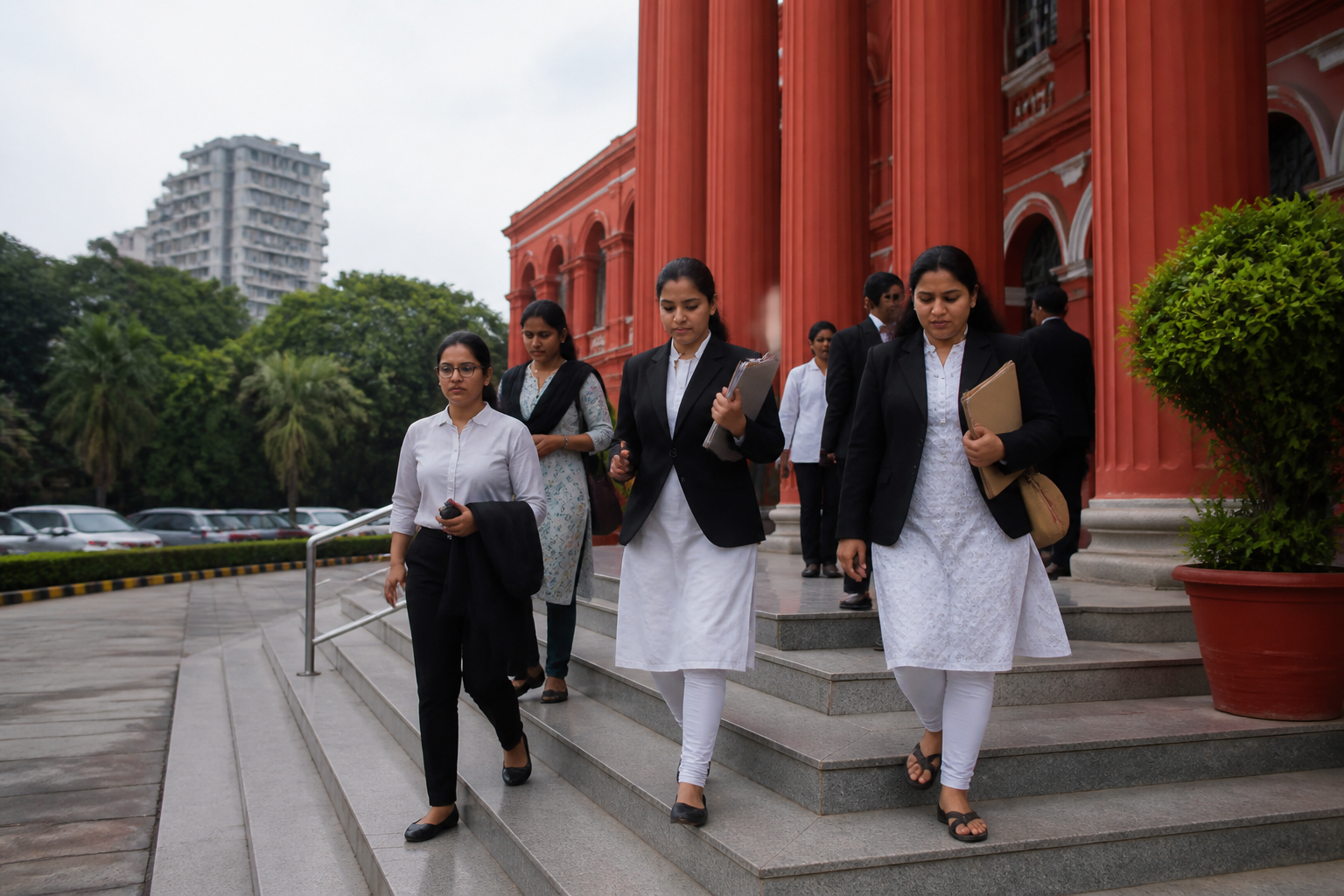
The Karnataka High Court has reserved its judgment on petitions challenging the state’s policy granting women employees one paid day of menstrual leave each month, after the Advocate General defended the measure as necessary for women’s health and dignity.
The hearing on the petitions was completed before Justice Anant Ramanath Hegde, who was sitting as a single judge. The challenges have been filed by the Bengaluru Hotels Association president H.S. Subramanya and others against the notification issued by the state Labour Department on November 20, 2025.
Advocate General K. Shashikiran Shetty told the court that the Karnataka government had introduced the menstrual leave policy from the perspective of women’s health and dignity. He strongly defended the state’s authority to issue the order and said the question of federalism did not arise in the matter.
According to the Advocate General, Article 162 of the Constitution gives the state government the power to take such a decision. He also told the court that the policy was based on the report of an expert committee. The committee had already heard the petitioners’ representations, objections and suggestions, he submitted. The state also brought to the court’s attention that the Law Commission had made recommendations on the issue.
The notification provides one day of paid menstrual leave every month to women employees working in establishments registered under various labour laws. The policy therefore applies to workplaces covered by the relevant statutory registration framework, including the establishments represented by the petitioners.
The petitioners have argued that the order violates the right to equality guaranteed under Article 14 of the Constitution. Their petition states that the policy could lead to gender discrimination and create a perception among employers that women are weaker than men, according to the report.
The challenge places two competing questions before the court: whether a state government can require covered establishments to provide paid menstrual leave, and whether such a measure advances workplace equality or risks reinforcing discriminatory assumptions. The government’s position is that the policy is a health and dignity measure supported by expert review, while the petitioners have questioned its constitutional consequences for women’s treatment in employment.
With the arguments now concluded, the court has reserved its judgment. The ruling will determine whether the November 20, 2025 notification can remain in force in its present form or whether the policy will face legal restrictions.

