


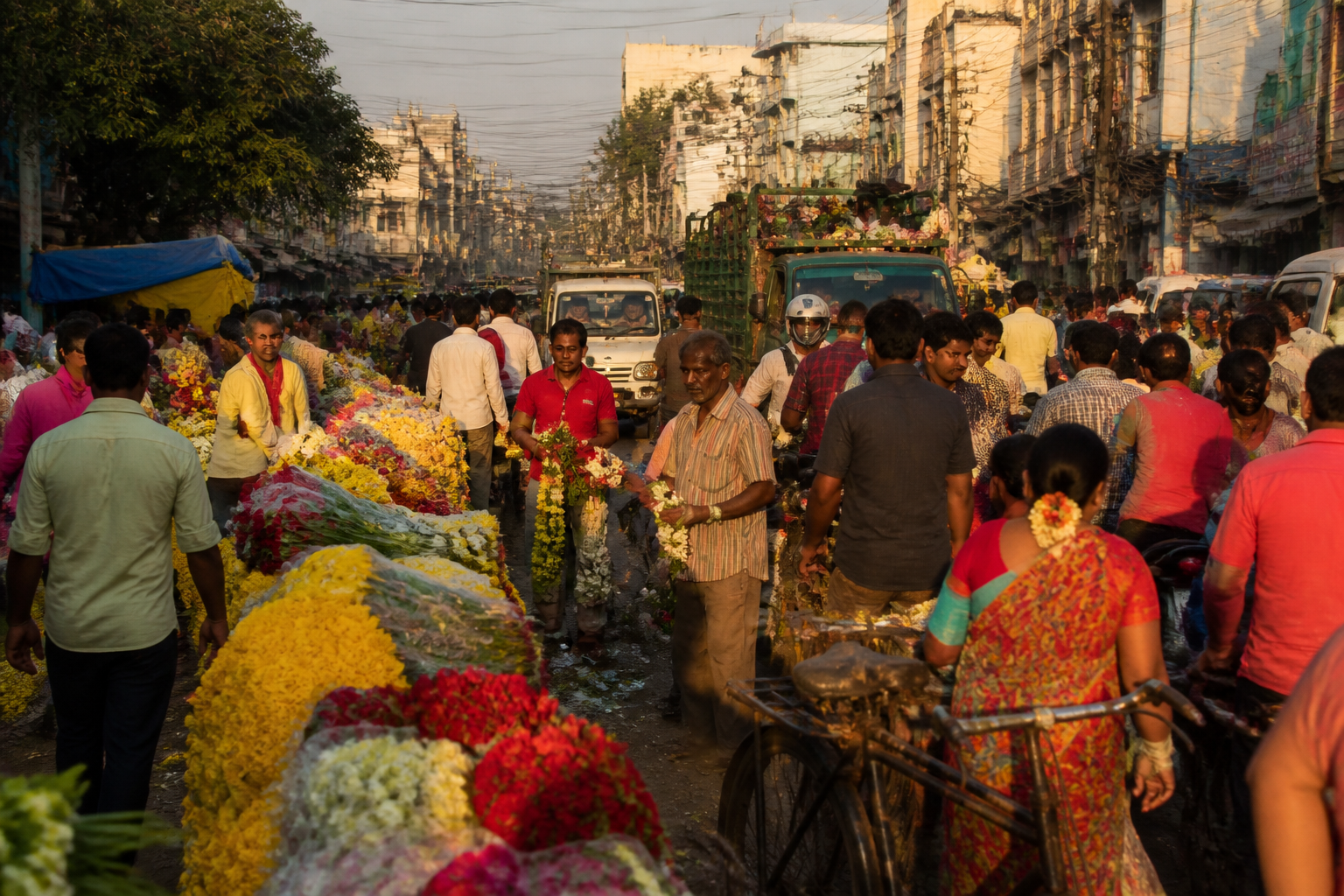
Nellore’s Vinayaka Chavithi rush pushed flower prices sharply higher and slowed traffic around several commercial areas as residents and pandal organisers completed their purchases ahead of the festival. Chrysanthemum prices rose to ₹250 a kg from ₹100 two days earlier, according to a report by Deccan Chronicle – South.
Roses were being sold at ₹300 a kg, compared with ₹100 previously, while marigold prices doubled from ₹40 to ₹80 a kg. The steep increases came as markets recorded heavy footfalls and shoppers bought flowers, fruits, puja articles, idols and decorations.
The demand extended beyond festival essentials. Vendors reported brisk sales of decorative umbrellas, colourful hangings and other accessories used to decorate homes and Ganesh pandals, despite higher prices. Ganesh idol sellers also displayed models in different sizes and designs for household and community celebrations.
The festival market highlighted a continuing price difference between idol materials. Plaster of Paris idols continued to attract buyers because they were cheaper, while environment-friendly clay idols saw lower demand because of their higher prices. The report did not provide a wider comparison of sales volumes or the total number of idols sold.
The rush also affected movement through parts of the city. Vehicles transporting idols to pandals, along with shoppers and vendor activity, slowed traffic around the A.C. Subba Reddy Vegetable Market, Trunk Road, the flower market near Atmakur Bus Stand and the Stonehousepeta wholesale market.
Shopping areas began filling from the morning as households made last-minute purchases and organisers moved idols to celebration sites. The concentration of festival commerce around existing markets brought together retail activity, pedestrian movement, goods transport and temporary stalls in already busy commercial zones.
By Sunday, Nellore had taken on a distinct festive appearance, with traders serving customers and pandal organisers completing preparations ahead of Vinayaka Chavithi. The report did not mention any formal traffic diversion, enforcement measure or market-level price intervention by local authorities.
