


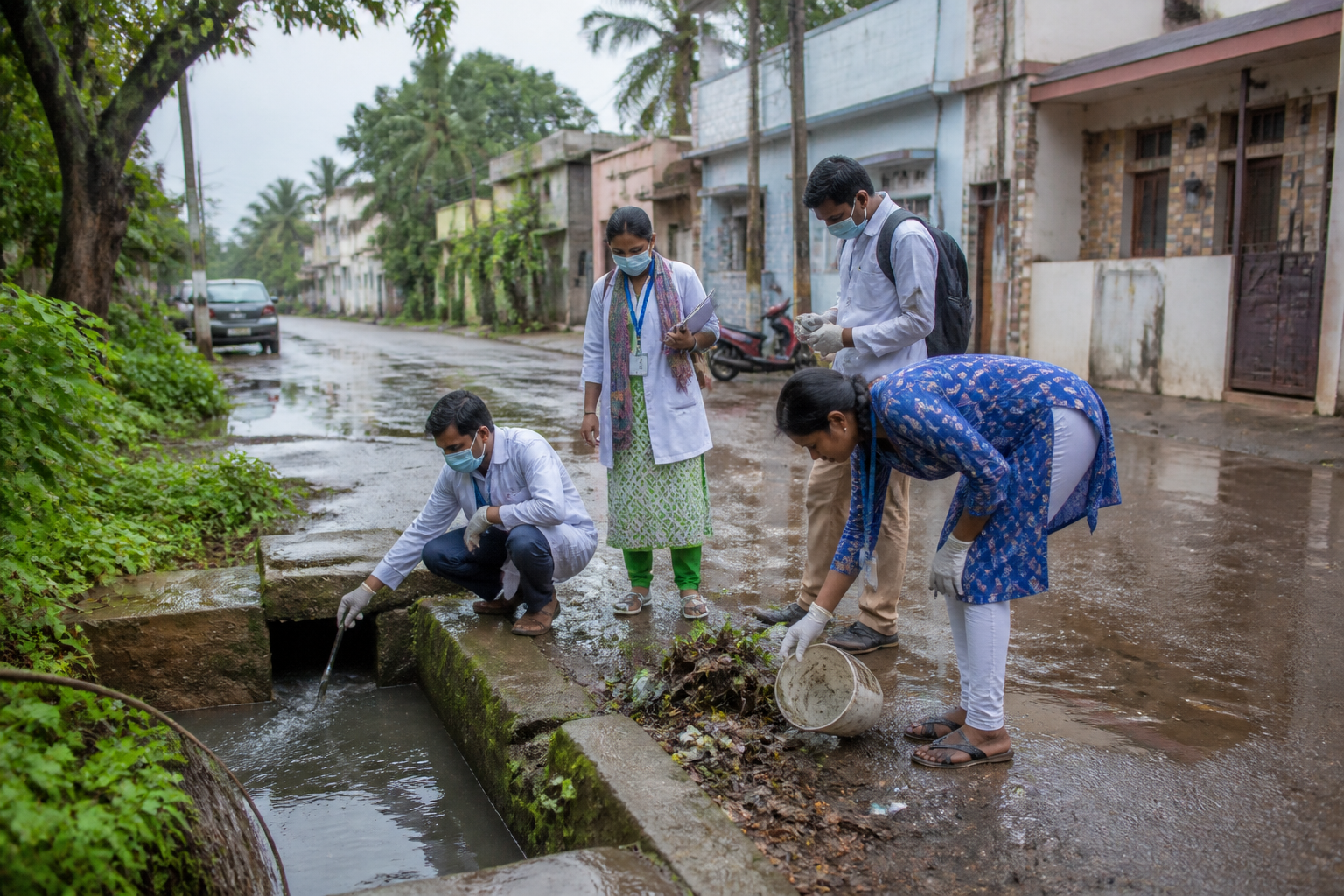
Andhra Pradesh has intensified disease surveillance and preventive action after heavy rainfall increased the risk of malaria, dengue, scrub typhus and water- and food-borne diseases across the state, with officials directed to identify emerging hotspots and act on stagnant water, silted drains, garbage heaps and other breeding sites.
Health Minister Satya Kumar Yadav instructed officials to strengthen field-level operations and improve disease reporting so that automatic alerts reach officials at all levels when cases cross predetermined thresholds. The measures bring health, rural development and urban development departments into a coordinated response focused on surveillance, sanitation and local prevention.
As of August 30, Andhra Pradesh had reported 7,895 malaria cases, compared with 6,172 during the corresponding period last year. The increase of 1,723 cases represents a 27.9 per cent rise. Alluri Sitarama Raju, Polavaram and Vizianagaram were identified as areas where cases had risen particularly sharply.
Officials have been asked to intensify indoor residual spraying, distribute mosquito nets and undertake larval control, particularly in malaria-prone tribal areas. The second round of indoor spraying is to be completed in Alluri Sitarama Raju, Polavaram, Parvathipuram Manyam and Eluru districts. Further rounds will be taken up in vulnerable areas if required. Distribution of 5,99,367 mosquito nets to eligible beneficiaries has also begun.
Dengue cases have increased more moderately, from 1,410 last year to 1,475 this year, a rise of 4.6 per cent. YSR Kadapa recorded an increase from 48 to 128 cases, while Chittoor rose from 73 to 112. Kurnool recorded a decline from 182 to 106 cases, and Anakapalli fell from 99 to 64. Yadav directed officials to carry out spraying, fogging and larval control immediately around dengue cases.
The state has also recorded 941 scrub typhus cases this year. In Alluri Sitarama Raju, cases increased from 13 to 44, while Parvathipuram Manyam recorded a rise from 15 to 47. Health staff have been instructed to test fever cases promptly, especially in areas near forests, and to ensure early treatment and medicine availability.
Water- and food-borne diseases are adding to the pressure on local sanitation systems. Srikakulam recorded an increase from 34 such cases last year to 408 this year, prompting inspections of drinking water sources, purification measures and stronger sanitation and food-quality checks. The state has recorded 930 water- and food-borne disease cases this year. In Kurnool, officials will inspect drinking water sources following a rise in typhoid cases and undertake purification and sanitation measures wherever necessary.
The state has also directed officials to conduct a Dry Day every Friday, involving ASHA workers, health staff, village and ward secretariat personnel and residents. The exercise will focus on clearing stored water in containers, discarded articles and other mosquito-breeding locations. Monitoring will be carried out through an app, while larval control measures, including the use of larvivorous fish where feasible, will be undertaken.
Officials will use surveillance systems to identify emerging hotspots and coordinate action against stagnant water, silted drains and garbage heaps. The health, rural development and urban development departments have been instructed to continue joint preventive and sanitation measures.
