


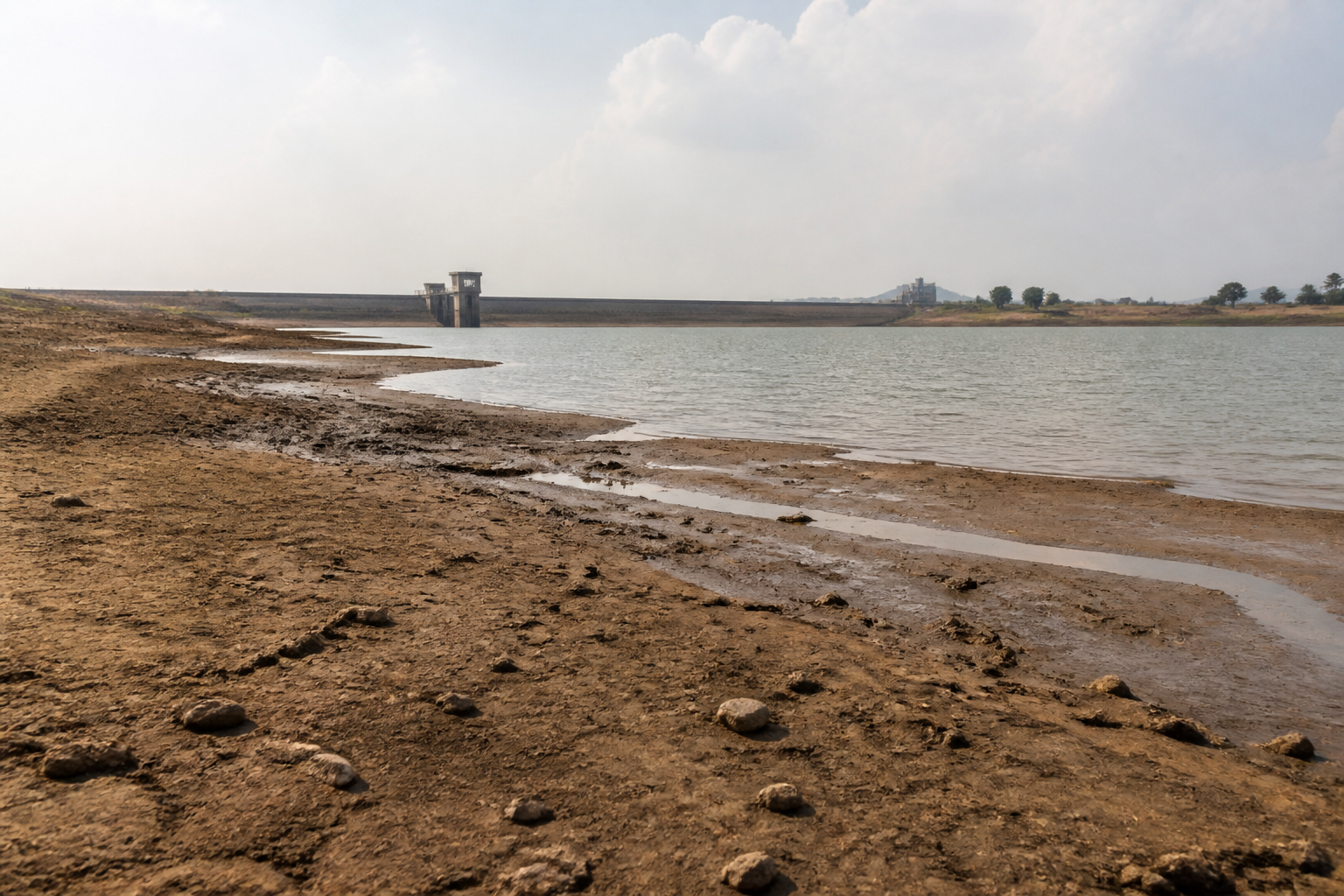
Chennai’s Krishna water supply from Andhra Pradesh’s Kandaleru reservoir is expected to stop within the next two to three days after the reservoir’s storage fell sharply, with the current discharge reduced to 40 cusecs, according to a senior Water Resources Department official.
The reduced inflow has raised concerns over Chennai’s reservoir levels and the city’s longer-term water security. Chennai received around 3 TMC of Krishna water between May and September, below the usual 4-5 TMC received during the period.
Andhra Pradesh began releasing water from Kandaleru on February 25 to augment Chennai’s storage. The water reached Poondi reservoir on March 4, but the discharge was temporarily halted on March 29 because of maintenance work on water bodies in Andhra Pradesh. Supply resumed on May 15, when releases were restored to between 180 and 200 cusecs.
The discharge remained at that level until July 10. Andhra Pradesh then increased the release to 455 cusecs in July, despite low storage in Kandaleru, and maintained that outflow until the first week of September. From September 10, the release was reduced to 100 cusecs and subsequently declined to the current 40 cusecs.
“Since there was no rainfall in Andhra Pradesh and water storage in the Kandaleru reservoir was only 17 TMC, the state had to meet its requirements for the second crop cultivation. So, the outflow to Chennai was reduced. The supply is expected to stop temporarily in the next two to three days,” the official said.
At present, Chennai’s reservoirs hold around 5 TMC of water, which officials estimate will meet the city’s requirements for the next five months. The 3 TMC of Krishna water received so far could support supply for another three months, extending the available buffer until February 2027, according to the officials cited in the report.
Officials said the outflow from Kandaleru could resume if the reservoir receives adequate inflows after rainfall in its catchment areas. They also cautioned that a deficient northeast monsoon could result in water shortages during the summer of 2027.

