


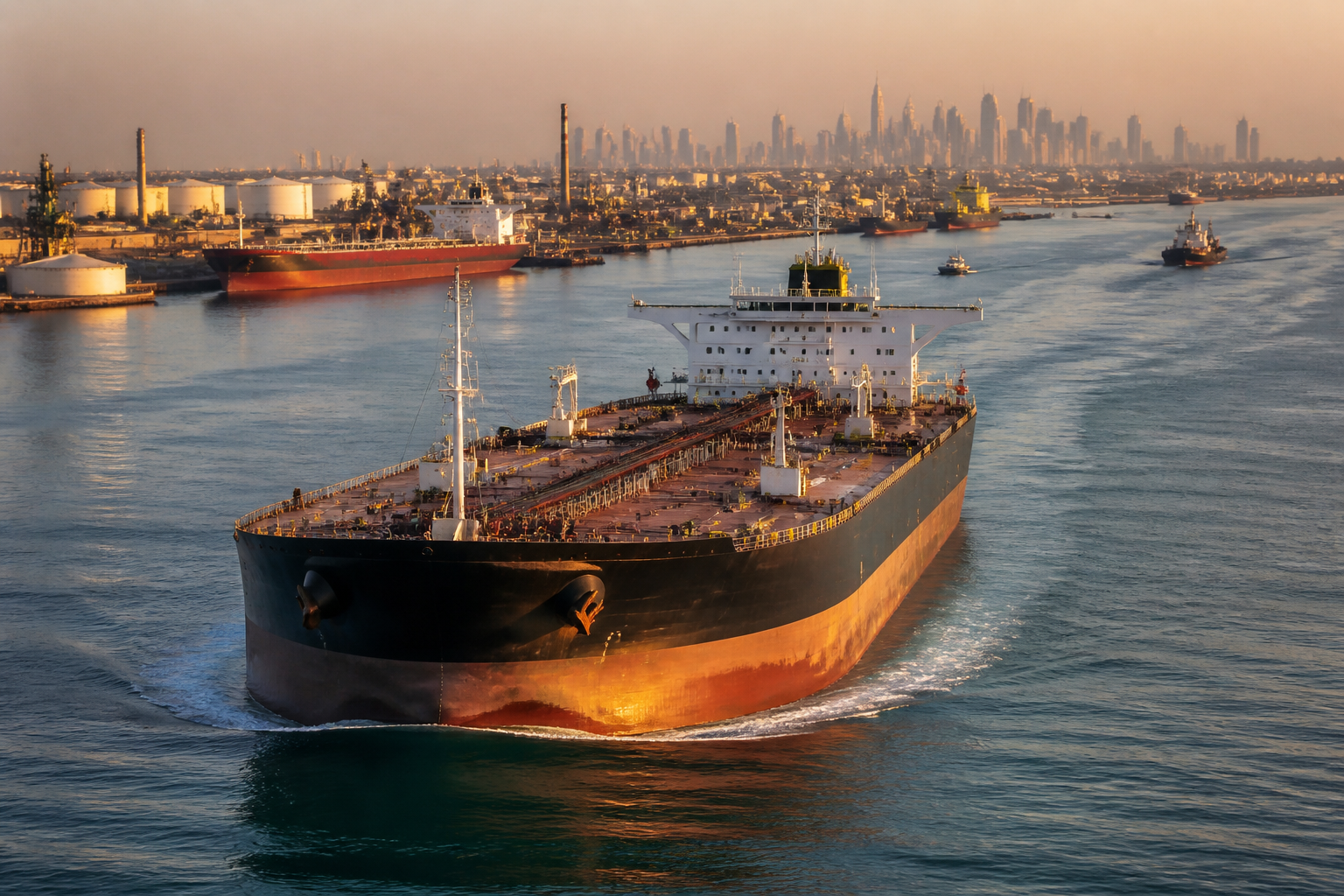
Brent crude oil prices crossing $100 a barrel has turned a geopolitical conflict into an urban economic risk. The immediate event is a sharp rise in benchmark oil prices, driven by fears that fighting in the Middle East could disrupt production, shipping routes and the movement of crude to global buyers. The wider concern is how a prolonged supply shock could reach cities through transport costs, construction activity, utilities and household budgets.
Brent crude futures touched $100.19 a barrel on Wednesday, their highest level in more than six weeks and the first time they had crossed the $100 mark since July 24. The contract was later trading at $99.93, up $2.01, or 2.05%. US West Texas Intermediate crude rose by $1.49, or 1.60%, to $94.52 a barrel. According to the report, Brent has gained approximately 25% since early August.
The price movement is not being driven by one isolated incident. It reflects a combination of conflict-related risks: the worsening US-Iran confrontation, attacks on energy infrastructure in Saudi Arabia, reduced oil movement through the Strait of Hormuz and concern about shipping through the Red Sea. Together, these developments have made the market less certain about the volume of crude that can reach refineries and buyers.
That uncertainty is important for cities because oil is not consumed only as petrol or diesel at filling stations. It is embedded in the daily functioning of urban economies. Public and private transport depend on fuel. Construction equipment and logistics fleets require diesel. Roads, buildings and other infrastructure use petroleum-linked materials. Higher energy and freight costs can therefore affect both the operation of existing urban systems and the cost of creating new ones.
The evidence in the report points first to a supply-route problem. Oil flows through the Strait of Hormuz have been severely affected since the Iran war began on February 28. Before fighting resumed on August 30, about 8 million to 9 million barrels per day were moving through the strait, according to Rystad Energy Chief Economist Claudio Galimberti. More recently, flows had fallen below 2 million barrels per day, he said.
The Strait of Hormuz is a critical passage for oil shipments from the Middle East. When flows through it decline, the concern is not simply that one route becomes slower. Reduced movement can force traders to reassess how much crude is available, how quickly it can be delivered and how much insurance and transport risk is attached to every shipment. Those calculations are reflected in the price of oil before a complete physical shortage is necessarily visible in cities.
The Red Sea has become an alternative route because movement through Hormuz has been heavily reduced. But the report says attacks on energy facilities in Saudi Arabia and continuing concern over Houthi activity have raised fears that the Red Sea could also face disruption. If both routes remain under pressure, the market would have fewer reliable pathways for moving Middle Eastern crude to global buyers.
This is where a geopolitical event begins to behave like an urban infrastructure issue. Cities are dependent on long supply chains that are usually invisible to residents. Fuel reaches buses, taxis, trucks and construction sites through a network of ports, tankers, refineries, distributors and roads. A disruption at a maritime chokepoint can therefore affect urban activity even when the conflict is thousands of kilometres away.
The report also identifies a less visible risk involving oil tankers and ship-to-ship transfers in the Gulf of Oman. Hamad Hussain, senior climate and commodities economist at Capital Economics, said traders were concerned that recent attacks could reduce these transfers. He said the transfers had helped keep supplies moving to global markets and had prevented prices from rising even more sharply. A decline in such activity could mean that less crude reaches buyers.
This matters for construction and infrastructure because fuel is an operating cost at several stages of a project. Excavators, concrete transporters, trucks and other machinery rely on energy inputs. Materials may also travel long distances before reaching a construction site. If fuel and freight costs increase, project budgets can come under pressure. The supplied material does not establish the scale of any such increase for Indian projects, but it shows how a supply shock could begin before its effects are visible in a city’s construction statistics.
Urban mobility is similarly exposed. The report does not provide fare data, public transport budgets or country-specific fuel-price changes. It therefore cannot establish how commuters or transport agencies are being affected at this stage. It does, however, establish the mechanism: a higher crude benchmark raises concern about the cost of refined fuels, while transport systems and logistics networks remain dependent on regular energy supplies.
For households, the potential transmission is broader than the price of fuel. Transport costs influence the movement of food, building materials and consumer goods. Urban residents may experience the effect through commuting expenses, delivery charges or the price of products brought into cities. These consequences are not quantified in the report, but the dependence of urban economies on oil-linked movement makes them an important part of the risk being priced into crude markets.
The institutional response described in the report is currently concentrated in market expectations rather than a confirmed policy intervention. Goldman Sachs, Bank of America and HSBC have raised their crude-oil forecasts in recent days. Their actions indicate that financial institutions are assigning greater weight to the possibility of prolonged disruption. The report also quotes Jeffrey Currie, co-chairman at Abaxx Markets, describing the extra cost built into oil prices as a geopolitical “security premium”.
Currie’s assessment is significant because it challenges the idea that the latest rise is necessarily a short-lived price spike. He said markets may be treating the increase as temporary, while the underlying problem could be structural. In this context, structural means that risk remains embedded in the supply system for longer, rather than disappearing after one attack or one market session.
There are countervailing forces. The United States, Canada and Guyana are increasing oil output, according to the report. Additional production can support global supply and reduce some pressure on prices. But the report also says this may not fully offset disruption in the Middle East. The result is a market in which new production exists, but may not provide an immediate substitute for crude affected by route-specific or regional supply constraints.
The International Energy Agency said last month that global oil supply could fall by 4.3 million barrels per day this year, equivalent to about 4% of global supply. That figure gives the current price movement a wider context. The concern is not only whether a particular shipment is delayed; it is whether the global market could face a sustained reduction in available supply while geopolitical risks remain elevated.
For urban governments, the report highlights an issue of exposure rather than announcing a new municipal policy. Cities do not control international oil routes, but their budgets and services can be affected by energy-price volatility. Public transport operations, road construction, waste collection, emergency services and water infrastructure all depend on vehicles, machinery or electricity systems whose costs may be influenced by energy markets. The supplied material does not identify specific city-level responses, so the extent of this exposure remains unmeasured here.
The current data also show why a headline oil price is not enough to understand the urban consequences. Brent reached $126.41 a barrel after the Iran war began, with that peak recorded on April 30, before later falling and then rising again above $100. The movement demonstrates how quickly expectations can change. Prices respond not only to actual supply losses but also to fears about what could happen to infrastructure, tankers and routes.
The larger urban question is whether cities have enough resilience when a global commodity shock passes through local systems. The report does not establish that cities are facing shortages, fare increases or construction stoppages. It does show that urban economies remain connected to distant geopolitical and maritime risks. When oil flows through a major chokepoint fall from 8 million to 9 million barrels per day to below 2 million, the potential consequences extend well beyond energy traders.
What the evidence confirms is that Brent’s move above $100 reflects a higher perceived risk of prolonged disruption, not a single isolated market fluctuation. What remains uncertain is the duration of the conflict, the extent of further damage to energy infrastructure, the future of tanker transfers and the ability of production outside OPEC to compensate. For cities, the developments requiring close monitoring are crude prices, shipping flows through Hormuz and the Red Sea, refined-fuel costs and the effect of energy volatility on transport, construction and municipal operations.
