


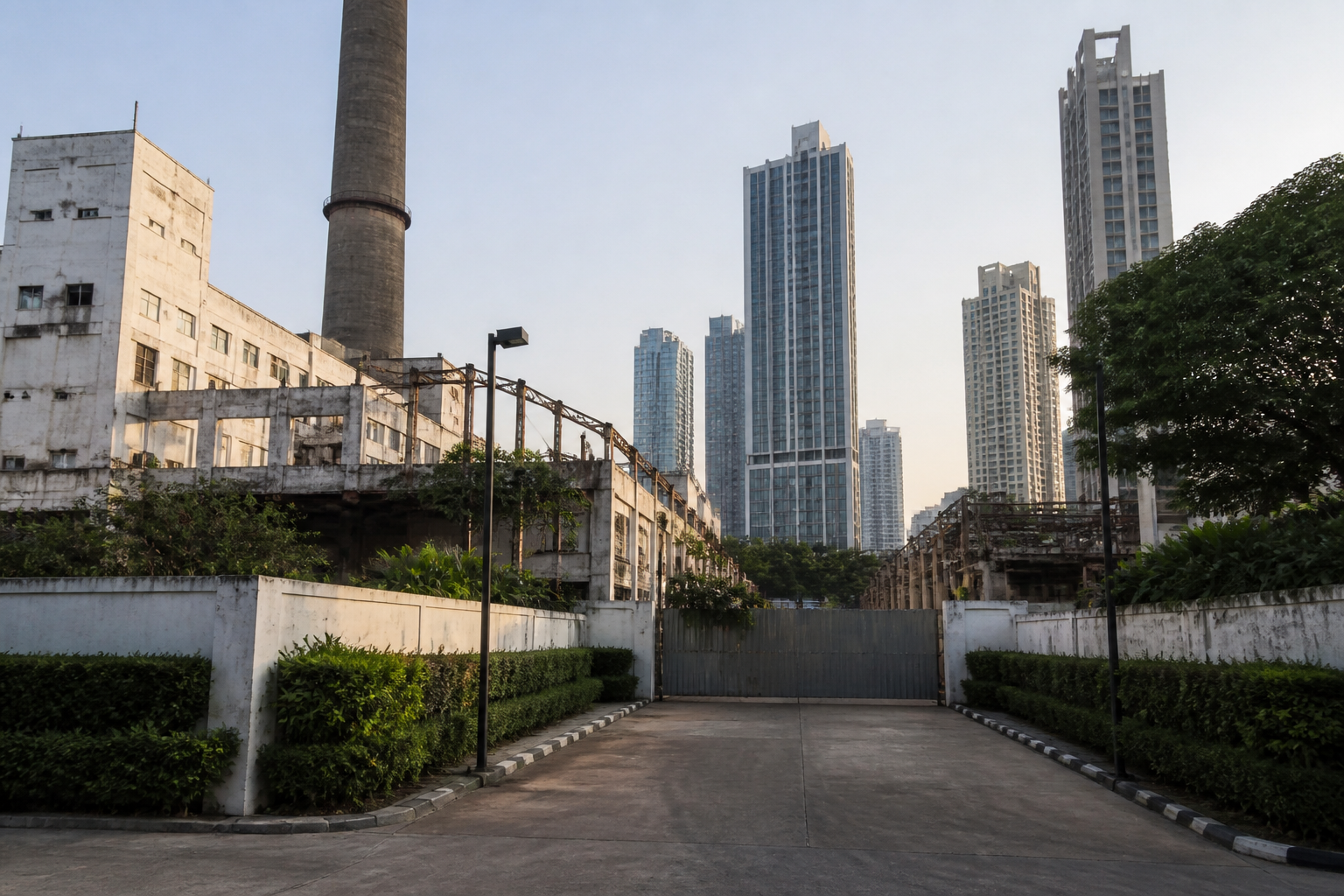
A proposed 30-year allotment of 6.17 acres of Century Mill land in Lower Parel has reopened one of Mumbai’s oldest urban questions: who should benefit when former industrial land is redeveloped? According to a report by Loksatta, the Brihanmumbai Municipal Corporation has proposed giving the land to a private developer for ₹1,300 crore. The report says the land is valued at ₹13,000 crore, a figure that has become central to the opposition from mill workers’ organisations.
The proposal has reportedly received approval from the BMC’s Improvement Committee and is expected to be placed before the municipal corporation’s general body for final approval. Mill workers’ groups oppose the allotment and are demanding that the entire Century Mill site be used for housing for eligible workers and their heirs. The groups have announced a protest at the mill’s entrance at 2 p.m. on Tuesday.
The dispute is not simply about one plot in Lower Parel. It brings together three competing claims on Mumbai’s former mill lands: the financial value of centrally located real estate, the municipal interest in securing value from public or controlled land, and the long-standing expectation that mill workers should receive housing through the redevelopment of the land on which the textile economy was built.
## The proposal at the centre of the dispute
The reported proposal involves 6.17 acres of Century Mill land being made available to a private developer for 30 years. Loksatta reports that the BMC’s proposed consideration is ₹1,300 crore, while the land’s value has been described in the report as ₹13,000 crore. The source report does not provide the valuation document, the terms of the proposed agreement, the identity of the developer, or the method used to calculate either figure. Those details will be important if the proposal proceeds to final approval.
The proposal’s status, as reported, is between committee approval and consideration by the municipal general body. That means the reported Improvement Committee decision is not presented as the final municipal approval. The next formal stage is therefore significant: the general body’s consideration could establish whether the allotment is approved, modified, deferred or rejected.
For residents and workers, the terms of a 30-year arrangement matter beyond the headline price. The supplied report does not state whether the agreement involves a lease, development rights, revenue sharing, construction obligations, public amenities or a specified share of housing. Without those details, it is not possible to assess the full financial or planning implications of the proposal. The disagreement, however, shows that the land’s intended use is already being treated as a question of public entitlement.
## Why mill workers are contesting the allotment
The mill workers’ position, as reported, is that the entire 6.17-acre site should be reserved for their housing rather than transferred to a private developer. The demand is being advanced by the Mill Workers’ Unity organisation and supported by mill workers’ unions. B. K. Ambre, identified in the report as a leader of the Sarva Shramik Sangh, said the organisation would hold the protest and called on workers to participate.
The workers’ argument is connected to the way housing has been provided on some former mill lands. The report says that homes have been built through the Maharashtra Housing and Area Development Authority, or MHADA, and distributed through a lottery to eligible workers. More than 16,000 workers have received such homes through this process, according to the report.
At the same time, the report says that more than 100,000 mill workers and their heirs are still waiting for housing. That figure is attributed to the report and is not accompanied by a beneficiary list or official housing database in the supplied material. It nevertheless indicates the scale of the unresolved claim as presented by the workers’ side: the housing programme has produced beneficiaries, but has not closed the gap between eligible claimants and available homes.
This is why the Century Mill proposal has significance beyond a single development transaction. If the remaining land available for worker housing is shrinking, each redevelopment decision can affect the future supply of homes for a large group whose claims arise from Mumbai’s industrial past. The workers’ demand is not only for a share of a project; it is for the land to be treated as a remaining resource for an outstanding housing obligation.
## The legacy of Mumbai’s mill lands
Mumbai’s former textile mills occupied strategically located land in areas that later became some of the city’s most valuable redevelopment zones. Lower Parel is now associated with intensive commercial and mixed urban development, but its land-use history is rooted in manufacturing and the workers who sustained that economy.
The transformation of mill land creates a recurring governance problem. Industrial sites often become valuable precisely because the surrounding city has changed. Once the factories close or their land is redeveloped, the central question becomes how the benefits of that increase in land value are divided. Private development can bring investment and new construction, while public authorities may seek revenue or development capacity. Workers and their organisations may instead argue that the land should first satisfy commitments connected to the original industry.
The supplied report does not establish the legal origin of the Century Mill land, the ownership structure, or the exact basis for the BMC’s authority to propose the allotment. It also does not state whether the land is subject to earlier court orders, development-control requirements, worker-housing obligations or other reservations. These are essential facts for evaluating the proposal and should be made available during the approval process.
The absence of those details also limits what can be concluded from the reported ₹13,000-crore valuation. A land-value comparison with the proposed ₹1,300-crore consideration may indicate a substantial difference, but the two figures may represent different valuation concepts. They could refer to different rights, time periods, permissible uses or contractual obligations. The source report presents the figures as the basis of the workers’ objection, but the underlying valuation methodology remains unestablished in the supplied material.
## A municipal decision about land, housing and accountability
The BMC’s general body will be the next institutional point in the process described by the report. Its consideration should clarify the proposal’s commercial and public-interest terms, including the duration, payment structure, permitted development, responsibilities of the private party and any housing-related obligations.
It should also clarify how the proposed use relates to the city’s continuing worker-housing programme. The report says unions are demanding that not only Century Mill’s entire site but also the land of other mills that has not yet been made available for worker housing should be used for that purpose. They are also seeking the use of the full available area of mills already identified for housing.
Those demands point to a larger administrative question: whether Mumbai has a complete and publicly accessible account of the mill lands still available for worker housing, the number of eligible applicants, the number of homes delivered and the reasons for the remaining shortfall. The supplied report provides one figure for completed housing and another for pending claims, but does not include the underlying records. Without a consolidated account, each individual land decision risks being assessed in isolation.
For the municipal corporation, the issue is therefore not only whether the Century Mill proposal meets a financial benchmark. It is also whether the decision is consistent with earlier housing commitments and whether the public can examine the evidence behind the valuation and allocation. The reported movement from committee approval to general-body consideration makes disclosure particularly important because the next stage may determine whether the proposal becomes binding.
## What the reported numbers establish—and what they do not
Three numbers define the dispute as presented: 6.17 acres of Century Mill land, ₹1,300 crore as the reported proposed consideration, and ₹13,000 crore as the reported land value. Two further figures frame the housing issue: more than 16,000 workers who have reportedly received homes and more than 100,000 workers and heirs who are reportedly still waiting.
These figures establish the scale of the competing claims, but they do not by themselves establish whether the proposal is financially disadvantageous or legally impermissible. A proper assessment would require the official proposal, valuation reports, land records, development permissions, contract terms and the applicable rules governing mill-land redevelopment. It would also require clarification of whether the housing figures refer to workers, households, applications or eligible beneficiaries.
That distinction matters because land-use decisions in Mumbai often combine property rights, planning controls, public finance and social claims. A simple comparison between a reported market value and a proposed consideration can identify a question for scrutiny, but cannot replace an examination of the transaction’s full terms.
## The larger urban question
The Century Mill dispute shows how Mumbai’s redevelopment choices continue to carry obligations from the city’s industrial era. Former mill land is not merely vacant urban land. It is connected to employment, migration, neighbourhood formation and promises of rehabilitation and housing. When such land is assigned for a new use, the decision affects both the physical form of the city and the distribution of urban opportunity.
The immediate next step is the proposal’s reported presentation before the BMC general body. The key facts still requiring public clarity are the official valuation, the identity and obligations of the proposed developer, the legal form of the 30-year arrangement, the applicable worker-housing provisions and the status of the outstanding claims. Until those details are available, the reported dispute confirms the depth of the conflict but not the final merits of the transaction.
The protest announced for Tuesday will give the workers’ organisations an opportunity to press their demand before the next municipal decision. The general body’s response will show whether Century Mill is treated primarily as a redevelopment opportunity, a municipal asset, or part of Mumbai’s unfinished housing commitment to mill workers.
